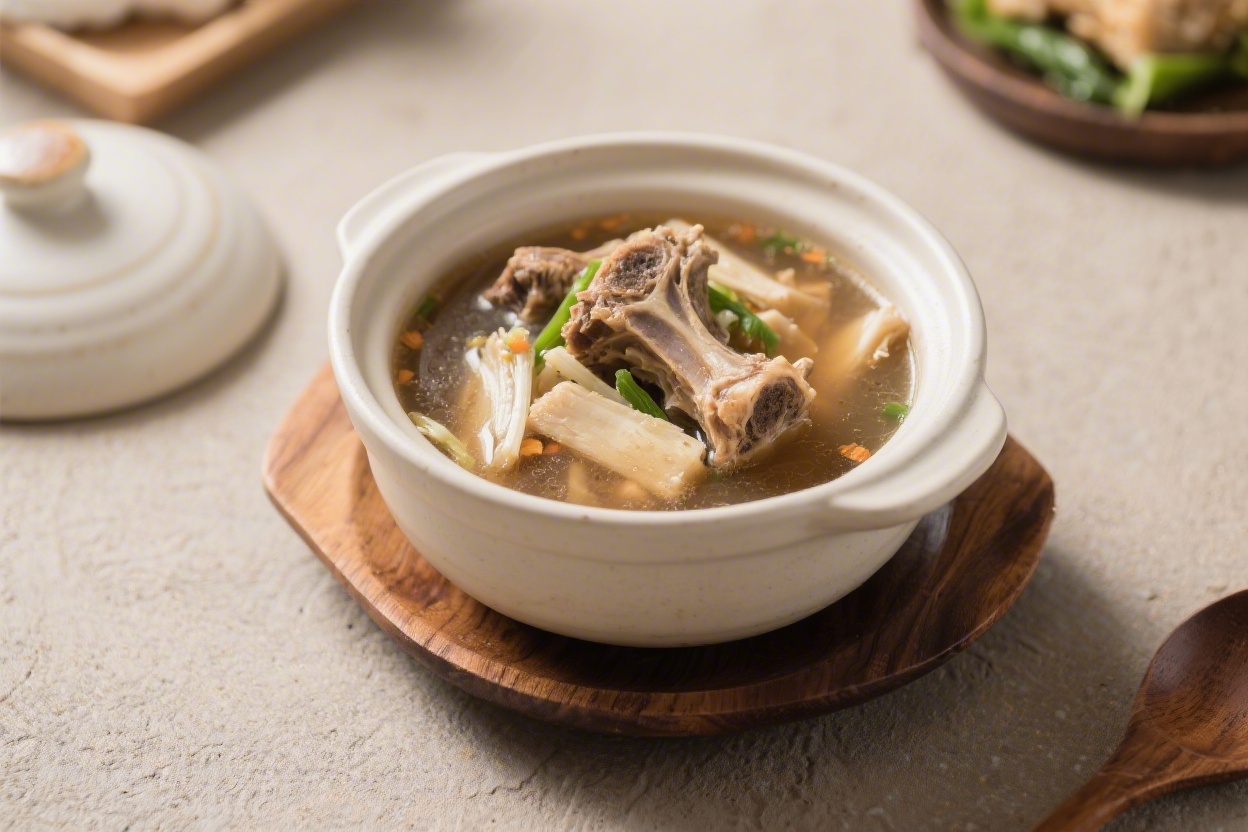
Soak the bones: Rinse bones under cold water, then soak in a large pot of cold water for 1–2 hours.
Change the water once or twice until it runs mostly clear.
Blanch to remove impurities: Place bones in a large pot, cover with fresh water, and bring to a rolling boil for 10 minutes. Drain, rinse the bones, and scrub any scum. Rinse the pot well.
Start the first simmer: Return cleaned bones to the pot.
Add enough fresh water to cover by 2–3 inches. Bring to a boil, then reduce to a gentle simmer. Skim foam for the first 20 minutes.
Add the brisket: After 45–60 minutes, nestle the brisket or shank into the pot.
Simmer gently for 1.5–2 hours more, until the meat is tender. Remove the meat, cool, and slice thinly. Refrigerate it until serving.
Keep simmering the bones: Continue simmering the bones for 6–10 hours total. Low and steady is key.
Add hot water as needed to keep bones submerged. The broth should gradually turn cloudy and ivory.
Optional second extraction: For extra richness, strain the first broth, set aside, and cover bones with fresh water. Simmer another 4–6 hours.
Combine broths to taste for body and flavor.
Season at the table: Seolleongtang is traditionally served unseasoned. Ladle hot broth into bowls, add sliced brisket and scallions, and let each person add salt and pepper to their liking.
Serve: Add rice or noodles directly to the bowl. Enjoy with kimchi for brightness and crunch.