
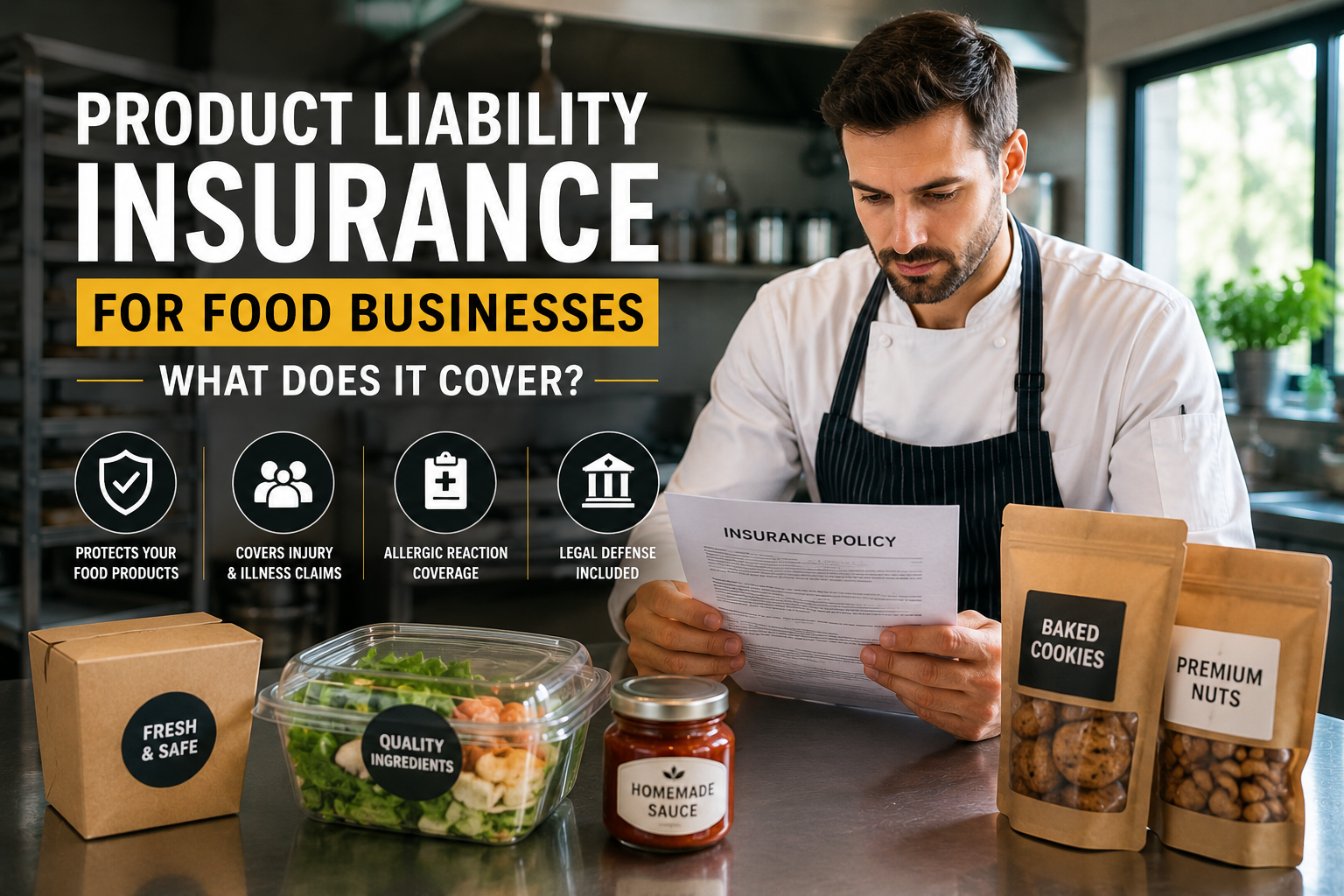
Selling food comes with a responsibility that goes beyond making a good product.
Whether you run a restaurant, bakery, food truck, catering company, or packaged food brand, customers expect the food they buy to be safe. But even when you follow proper food safety practices, something can still go wrong.
A customer could have an allergic reaction, claim that your food made them sick, or report an injury caused by a product you sold.
This is where product liability insurance can become important.
In this guide, we’ll explain what product liability insurance is, what it can cover, who may need it, and how it differs from general liability insurance.
What Is Product Liability Insurance?
Product liability insurance is designed to help protect a business when a customer claims that a product sold or supplied by the business caused injury or property damage.
For a food business, the “product” is often something people consume.
For example, a customer might claim that:
- A food product caused an illness
- An ingredient caused an allergic reaction
- A packaged product contained a foreign object
- A product was contaminated
- A food label failed to properly identify an ingredient
- A product caused damage to someone’s property
If a claim is made, the business may face legal expenses, settlement costs, or other financial losses.
The exact protection depends on the insurance policy, coverage limits, exclusions, and circumstances of the claim.
Why Is Product Liability Insurance Important for Food Businesses?
Food products are different from many other products because customers consume them.
That creates risks that businesses selling clothing, furniture, or other non-food products may not face in the same way.
Even a small food business can potentially face a significant claim.
Imagine you operate a small bakery and sell packaged cookies.
A customer purchases the cookies and later claims that the product caused a serious allergic reaction because of an undeclared ingredient.
Even if you believe your business did nothing wrong, responding to the claim could still involve legal and professional costs.
Product liability coverage can help protect the business against eligible claims covered by the policy.
What Does Product Liability Insurance Cover?
Coverage varies between insurance companies and policies, but product liability insurance may help with certain claims involving bodily injury or property damage caused by a product.
Some common situations include the following.
1. Foodborne Illness Claims
A customer may claim that your food caused food poisoning or another illness.
For example, someone eats food purchased from your catering company and later claims that several people became sick after the event.
A claim like this could potentially result in legal expenses and other costs.
Product liability coverage may provide protection if the claim falls within the policy’s terms.
2. Allergic Reaction Claims
Food allergies are another important risk for food businesses.
A customer may have an allergic reaction after consuming a product containing an ingredient they were not expecting.
This can be especially important for businesses selling products containing common allergens such as:
- Peanuts
- Tree nuts
- Milk
- Eggs
- Wheat
- Soy
- Fish
- Shellfish
Proper ingredient labeling and food safety procedures remain extremely important.
Insurance should not be treated as a replacement for safe food handling or accurate labeling.
3. Contaminated Food Claims
Food can potentially become contaminated during production, preparation, storage, transportation, or packaging.
If a customer claims that contaminated food caused an injury or illness, the business could face a product liability claim.
The policy may help with covered claims, subject to its conditions and exclusions.
4. Foreign Object Claims
Another possible situation involves a foreign object being found inside food.
For example, a customer could claim that they discovered a piece of plastic, metal, glass, or another unwanted object in a packaged product.
If the customer suffers an injury, the business could potentially face a claim.
Again, whether insurance responds depends on the specific policy.
What Product Liability Insurance May Not Cover
It’s just as important to understand what your policy doesn’t cover.
Insurance policies can contain exclusions and conditions that vary significantly between providers.
For example, a policy may not cover certain types of:
- Intentional acts
- Contractual disputes
- Known problems
- Certain recalled products
- Pollution-related claims
- Employee injuries
- Damage to your own business property
Some risks may require separate coverage or an endorsement.
That’s why you should never assume that every food-related problem is automatically covered by product liability insurance.
Product Liability vs. General Liability Insurance
These two types of insurance are often confused.
They are related, but they are not exactly the same.
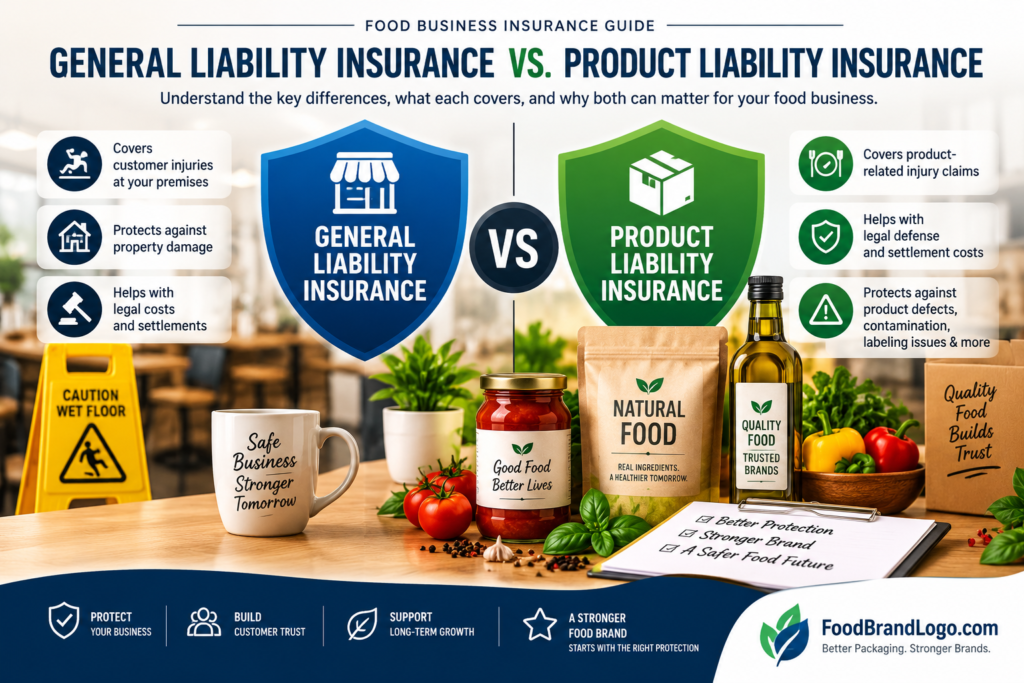
General liability insurance generally addresses certain third-party claims involving bodily injury, property damage, and other covered liabilities arising from business operations.
Product liability insurance focuses specifically on claims arising from products sold, supplied, or distributed by a business.
For a food business, both types of coverage may be relevant.
For example:
Customer slips inside your restaurant:
This could fall under general liability.
Customer claims your packaged food caused an illness:
This could involve product liability.
The actual coverage depends on the policy wording and circumstances.
Which Food Businesses Need Product Liability Insurance?
Product liability insurance can be relevant to many different types of food businesses.
Restaurants
Restaurants prepare and serve food directly to customers.
Even though customers eat the food on-site, the food itself can create potential product-related risks.
Food Trucks
Food trucks have many of the same food-related risks as restaurants but operate from mobile locations.
Product liability can be an important part of a food truck’s overall insurance strategy.
Bakeries
Bakeries sell products containing ingredients that can cause allergic reactions.
Product liability coverage may be particularly relevant for bakeries selling packaged or made-to-order products.
Catering Businesses
Caterers prepare food for events, offices, weddings, parties, and other gatherings.
A single event can involve a large number of customers consuming food prepared by the business.
That makes liability planning especially important.
Packaged Food Brands
Businesses selling packaged food products may have even more reason to consider product liability insurance.
Examples include:
- Sauces
- Snacks
- Cookies
- Spices
- Frozen foods
- Meal kits
- Ready-to-eat products
- Beverages
- Specialty foods
If you manufacture, package, distribute, or sell food products, product liability deserves serious consideration.
Do Home-Based Food Businesses Need Product Liability Insurance?
A home-based food business may be small, but that doesn’t mean it has no liability risk.
For example, imagine someone running a home bakery that sells cakes and cookies through social media.
The business may have only a few customers each week.
But if one customer claims that a product caused an allergic reaction, the owner could still face a claim.
Homeowners or renters insurance may not automatically provide the business coverage the owner expects.
That’s why home-based food entrepreneurs should specifically ask an insurance professional about business liability and product liability coverage.
How Much Does Product Liability Insurance Cost?
There isn’t one fixed price for product liability insurance.
The cost can depend on several factors, including:
- Type of food business
- Annual revenue
- Type of products sold
- Number of products
- Sales volume
- Business location
- Claims history
- Coverage limits
- Deductible
- Distribution area
- Manufacturing process
A small local bakery may have very different insurance costs from a food manufacturer distributing products across the country.
For that reason, it’s better to compare actual quotes for your specific business instead of relying on a generic average.
If you’re looking at the overall cost of protecting your food business, you can also read our guide:
How Much Does Food Business Insurance Cost? A Complete Guide for 2026
How to Reduce Product Liability Risks
Insurance is only one part of protecting a food business.
Good safety procedures can help reduce the chance of problems occurring in the first place.
Keep Accurate Ingredient Records
Maintain clear records of ingredients used in your products.
This can make it easier to identify allergens and respond to customer questions.
Label Products Carefully
If you sell packaged food, make sure your labels meet the requirements that apply to your business and location.
Never assume that a small labeling mistake is harmless.
Follow Food Safety Procedures
Use appropriate procedures for:
- Food storage
- Temperature control
- Cleaning
- Cross-contamination prevention
- Food preparation
- Employee hygiene
Keep Supplier Records
Know where your ingredients come from.
Keep invoices and relevant supplier documentation so you can trace ingredients when necessary.
Document Complaints
If a customer reports a problem, record the details.
Keep information about the product, purchase date, batch or lot number when available, and the nature of the complaint.
Review Your Insurance Regularly
Your insurance needs can change as your business grows.
If you start selling new products, increase production, expand into new locations, or begin shipping products, review your coverage.
What Should You Look for in a Product Liability Policy?
When comparing policies, don’t look only at the price.
Pay attention to:
- Coverage limits
- Deductibles
- Exclusions
- Covered products
- Geographic coverage
- Legal defense coverage
- Product recall options
- Claims process
- Policy conditions
It’s also important to make sure the insurer understands exactly what your business does.
A business selling homemade cookies online may have very different risks from a manufacturer producing thousands of packaged products every day.
Do You Need Product Recall Insurance Too?
Product liability and product recall insurance are not necessarily the same thing.
Product liability generally focuses on certain claims that a product caused injury or property damage.
Product recall coverage can address certain costs associated with recalling a product from the market, depending on the policy.
For a food manufacturer or packaged food brand, this distinction can be important.
If your business produces food on a larger scale, ask an insurance professional whether product recall coverage makes sense for your situation.
Final Thoughts
Product liability insurance can be an important part of risk management for food businesses.
A restaurant, bakery, food truck, catering company, or packaged food brand can face claims related to illness, allergies, contamination, labeling, or other product-related issues.
The right insurance won’t eliminate those risks, but it can provide financial protection against certain covered claims.
The most important thing is to understand your actual risks and choose coverage accordingly.
And remember, insurance should work alongside good food safety practices, accurate labeling, quality control, and proper record keeping.
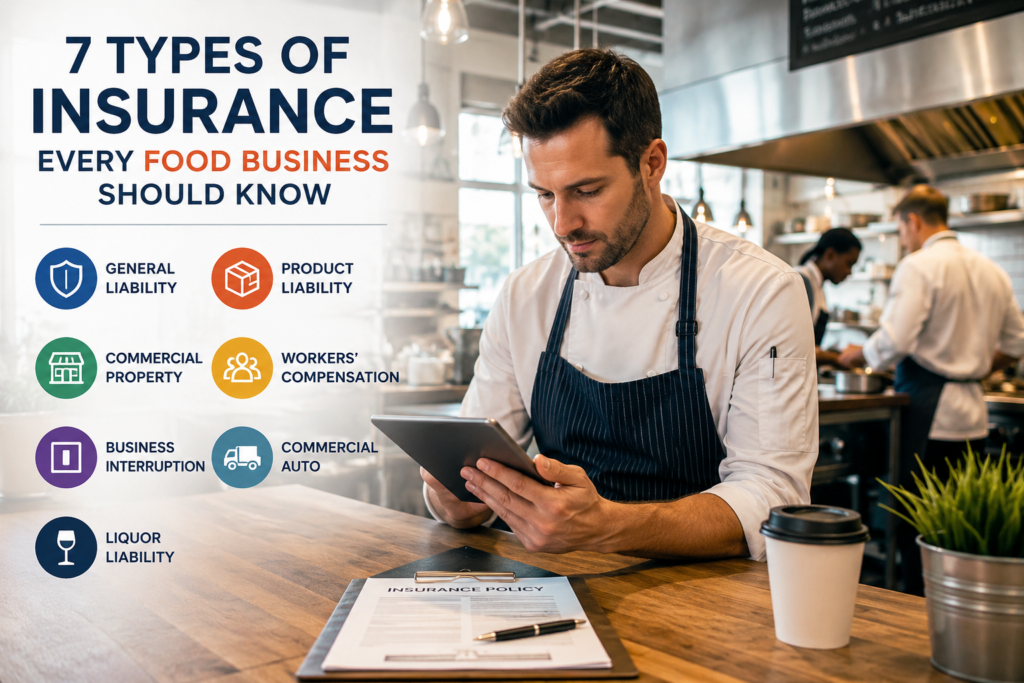
If you’re building a complete insurance strategy for your food business, start with the basics by reading our guide to 7 Types of Insurance Every Food Business Should Know and then compare your potential costs with our Food Business Insurance Cost Guide for 2026.
Important: Insurance coverage, requirements, exclusions, and laws vary by location and insurance provider. This article is for general informational purposes and should not be considered legal or insurance advice.