
Teriyaki Glazed Vegetables – A Bright, Savory Weeknight Side
Skip the takeout and make these glossy, flavor-packed Teriyaki Glazed Vegetables at home. They cook quickly, use everyday produce, and taste like your favorite stir-fry spot. The sauce is sweet, salty, and a little tangy, clinging to each bite.
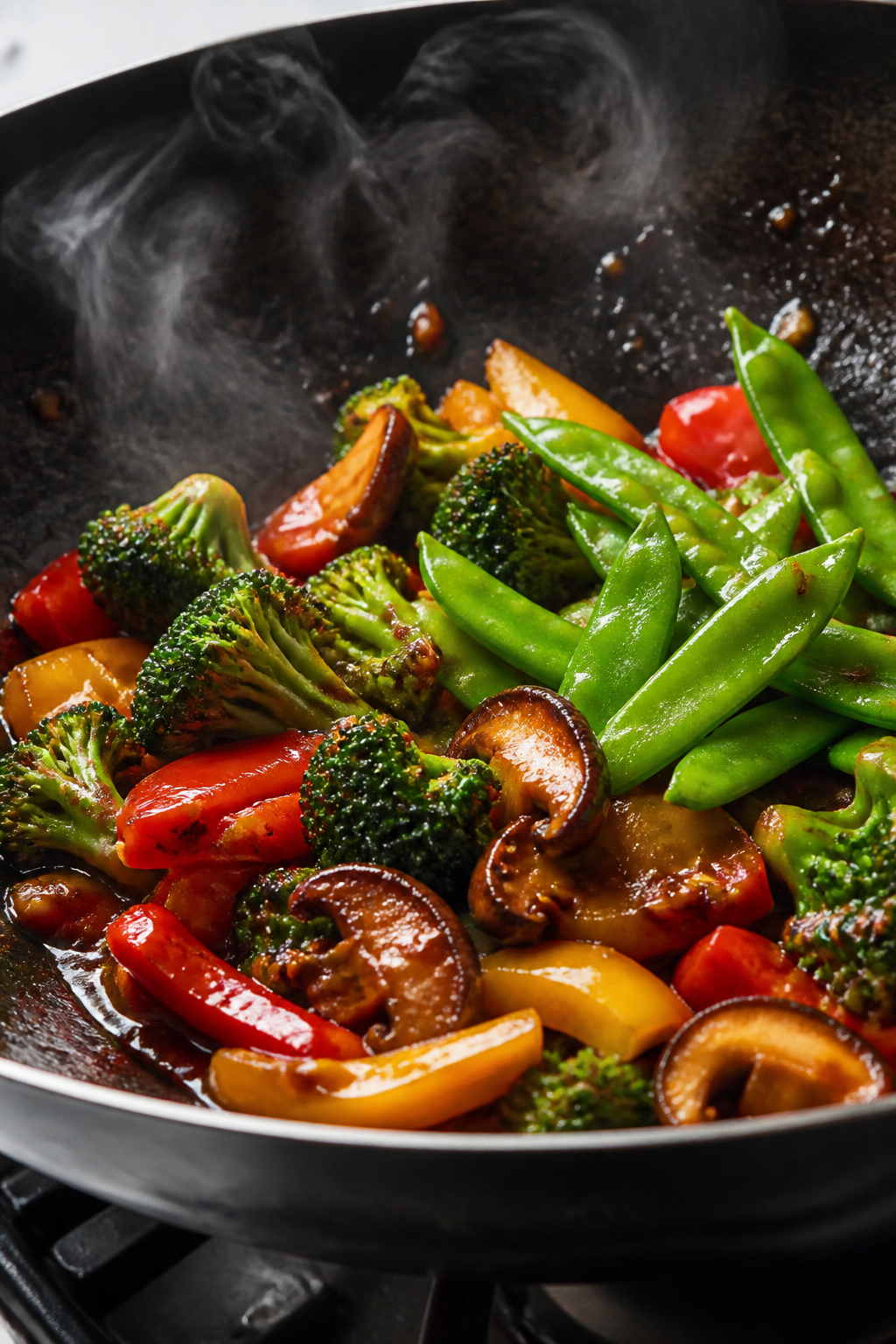
You don’t need fancy tools just a hot pan and a few smart steps. It’s a reliable side for rice, noodles, tofu, chicken, or salmon, and it’s easy to scale for meal prep.
Why This Recipe Works
High heat equals crisp-tender veggies. Cooking fast in a wide skillet or wok gives you charred edges and bright color without turning everything mushy.
A balanced sauce does the heavy lifting. Soy sauce brings umami, mirin or honey adds sweetness, and rice vinegar brightens it all. A little cornstarch thickens the sauce so it coats the vegetables instead of pooling.
Layered aromatics build flavor. Garlic and ginger bloom in hot oil first, infusing the oil so every bite tastes fragrant and savory.
Ingredients
Instructions
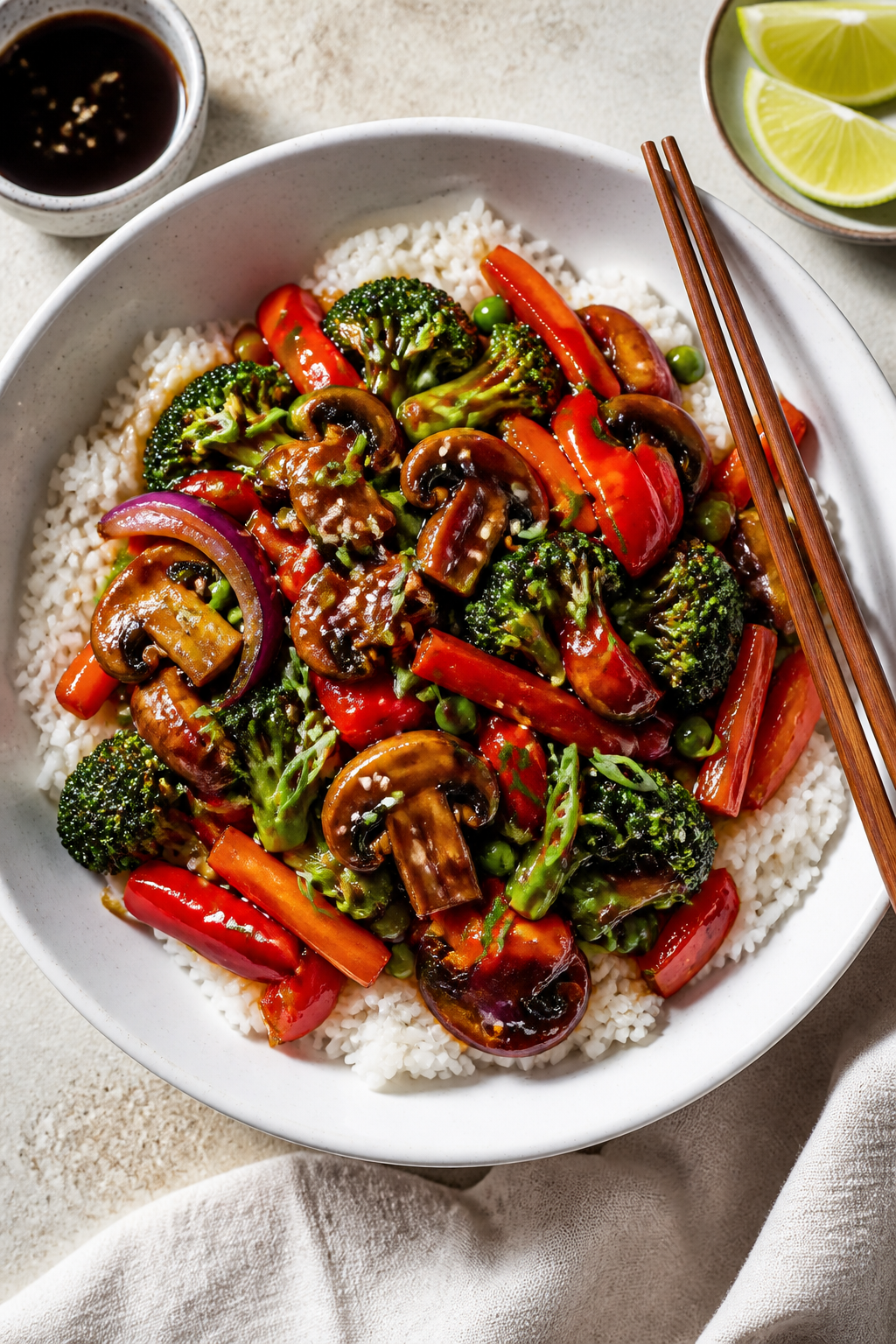
- Make the teriyaki sauce. In a bowl, whisk 1/4 cup soy sauce, 2 tablespoons mirin or 1 tablespoon honey, 1–2 teaspoons brown sugar (optional), 1 tablespoon rice vinegar, 1/2 cup water, and 1 tablespoon cornstarch until smooth.Set aside.
- Prep the vegetables. Cut broccoli into bite-size florets, slice peppers and carrots thin, trim peas, slice mushrooms, and cut onion into wedges. Aim for uniform sizes so everything cooks evenly.
- Heat the pan. Set a large skillet or wok over medium-high heat. Add 1–2 tablespoons neutral oil and let it shimmer.
- Sauté aromatics. Add 2–3 minced garlic cloves and 1 tablespoon grated ginger.Stir for 20–30 seconds until fragrant. Don’t let them brown.
- Cook the hearty veg first. Add carrots and broccoli. Stir-fry 2–3 minutes until they start to brighten and soften at the edges.
- Add the rest. Toss in peppers, onions, and mushrooms.Stir-fry 2–3 more minutes. Add peas last so they stay crisp, cooking 1 minute.
- Glaze with sauce. Give the sauce a quick stir (the cornstarch settles), then pour it around the pan. Stir constantly.In 1–2 minutes, it will thicken and coat the vegetables.
- Finish and serve. Turn off the heat. Stir in 1 teaspoon sesame oil for a nutty finish. Sprinkle sesame seeds and sliced scallions.Serve over rice or noodles.
Keeping It Fresh
Storage: Cool completely, then refrigerate in an airtight container for up to 4 days.
Reheating: Warm in a skillet with a splash of water to loosen the glaze, or microwave in short bursts, stirring in between. Avoid overcooking so the veggies stay crisp-tender.
Meal prep tip: Keep sauce and vegetables separate until reheating if you prefer extra-crisp texture.
Health Benefits
Fiber and micronutrients: Broccoli, peppers, and carrots deliver fiber, vitamin C, beta-carotene, and potassium, supporting digestion and immunity.
Lower sodium options: Using low-sodium soy sauce and balancing with vinegar and aromatics cuts salt without losing flavor.
Healthy fats: A small amount of sesame and neutral oil helps absorb fat-soluble vitamins while keeping calories in check.
Pitfalls to Watch Out For
- Soggy vegetables: Overcrowding steams them. Cook in batches if needed, keeping the pan hot.
- Broken or thin sauce: Stir the cornstarch slurry just before adding, and simmer briefly.If too thick, add a splash of water.
- Bitter or burnt aromatics: Garlic and ginger cook fast. Add them to hot oil, stir, then immediately add vegetables.
- One-note sweetness: Balance with rice vinegar and a pinch of salt or extra soy. A squeeze of lime also helps.
Variations You Can Try
- Spicy kick: Add chili flakes, sambal, or a drizzle of sriracha to the sauce.
- Citrus twist: Stir in 1 teaspoon orange zest and a splash of orange juice for brightness.
- Protein boost: Add crispy tofu, seared shrimp, or sliced chicken.Cook protein first, set aside, then add back with the sauce.
- Gluten-free: Swap soy sauce for tamari or coconut aminos and check labels on vinegar and mirin.
- More umami: Add a few drops of toasted sesame oil at the end and a teaspoon of miso whisked into the sauce.
FAQ
Can I use frozen vegetables?
Yes, but cook them straight from frozen in a very hot pan to avoid excess moisture. Expect a softer texture and be ready to reduce the sauce a bit longer.
What can I use instead of cornstarch?
Use potato starch or arrowroot in the same amount. Add it at the end and avoid boiling hard, as these thickeners can thin out if overheated.
How do I keep the vegetables crisp?
Cut evenly, cook over high heat, and don’t overcrowd the pan. Stop cooking once they’re bright and just tender; the residual heat will finish the job.
Is there a sugar-free option?
Skip the brown sugar and use just mirin or a small amount of a zero-calorie sweetener. Taste and adjust with extra vinegar and soy for balance.
What should I serve this with?
Steamed jasmine rice, brown rice, quinoa, udon, or soba noodles all work well. For protein, try baked salmon, grilled chicken, or crispy tofu.
In Conclusion
Teriyaki Glazed Vegetables are quick, colorful, and deeply satisfying. With a balanced sauce and hot pan, you get glossy, crisp-tender vegetables every time. Keep the ingredients on hand and this becomes a weeknight staple you can tweak to fit any mood. Simple technique, big flavor, and plenty of ways to make it your own.
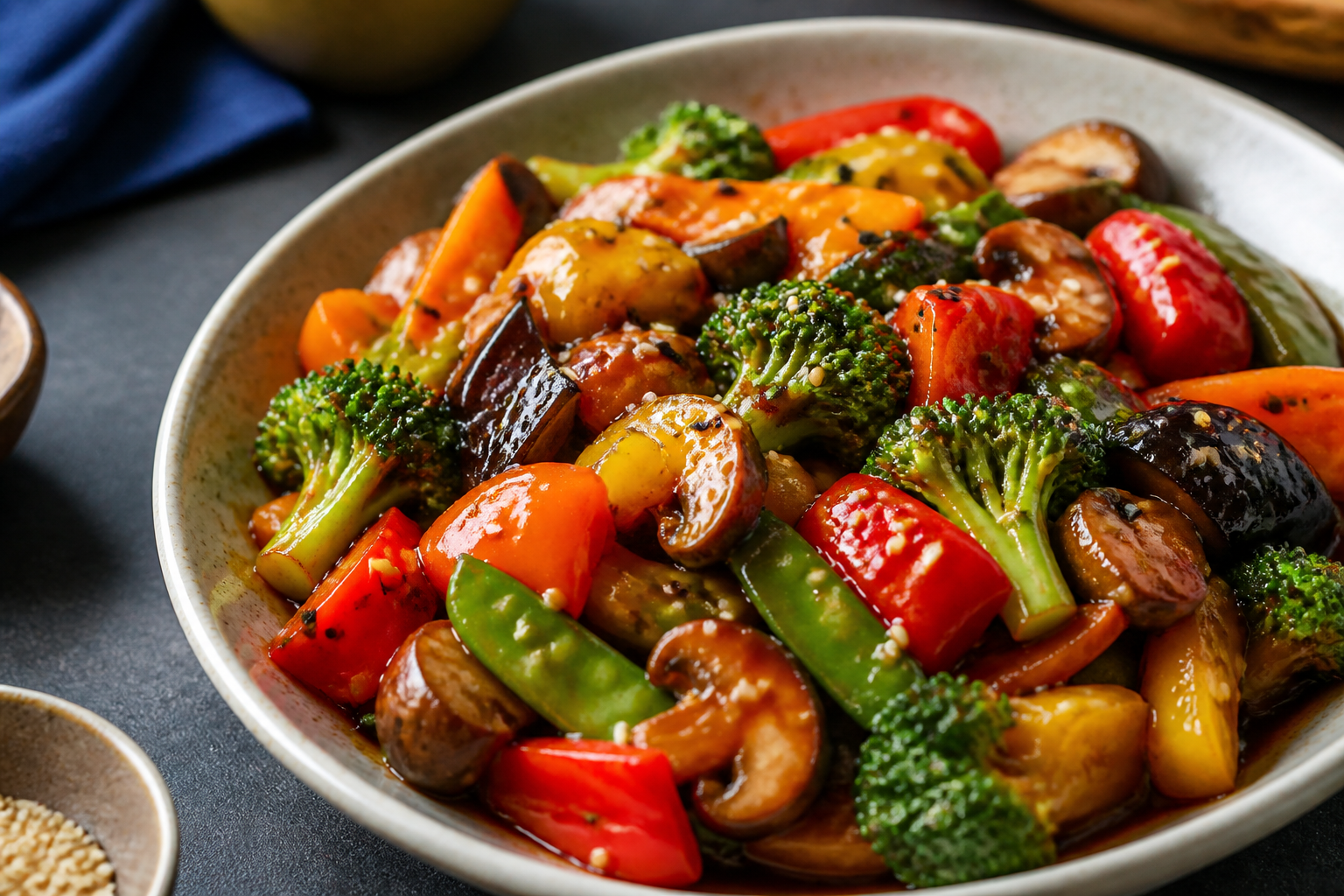
Ingredients
Method
- Make the teriyaki sauce. In a bowl, whisk 1/4 cup soy sauce, 2 tablespoons mirin or 1 tablespoon honey, 1–2 teaspoons brown sugar (optional), 1 tablespoon rice vinegar, 1/2 cup water, and 1 tablespoon cornstarch until smooth. Set aside.
- Prep the vegetables. Cut broccoli into bite-size florets, slice peppers and carrots thin, trim peas, slice mushrooms, and cut onion into wedges. Aim for uniform sizes so everything cooks evenly.
- Heat the pan. Set a large skillet or wok over medium-high heat. Add 1–2 tablespoons neutral oil and let it shimmer.
- Sauté aromatics. Add 2–3 minced garlic cloves and 1 tablespoon grated ginger. Stir for 20–30 seconds until fragrant. Don’t let them brown.
- Cook the hearty veg first. Add carrots and broccoli. Stir-fry 2–3 minutes until they start to brighten and soften at the edges.
- Add the rest. Toss in peppers, onions, and mushrooms. Stir-fry 2–3 more minutes. Add peas last so they stay crisp, cooking 1 minute.
- Glaze with sauce. Give the sauce a quick stir (the cornstarch settles), then pour it around the pan. Stir constantly. In 1–2 minutes, it will thicken and coat the vegetables.
- Finish and serve. Turn off the heat. Stir in 1 teaspoon sesame oil for a nutty finish. Sprinkle sesame seeds and sliced scallions. Serve over rice or noodles.
Printable Recipe Card
Want just the essential recipe details without scrolling through the article? Get our printable recipe card with just the ingredients and instructions.