
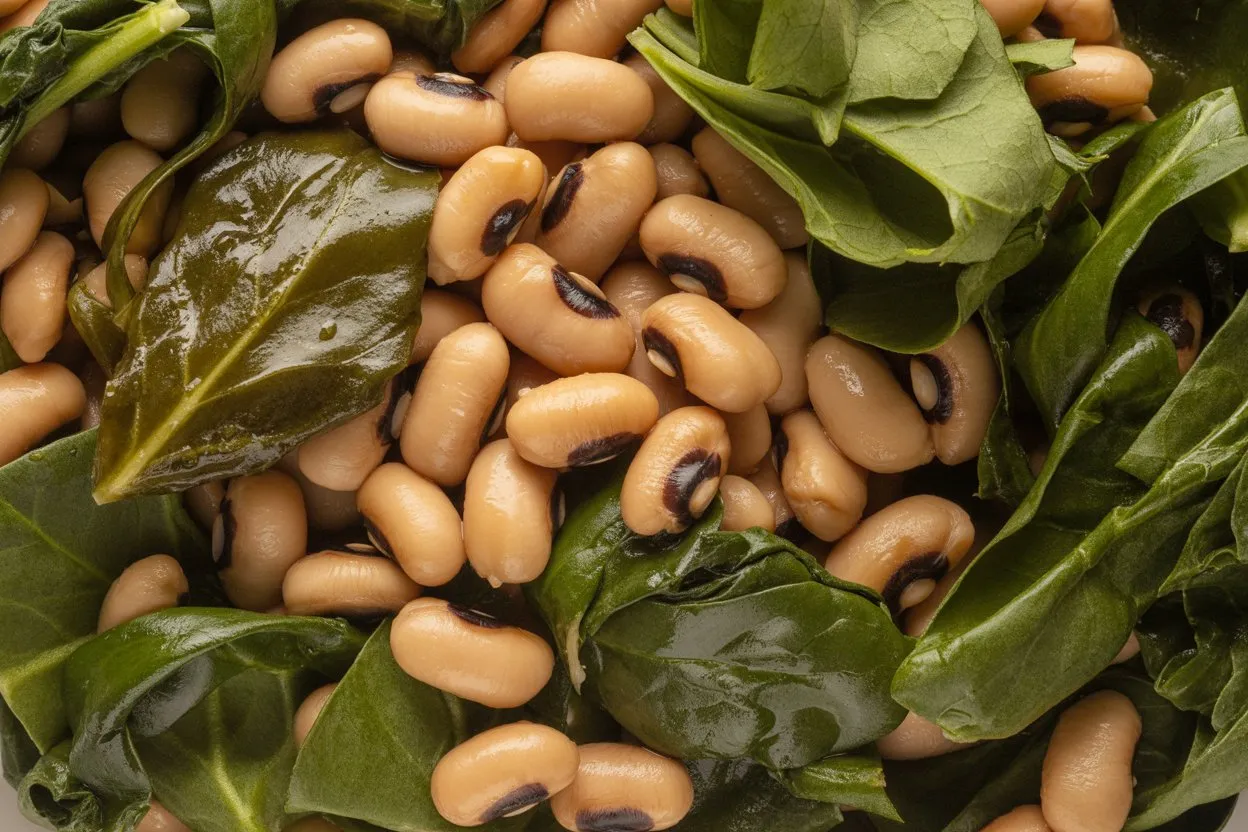
Vegetarian Black-Eyed Peas and Greens: A Nutritious and Flavorful Comfort Dish
When it comes to hearty, soul-satisfying meals, few dishes compare to black-eyed peas and greens. This classic Southern dish is traditionally cooked with ham hocks or bacon, but you don’t need meat to enjoy its rich, comforting flavors. A vegetarian version can be just as delicious, packed with nutrients, and satisfying for the whole family. In this article, we’ll explore why black-eyed peas are so special, how to cook them perfectly, and a step-by-step guide to making a flavorful vegetarian version with greens.
Why Black-Eyed Peas Are a Superfood
Black-eyed peas, also called cowpeas, are small legumes with a creamy texture and a distinctive black spot. They’re more than just a Southern tradition—they are a nutritional powerhouse.
One cup of cooked black-eyed peas contains around 13 grams of protein and 11 grams of fiber, making them a great plant-based protein source. They are rich in folate, iron, potassium, and magnesium while being very low in fat. Including black-eyed peas in your diet can help maintain heart health, regulate digestion, stabilize blood sugar, and keep you feeling full longer.
Pairing black-eyed peas with leafy greens, such as collards, kale, or spinach, further boosts the nutrient profile. Greens provide vitamins A, C, K, and calcium, creating a meal that is not just tasty but incredibly nourishing.
Choosing and Preparing Your Ingredients
For this vegetarian version, you can use dried black-eyed peas or canned peas. Dried peas have a richer flavor and better texture when cooked from scratch. They require soaking overnight or using a quick-soak method (boil for 5 minutes, then let sit for 1 hour) to soften before cooking.
Canned black-eyed peas are convenient and ready to use; just rinse them to remove excess sodium. Regardless of the form you choose, you’ll need fresh, vibrant greens and flavorful aromatics like onion, garlic, and optional carrots to create depth.
To replicate the smoky, savory flavor of traditional ham or bacon without using meat, smoked paprika and cumin are essential. A dash of cayenne adds warmth, while apple cider vinegar or lemon juice brightens the dish at the end.
Vegetarian Black-Eyed Peas and Greens Recipe
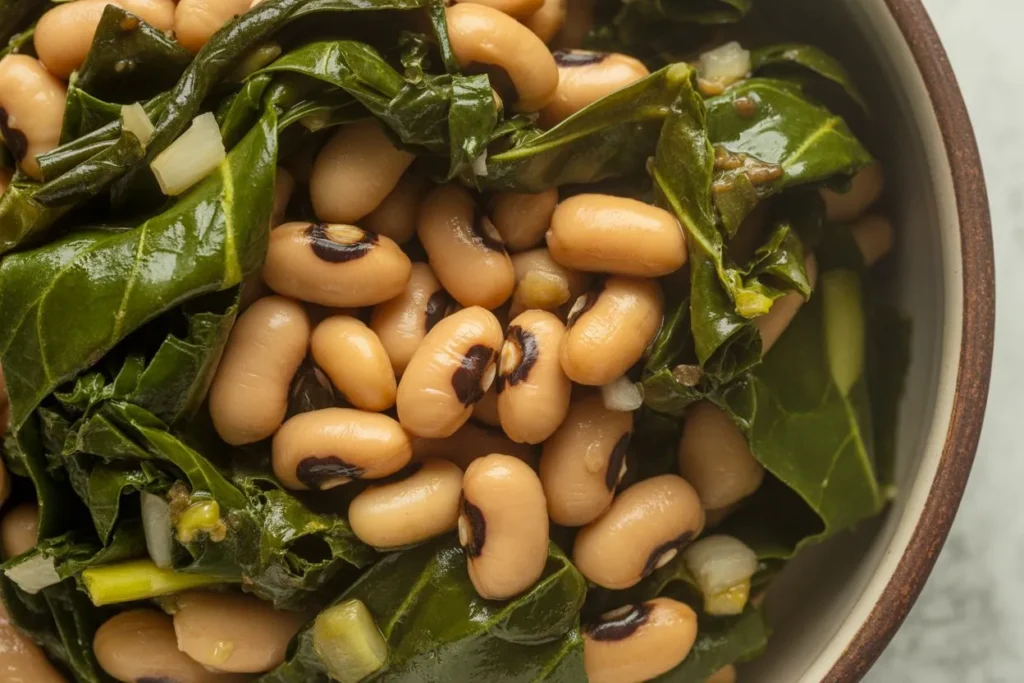
Ingredients:
- 1 cup dried black-eyed peas (or 2 cans, drained and rinsed)
- 4 cups vegetable broth
- 1 small onion, diced
- 3 cloves garlic, minced
- 1 teaspoon smoked paprika
- ½ teaspoon cayenne pepper (optional)
- 1 teaspoon ground cumin
- Salt and black pepper to taste
- 2 cups chopped collard greens, kale, or spinach
- 1 tablespoon olive oil or avocado oil
- 1 tablespoon apple cider vinegar or lemon juice
- Optional: 1 small carrot, diced
Instructions:
- Prepare the peas: If using dried black-eyed peas, rinse and soak overnight or quick-soak. Simmer in vegetable broth until tender, about 45 minutes. If using canned peas, skip soaking and heat in broth for 10 minutes.
- Sauté aromatics: In a large skillet or pot, heat olive oil over medium heat. Add onion, garlic, and carrot if using, and sauté until fragrant and softened, about 5 minutes.
- Add spices: Stir in smoked paprika, cayenne, cumin, salt, and pepper. Toast for 1-2 minutes to release the flavors.
- Combine peas and greens: Add cooked black-eyed peas and chopped greens to the skillet. Stir well and simmer for 5–10 minutes, until the greens are wilted and tender.
- Brighten the flavors: Remove from heat and stir in apple cider vinegar or lemon juice. Taste and adjust seasoning as needed.
- Serve: Enjoy as a main dish over rice or quinoa, or as a hearty side alongside cornbread or roasted vegetables.
Tips for Perfect Vegetarian Black-Eyed Peas

- Boost umami: Add a splash of soy sauce, a teaspoon of miso paste, or a sprinkle of nutritional yeast for a rich, savory flavor without meat.
- Mix greens: Combining collard greens with kale or spinach adds different textures and flavors.
- Batch cooking: This dish stores well in the fridge for up to 5 days or freezes for 2–3 months, making it great for meal prep.
- Adjust spice levels: Increase cayenne or add chili flakes if you like a bit more heat.
- Acidity matters: The vinegar or lemon juice at the end balances the richness of the peas and greens and enhances all the flavors.
Why This Dish Works
Vegetarian black-eyed peas and greens deliver a satisfying balance of flavors and textures. The peas are creamy and tender, the greens slightly bitter yet earthy, and the spices provide warmth and depth. Unlike many vegetarian dishes that feel light or incomplete, this meal is hearty and filling, making it ideal for lunch, dinner, or a festive occasion.
It’s also a budget-friendly dish. Black-eyed peas and greens are affordable staples, yet the combination feels special and comforting. For those following plant-based diets, it’s an easy way to get protein, fiber, and a variety of micronutrients in one meal.
Cultural Significance
Black-eyed peas hold a special place in Southern U.S. cuisine. Eating them on New Year’s Day is a tradition believed to bring prosperity and good luck. While this recipe removes the traditional meat, it still honors the spirit of the dish. Globally, black-eyed peas are also popular in African and Indian cuisines, showing their versatility and long history as a staple food.
Variations to Try
- Add grains: Serve over brown rice, quinoa, or farro for a complete protein-packed meal.
- Spicy version: Include diced jalapeños or a dash of hot sauce.
- Mediterranean twist: Add chopped tomatoes, olives, and a drizzle of olive oil.
- Creamy version: Stir in a spoonful of tahini or coconut milk for a richer texture.
Conclusion
Vegetarian black-eyed peas and greens are more than just a meal, they’re a comforting, nutritious, and versatile dish that celebrates both flavor and tradition. By using simple ingredients, a few well-chosen spices, and fresh greens, you can create a plant-based version that rivals the original in taste and heartiness. Whether you’re enjoying it as part of a New Year’s tradition, a weeknight dinner, or a meal prep option, this recipe is flexible, flavorful, and full of nutrients.
Frequently Asked Questions(FAQs)
What makes this black-eyed peas and greens recipe vegetarian?
This recipe is vegetarian because it does not include any meat or animal products. Instead of ham or bacon, it uses smoked paprika, cumin, and other spices to provide a smoky, savory flavor that mimics the traditional version.
Can I use canned black-eyed peas instead of dried?
Yes! Canned black-eyed peas are convenient and ready to use. Just rinse them thoroughly to remove excess sodium, and heat them in vegetable broth for about 10 minutes to let them absorb flavor.
Do I need to soak dried black-eyed peas?
Soaking dried black-eyed peas is recommended to reduce cooking time and improve digestibility. You can soak them overnight or use a quick-soak method by boiling for 5 minutes and letting them sit for an hour.
What type of greens can I use?
Collard greens are traditional, but kale, spinach, or a mix of any leafy greens works well. Combining different greens adds texture, flavor, and nutrients to the dish.
How do I make this dish more flavorful without meat?
To enhance umami and depth, you can add a splash of soy sauce, a teaspoon of miso paste, or sprinkle nutritional yeast. Toasting spices like smoked paprika and cumin before adding the peas also intensifies the flavor.
Can I make this recipe spicy?
Absolutely! Increase the cayenne pepper, add red chili flakes, or include diced jalapeños while sautéing the aromatics to give the dish a spicy kick.
Is this recipe suitable for meal prep?
Yes! Vegetarian black-eyed peas and greens store well in the refrigerator for up to 5 days and can be frozen for 2–3 months. Reheat gently, adding a splash of water or broth if needed.
Can I add grains to make it a complete meal?
Yes. Serving the dish over rice, quinoa, farro, or another whole grain creates a complete, protein-rich meal. This is especially helpful if you’re following a plant-based diet.
Why should I add vinegar or lemon juice at the end?
Adding vinegar or lemon juice at the end balances the flavors, brightens the dish, and complements the earthy, smoky notes from the spices and greens.
Can I adjust the texture of the greens?
Yes. If you prefer firmer greens, add them earlier in the cooking process. For softer, more tender greens, add them near the end of cooking and allow them to wilt gently.
Is this dish gluten-free?
Yes! Black-eyed peas, greens, and the seasonings used in this recipe are naturally gluten-free. Just ensure any added sauces or seasonings (like soy sauce) are gluten-free as well.
Can I make this dish creamy without dairy?
Yes. For a creamier version, stir in a spoonful of tahini, coconut milk, or a plant-based cream at the end. This adds richness while keeping the dish fully vegetarian.
Printable Recipe Card
Want just the essential recipe details without scrolling through the article? Get our printable recipe card with just the ingredients and instructions.