
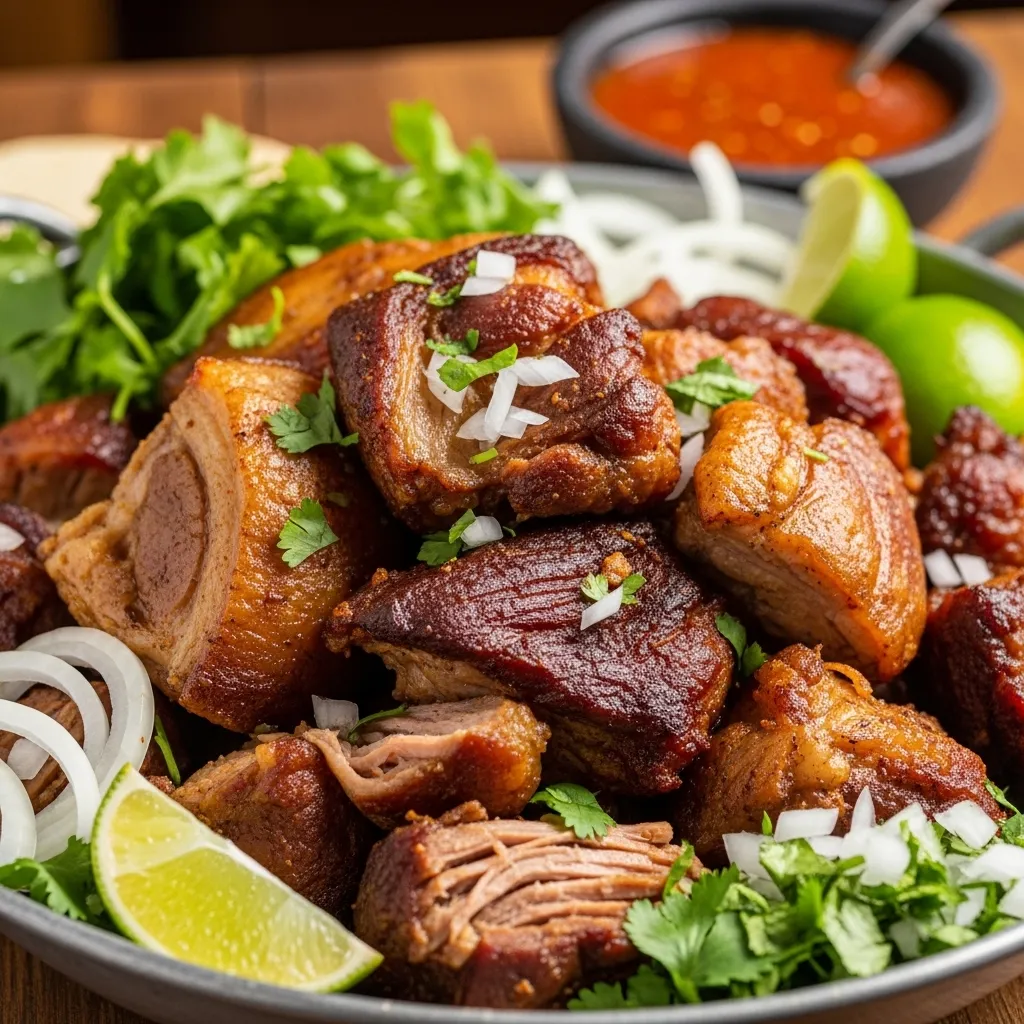
Traditional Carnitas (Mexican Pork Confit)
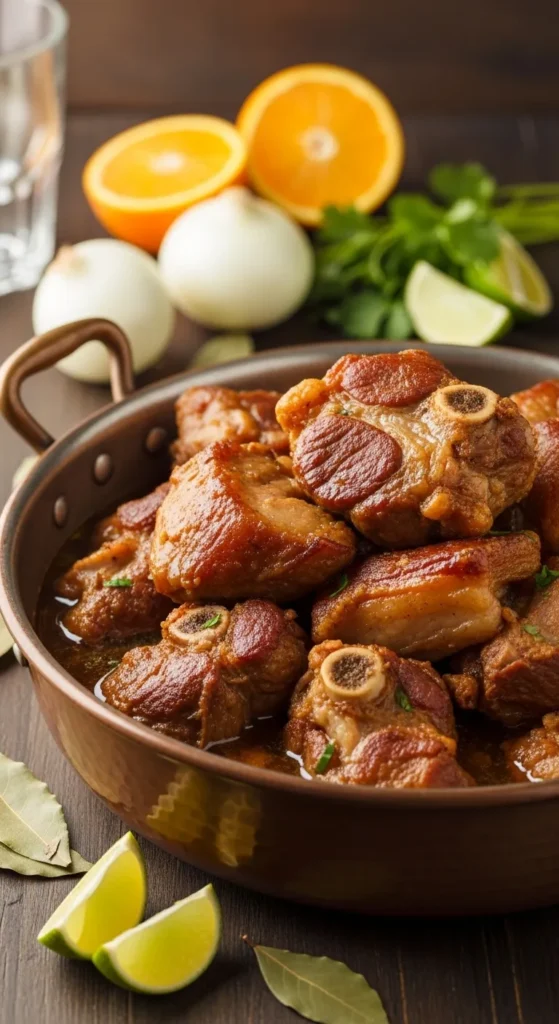
So you’re craving something ridiculously tasty, borderline life-changing, and very capable of making you feel like a kitchen wizard but you also don’t want to babysit a stove all day. Same. Enter Traditional Carnitas: tender pork that basically cooks itself, then crisps up like it’s showing off. It’s the kind of dish that makes people think you worked way harder than you actually did. And honestly? We love that for you.
This is slow-cooked, juicy, crispy-edged pork goodness with major taco-night energy. It smells amazing, tastes even better, and somehow feels both rustic and fancy. Let’s do this.
Why This Recipe Is Awesome
First of all, it’s shockingly low effort for how impressive it is. You throw everything into a pot, walk away, and let time do the heavy lifting. Iconic behavior.
Second, carnitas are versatile AF. Tacos? Obviously. Burritos? Yes. Rice bowls, nachos, quesadillas, straight from the pan at midnight? All valid choices.
Third, it’s hard to mess up. Like, truly. As long as you don’t turn the heat up to “volcano” or forget the salt, you’re golden. Even I didn’t ruin it, and that’s saying something.
Finally, leftovers somehow taste better the next day. Magic? Science? Pork sorcery? We may never know.
Ingredients You’ll Need
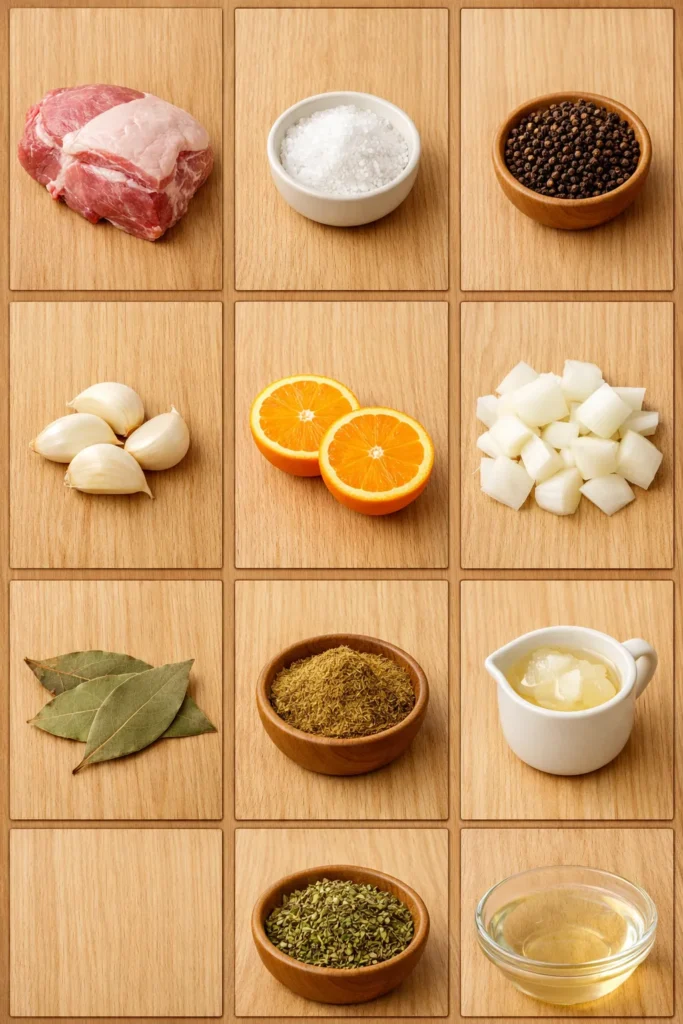
Keep it simple. Carnitas are not about fancy ingredients they’re about letting pork be its best self.
- Pork shoulder (aka pork butt) – Fatty, forgiving, and perfect for slow cooking
- Salt – Not optional, don’t get brave
- Black pepper – A little attitude never hurt
- Garlic cloves – Smash them. Don’t be shy.
- Orange – Cut in half; yes, peel and all
- Onion – Roughly chopped, no need to cry over precision
- Bay leaves – Subtle, but they matter
- Cumin – Warm, earthy vibes
- Oregano – Mexican oregano if you have it, but no stress
- Lard or oil – Lard is traditional, oil is fine, we’re not judging
- Water or broth – Just enough to keep things cozy
Step-by-Step Instructions
- Cut the pork into big chunks.
Think fist-sized, not bite-sized. Big pieces stay juicier and forgive your life choices. - Season like you mean it.
Salt and pepper the pork generously. This is not the time for restraint. - Add everything to a heavy pot.
Pork, garlic, onion, orange halves, bay leaves, cumin, oregano, and fat all go in together. One pot. Minimal drama. - Add liquid and bring to a simmer.
Pour in enough water or broth to barely cover the meat. Bring it to a gentle simmer, not a wild boil. - Cook low and slow.
Let it simmer uncovered for about 2–3 hours. Stir occasionally so nothing sticks or feels ignored. - Let the liquid evaporate.
Eventually, the liquid cooks off and the pork starts frying in its own fat. This is where the magic happens. - Crisp it up.
Turn the pieces occasionally until they’re golden and crispy on the edges. This step is non-negotiable. - Shred slightly and serve.
Break the pork into chunks or shreds. Keep those crispy bits those are the best part.
Common Mistakes to Avoid
- Cranking the heat too high.
This isn’t a race. Slow cooking = tender pork. High heat = regret. - Under-salting.
Pork needs seasoning. Be confident. You’re not seasoning a cucumber. - Skipping the crisping step.
If you stop before the pork gets crispy, you’ve made tasty pork—but not carnitas. Rookie mistake. - Over-stirring.
Let it sit. Constant stirring kills the crust, and we want that crunch.
Alternatives & Substitutions
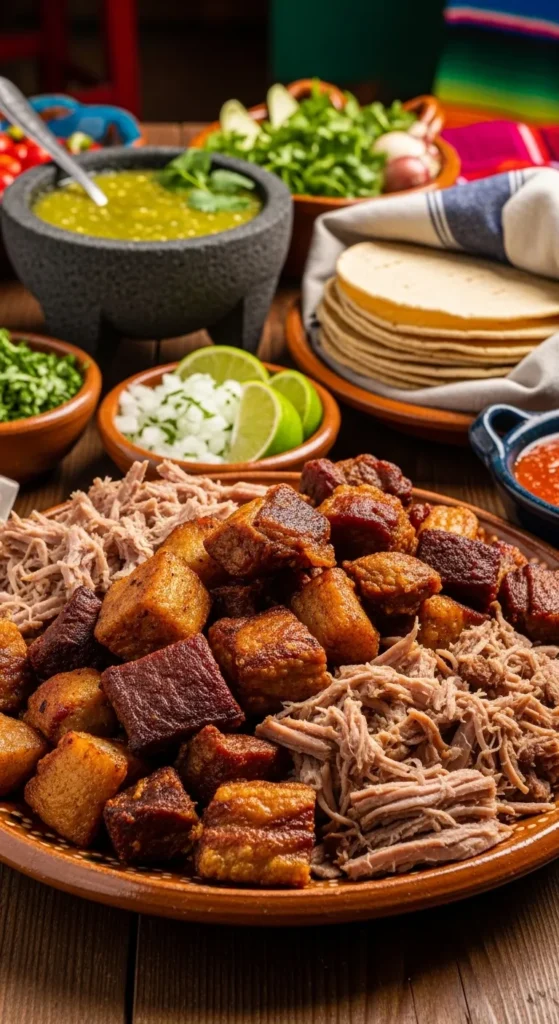
- No lard?
Use vegetable oil, avocado oil, or even olive oil. IMO, lard gives the best flavor, but life happens. - No orange?
Grapefruit works surprisingly well. Lime alone is okay, but orange brings balance. - Short on time?
Use a slow cooker for the first part, then crisp the pork in a pan or oven. Not traditional, but effective. - Want it spicy?
Add jalapeño or a dried chile. Carnitas don’t mind a little heat. - Different protein?
Chicken works, but let’s be honest it won’t hit the same. Still good, just different vibes.
FAQ (Frequently Asked Questions)
Can I make this ahead of time?
Absolutely. Carnitas love being made in advance. Reheat and crisp again for best results.
Do I really need to use pork shoulder?
Yes. Lean cuts will dry out and make you sad. Fat equals flavor.
Can I bake it instead of stovetop cooking?
Yep. Cover and bake low, then uncover to crisp. Same concept, different appliance.
Why is my pork not crispy?
Either too much liquid or not enough patience. Let the moisture cook off and trust the process.
Can I freeze carnitas?
Totally. Freeze in portions. Reheat in a hot pan to bring back the crisp.
Is carnitas supposed to be greasy?
Rich, yes. Greasy puddle, no. If it feels excessive, drain a bit of fat but not all of it.
Final Thoughts
Traditional carnitas are proof that simple ingredients + time = unreal flavor. You don’t need fancy skills, expensive gear, or culinary school credentials. You just need patience, pork, and the confidence to let fat do its thing.
Make this once, and it’ll become your go-to for feeding a crowd or yourself for three days straight. No shame. Now go load up a tortilla, add some salsa, and admire your work. You earned this.
Printable Recipe Card
Want just the essential recipe details without scrolling through the article? Get our printable recipe card with just the ingredients and instructions.