
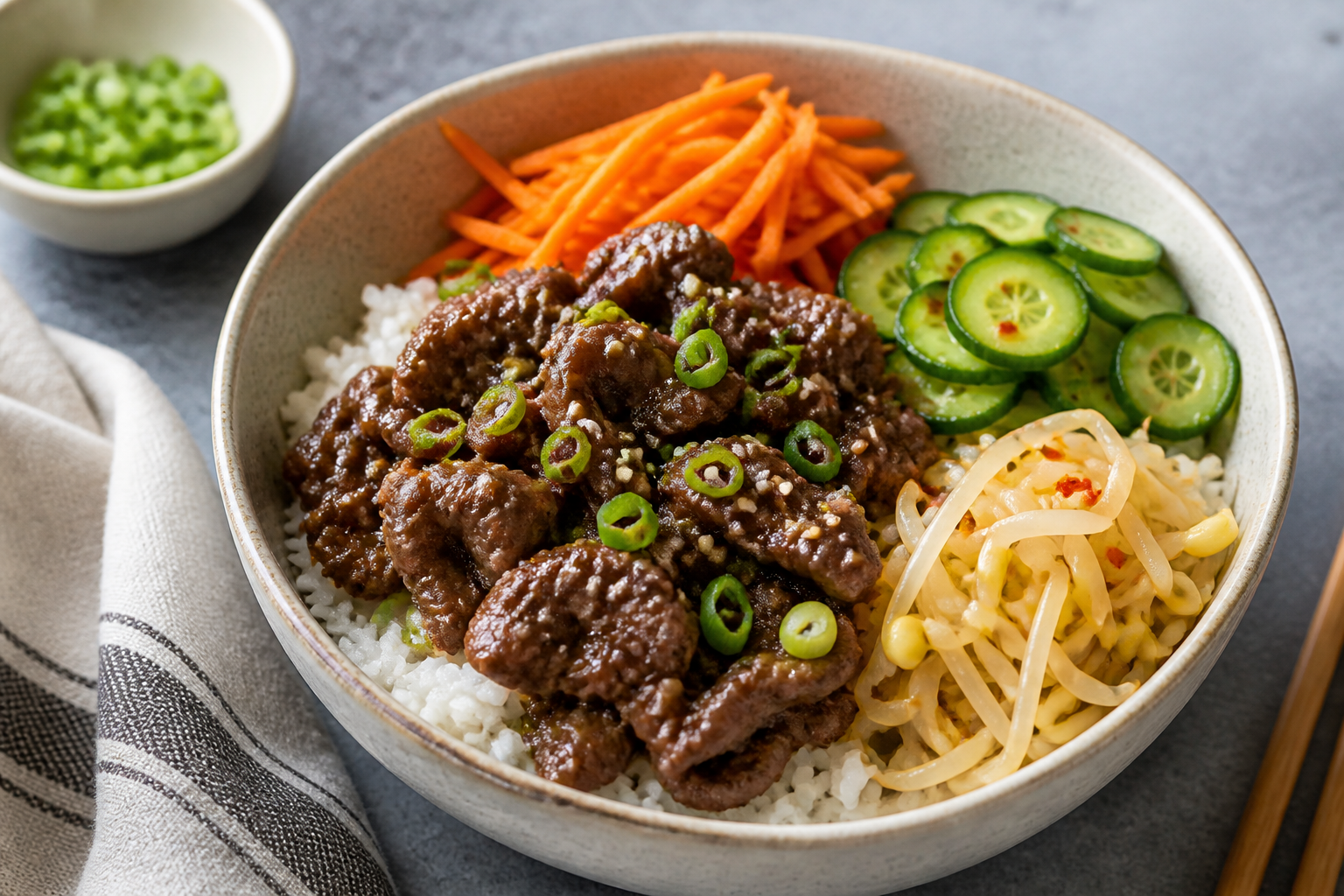
Skinnytaste Korean Beef Rice Bowls
If you love big flavor with minimal effort, these Skinnytaste Korean beef rice bowls are going to be a staple in your kitchen. They’re savory, slightly sweet, and packed with garlicky goodness without being heavy. This version keeps things lighter but still feels satisfying, thanks to lean ground beef and plenty of fresh garnishes.
It’s the kind of meal you can throw together on a busy weeknight and still feel great about serving. Best part? Leftovers reheat beautifully for lunch the next day.
What Makes This Special
These bowls deliver that classic Korean-inspired flavor soy, garlic, ginger, and a touch of brown sugar without complicated steps.
The sauce comes together in minutes and coats the beef perfectly. Serve it over hot rice, add crisp veggies, and you’ve got a complete meal with crunch, freshness, and warmth. It’s budget-friendly, customizable, and fast, making it perfect for families or meal prep.
What You’ll Need
- Lean ground beef (90% or higher)
- Low-sodium soy sauce or tamari
- Brown sugar (or coconut sugar)
- Garlic, minced
- Fresh ginger, grated
- Sesame oil
- Crushed red pepper flakes (to taste)
- Green onions, thinly sliced
- Cooked rice (jasmine, brown, or cauliflower rice)
- Carrots, shredded or matchsticks
- Cucumber, thinly sliced
- Sesame seeds, for topping
- Rice vinegar and a pinch of salt (optional, for quick-pickling veggies)
- Neutral oil (avocado or canola) for cooking
Instructions
- Cook the rice: Prepare your rice of choice according to package directions. Keep warm.For a lighter bowl, use brown or cauliflower rice.
- Prep the sauce: In a small bowl, whisk together soy sauce, brown sugar, sesame oil, red pepper flakes, and a splash of water. Set aside.
- Quick-pickle the veggies (optional): Toss sliced cucumbers and carrots with a little rice vinegar and a pinch of salt. Let sit while you cook the beef.
- Sauté aromatics: Heat a large skillet over medium-high.Add a teaspoon of oil, then the garlic and ginger. Cook 30–45 seconds until fragrant, stirring often.
- Brown the beef: Add the ground beef, breaking it up with a spoon. Cook until no longer pink and lightly browned, about 5–7 minutes.Drain excess fat if needed.
- Add the sauce: Pour the sauce over the beef. Stir and simmer 2–3 minutes until slightly thickened and glossy. Stir in half the green onions.
- Assemble: Divide rice into bowls.Top with the Korean beef, cucumbers, carrots, remaining green onions, and a sprinkle of sesame seeds.
- Finish and serve: Taste and adjust add a drizzle more soy for salt, a pinch more red pepper for heat, or a squeeze of lime for brightness.
How to Store
Keep the beef and rice in separate airtight containers for up to 4 days in the fridge. Store fresh toppings separately so they stay crisp. Reheat the beef gently in a skillet or microwave with a splash of water to loosen the sauce.
If freezing, freeze the cooked beef (without veggies) for up to 2 months, then thaw in the fridge overnight before reheating.
Health Benefits
- Lean protein: Ground beef (90%+) supports muscle repair and keeps you full longer.
- Balanced carbs: Pairing with brown rice or cauliflower rice helps steady energy and reduce overall calories.
- Antioxidants and fiber: Fresh cucumbers, carrots, and green onions add crunch, vitamins A and C, and fiber.
- Smart sodium swap: Using low-sodium soy sauce and fresh aromatics builds flavor without excessive salt.
What Not to Do
- Don’t skip draining excess fat if your beef isn’t very lean—it can make the dish greasy.
- Don’t burn the garlic and ginger. They turn bitter fast; 30–45 seconds is enough.
- Don’t drown the beef in sauce. You want it coated, not soupy. Reduce until glossy.
- Don’t assemble too early if meal prepping; keep components separate to avoid soggy rice and wilted veggies.
Variations You Can Try
- Turkey or chicken: Swap in lean ground turkey or chicken for an even lighter version.
- Veggie-forward: Add sautéed mushrooms, spinach, or steamed broccoli for extra volume and nutrients.
- Egg on top: Finish with a soft-fried egg for richness and protein.
- Gluten-free: Use tamari or coconut aminos instead of soy sauce.
- Spice level: Add gochujang for deeper heat and a hint of smokiness.
- Lower sugar: Cut the brown sugar in half or use a touch of honey; adjust to taste.
FAQ
Can I make this ahead for meal prep?
Yes. Cook the beef and rice, then store them separately with the veggies on the side. Assemble just before eating for the best texture.
What kind of rice works best?
Jasmine rice is classic for a soft, fragrant base. Brown rice adds fiber and a nutty bite. Cauliflower rice is a great low-carb option.
Is this spicy?
It’s mildly spicy if you use a small pinch of red pepper flakes. For more heat, add extra flakes or a spoon of gochujang.
Can I use frozen ground beef?
Yes, just thaw it fully in the fridge first for even cooking and the best texture.
How do I keep it from getting too salty?
Use low-sodium soy sauce, taste as you go, and balance with a splash of water or a squeeze of lime if needed.
What other toppings work well?
Try shredded cabbage, radishes, kimchi, avocado slices, or a drizzle of sriracha or toasted sesame oil.
Final Thoughts
Skinnytaste Korean beef rice bowls check all the boxes: quick, flavorful, and lighter without sacrificing satisfaction. With simple pantry staples and fresh toppings, you can get dinner on the table fast and feel good about it. Make it your own with the variations, and enjoy a reliable go-to for busy nights or easy meal prep.