
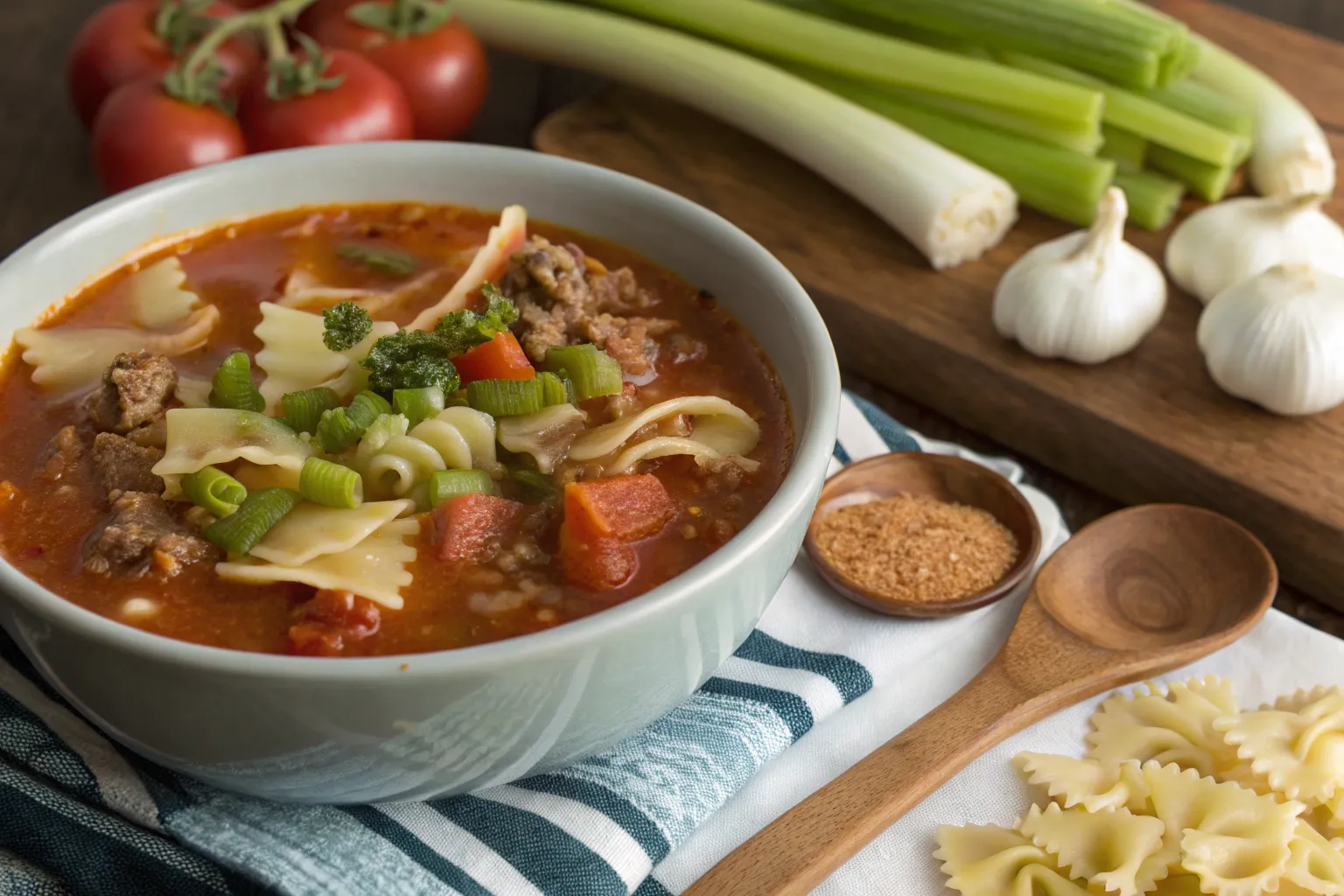
Lasagna Soup Recipe

Lasagna soup is everything you love about traditional lasagna, rich tomato broth, tender noodles, savory meat, and creamy cheeses, served in a warm, comforting bowl. It has all the flavors of classic Italian lasagna without the lengthy baking process. This soup is quick to prepare, deeply satisfying, and perfect for weeknights when you crave something hearty but don’t want extra work. With a few simple ingredients and one pot, you can enjoy lasagna in a fresh, spoonable form that the whole family will love.
Why You’ll Love This Recipe
This lasagna soup delivers comfort and convenience in one bowl. It has a robust tomato base that simmers with Italian herbs, ground meat, and chewy pasta for maximum flavor. The cheese mixture, usually ricotta, mozzarella, and Parmesan—melts into the hot soup, making every bite creamy and rich. It’s a flexible recipe that adapts easily to different diets and flavor preferences. It’s also a one-pot wonder, making cleanup fast and stress-free.
Nutritional Information
A single serving generally contains protein from the meat, fiber from vegetables, and carbohydrates from pasta. The tomato broth provides antioxidants, while the cheese adds calcium and healthy fats. Exact values vary by ingredients used, but overall it offers a balanced, satisfying meal.
Time Taken
From start to finish, lasagna soup takes about 35 to 45 minutes.
Preparation: 10 minutes
Cooking: 25 to 35 minutes
Ingredients
- Ground beef or Italian sausage
- Onion, diced
- Garlic, minced
- Tomato paste
- Crushed tomatoes
- Chicken or vegetable broth
- Lasagna noodles, broken into pieces
- Ricotta cheese
- Shredded mozzarella
- Grated Parmesan
- Italian seasoning
- Salt and black pepper
- Fresh basil (optional)
Instructions
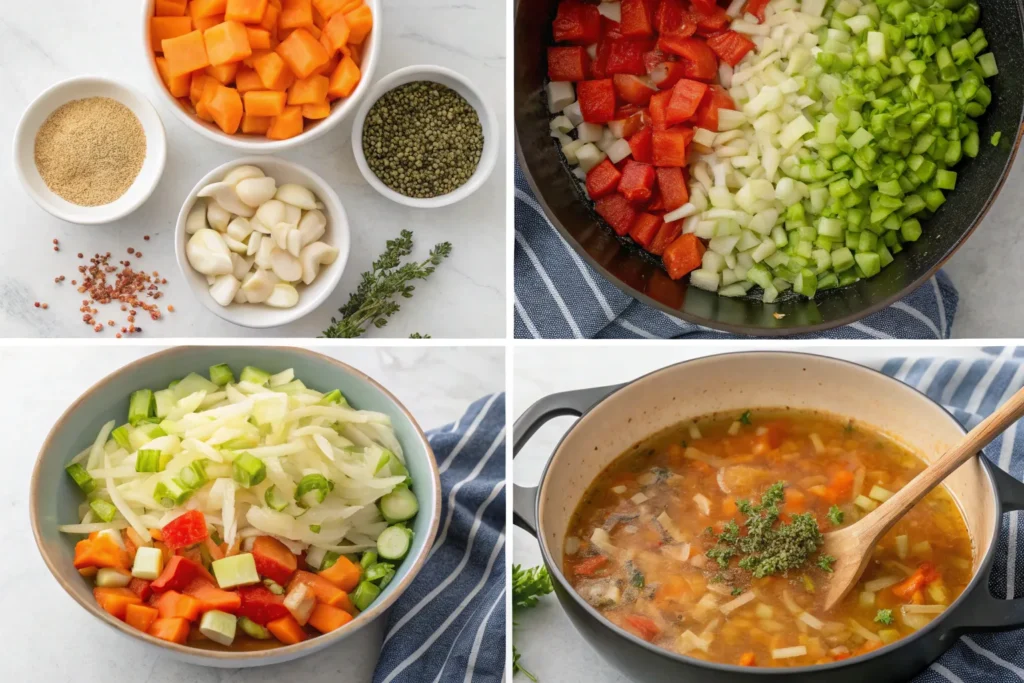
Start by browning the ground beef or sausage in a large pot. Add diced onion and minced garlic, cooking until fragrant. Stir in tomato paste, crushed tomatoes, broth, and Italian seasoning. Bring the mixture to a gentle boil and add broken lasagna noodles. Simmer until the pasta is tender. In a small bowl, mix ricotta, mozzarella, and Parmesan. Once the soup is ready, ladle it into bowls and top each serving with a spoonful of the cheese mixture. The heat of the soup melts the cheese into a delicious creamy layer.
You Must Know
Lasagna noodles continue to absorb liquid as they sit, so your soup may thicken over time. Keep extra broth on hand to adjust consistency when reheating. Using sausage instead of beef adds an extra depth of flavor. Always add the cheese to individual bowls rather than the whole pot to avoid it melting into the soup and thickening it too much.
Storage Tips
Store leftover soup in an airtight container for three to four days. Reheat on low heat and add broth if it becomes too thick. For best results, store the cheese mixture separately and add it fresh each time you serve.
Ingredient Substitutions
- Replace meat with plant-based crumbles for a vegetarian version.
- Use gluten-free pasta if needed.
- Swap ricotta with cottage cheese for a lighter option.
- Use turkey sausage instead of pork for a leaner soup.
Serving Suggestions

Serve lasagna soup with garlic bread, Caesar salad, or a slice of crusty Italian bread. Fresh basil or parsley sprinkled on top adds freshness and aroma. A small drizzle of olive oil can also elevate the flavor.
Cultural and Historical Context
Lasagna has deep roots in Italian cuisine, especially in regions like Emilia-Romagna. Lasagna soup is a modern adaptation developed in American kitchens to streamline the flavors of traditional lasagna into a quick, stovetop meal. It maintains the essence of Italian comfort food while embracing contemporary cooking convenience.
Seasonal Adaptations
In winter, add extra cheese for a richer bowl. In summer, use fresh tomatoes and basil for a lighter version. Fall variations may include roasted vegetables like zucchini or bell peppers for added warmth and texture.
Success Stories
Many home cooks love how easy lasagna soup is compared to classic lasagna. It’s a favorite for family gatherings, potlucks, and cold-weather meals because it delivers the same beloved flavors with far less effort. Kids especially enjoy the cheesy topping that melts beautifully into the broth.
Freezer Meal Conversion
To freeze, prepare the soup base without pasta. Freeze in airtight containers for up to two months. When ready to eat, reheat the soup and add cooked noodles separately, then finish with the cheese topping for best texture.
Pro Tips
Add a splash of heavy cream for an extra silky finish. Cook the noodles only until just tender to avoid mushiness. Let the soup rest for five minutes before serving, allowing flavors to meld.
Chef’s Special Tips
Toast the lasagna noodles lightly in the pot before adding broth to deepen the flavor. Mix a pinch of red pepper flakes into the cheese for subtle heat. Finish each bowl with freshly grated Parmesan for a restaurant-style touch.
Conclusion
Lasagna soup is a comforting, flavorful, and easy meal that brings all the warmth of Italian cuisine straight to your kitchen. Whether you’re cooking for family or meal prepping for the week, this dish offers everything you love in a satisfying, spoon-ready form. If you want more cozy soup recipes or variations on this classic, just let me know and I’ll create them for you.
FAQs
What kind of pasta works best for lasagna soup?
Broken lasagna noodles give the most authentic texture, but you can use any short pasta like mafalda, rotini, or penne if needed.
Can I make it without meat?
Yes, you can replace the meat with plant-based crumbles or add extra vegetables like mushrooms, zucchini, or spinach.
Why add the cheese mixture separately?
Adding it directly to each bowl keeps the cheese creamy instead of melting completely into the soup, giving that classic lasagna bite.
Does the soup thicken as it cools?
Yes, pasta absorbs liquid over time. Add a splash of broth when reheating to return it to a soup-like consistency.
Can I make lasagna soup ahead of time?
Absolutely. Prepare the soup base ahead, store the cheese mixture separately, and cook pasta fresh when reheating.
Printable Recipe Card
Want just the essential recipe details without scrolling through the article? Get our printable recipe card with just the ingredients and instructions.