
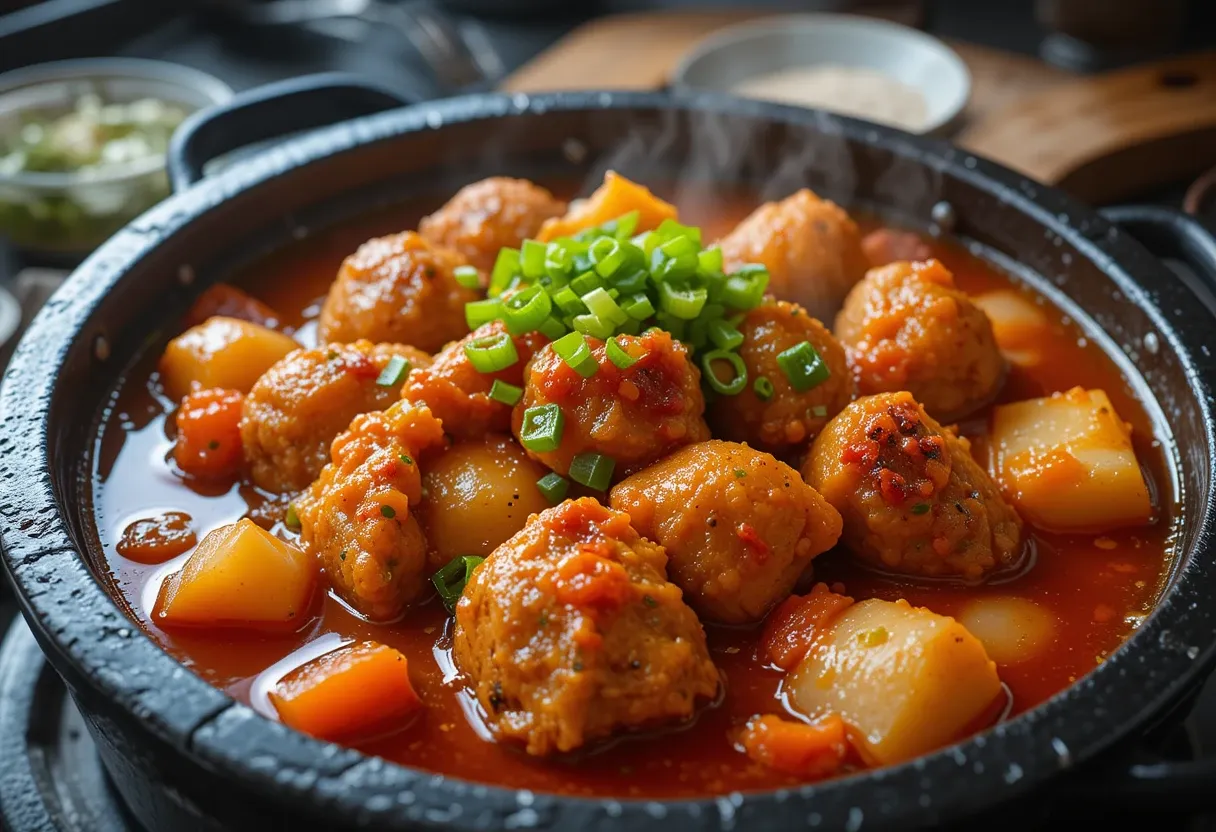
Korean Chicken Stew – A Hearty & Flavorful Comfort Dish
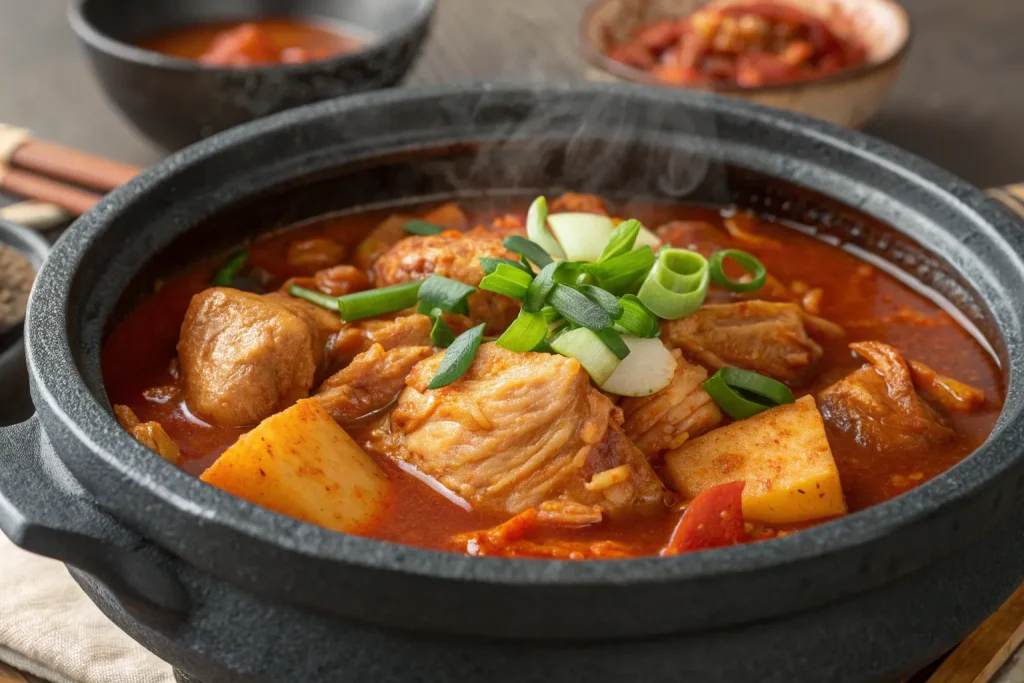
Korean Chicken Stew, also known as Dakdoritang or Dakbokkeumtang, is a rich, spicy, and deeply comforting dish made with chicken, potatoes, carrots, onions, and gochujang (Korean chili paste). This hearty stew is simmered to perfection, creating tender chicken and vegetables infused with bold flavors. It’s a one-pot wonder that’s perfect for family dinners, cold weather, or when you’re craving a wholesome, flavor-packed meal.
Why You’ll Love This Recipe
This stew brings together the warmth of a slow-simmered dish with the unique flavors of Korean cuisine. It’s both bold and cozy, perfect for a main dish that satisfies everyone at the table.
- Balanced flavors: spicy, savory, slightly sweet.
- One-pot recipe = less cleanup.
- Nutritious and hearty.
- Great for family meals or meal prep.
Nutritional Information
Korean Chicken Stew is filling yet wholesome, with lean protein from the chicken and plenty of fiber-rich vegetables. It’s also naturally gluten-free when using gluten-free gochujang.
- Calories: 320
- Protein: 26g
- Carbohydrates: 22g
- Fat: 14g
- Fiber: 4g
- Vitamin A: 80% DV
- Vitamin C: 45% DV
Time Breakdown
Despite its rich flavor, this recipe comes together fairly quickly. The prep is simple, and most of the cooking time is hands-off, allowing the stew to simmer and build depth naturally.
- Prep Time: 15 minutes
- Cook Time: 40 minutes
- Total Time: ~55 minutes
Ingredients You’ll Need
The ingredients for this stew are simple yet flavorful, combining everyday staples with Korean essentials like gochujang. Together, they create a rich, savory base with a satisfying spicy kick.
- 1 ½ lbs chicken (bone-in thighs or drumsticks)
- 2 medium potatoes, peeled & cubed
- 2 carrots, chopped
- 1 onion, sliced
- 3 cups water or chicken broth
- 2 tbsp gochujang (Korean chili paste)
- 1 tbsp gochugaru (Korean chili flakes, optional for extra heat)
- 2 tbsp soy sauce
- 1 tbsp sesame oil
- 3 cloves garlic, minced
- 1 tsp ginger, grated
- 1 green onion, chopped (for garnish)
- Sesame seeds, for garnish
Condensed Grocery Checklist
To make shopping stress-free, here’s a quick list of everything you’ll need. Having these ingredients on hand makes it easy to whip up this cozy stew whenever the craving strikes.
- Chicken (thighs or drumsticks)
- Potatoes
- Carrots
- Onion
- Garlic & ginger
- Gochujang (Korean chili paste)
- Soy sauce
- Sesame oil
- Optional: gochugaru, green onion, sesame seeds
How to Make – Step by Step
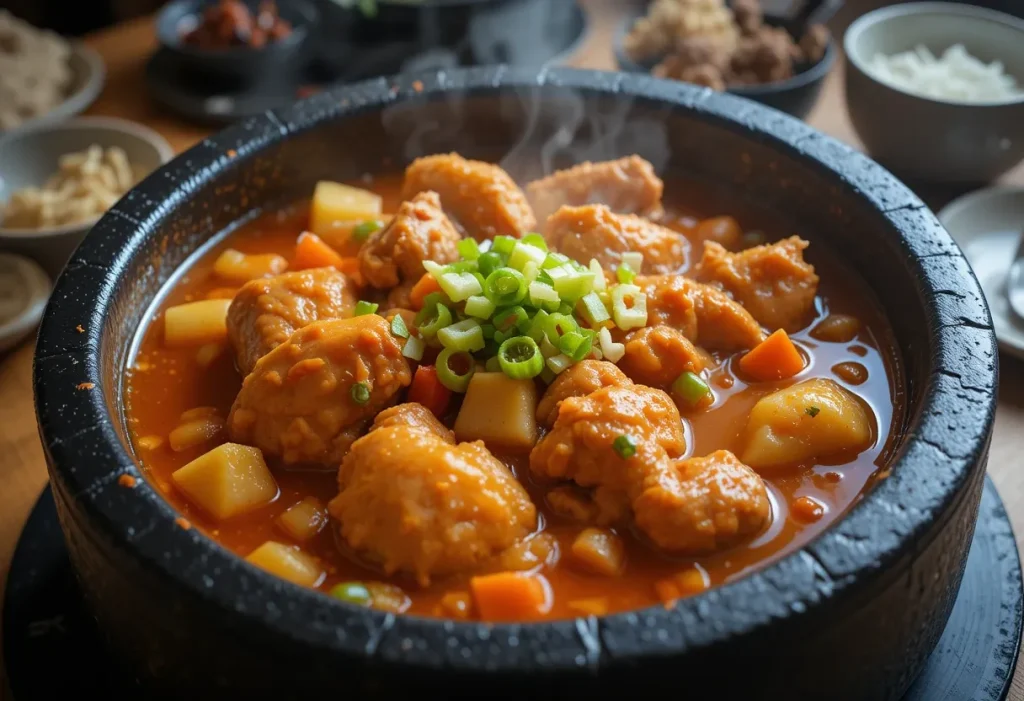
The cooking process is straightforward, with each step designed to build layers of flavor. From sautéing aromatics to simmering chicken and vegetables, every step enhances the final dish.
- In a pot, heat sesame oil and sauté garlic, ginger, and onion until fragrant.
- Add chicken pieces and brown lightly.
- Stir in gochujang, soy sauce, and chili flakes (if using).
- Pour in water or chicken broth, then add potatoes and carrots.
- Bring to a boil, then lower heat and simmer for 30–35 minutes until chicken is cooked and vegetables are tender.
- Garnish with chopped green onions and sesame seeds before serving.
Ingredient Swaps & Variations
This stew is versatile and easy to customize to suit your preferences. Whether you want it spicier, milder, or loaded with extra vegetables, there are plenty of ways to adapt it.
- Swap chicken thighs for chicken breast (less juicy but leaner).
- Use sweet potatoes instead of regular potatoes for extra sweetness.
- Add mushrooms, zucchini, or daikon radish for more veggies.
- Make it less spicy by reducing gochujang and omitting gochugaru.
- Add rice cakes (tteok) for a heartier version.
Serving Suggestions
Korean Chicken Stew is best enjoyed with simple sides that balance its bold flavor. From a bowl of warm rice to tangy kimchi, these pairings help make it a complete meal.
- Serve with steamed white rice or brown rice.
- Pair with kimchi for extra tang.
- Add a side of cucumber salad (Oi Muchim) for freshness.
- Serve with Korean pickled radish (danmuji) for crunch.
Storing Tips
Like many stews, this dish tastes even better the next day as the flavors deepen. With proper storage, it reheats beautifully and is perfect for meal prep or make-ahead dinners.
- Store leftovers in an airtight container in the fridge for up to 3–4 days.
- Reheat gently on the stovetop, adding a splash of broth if too thick.
- Freeze for up to 2 months; thaw overnight before reheating.
Chef’s Special Tips
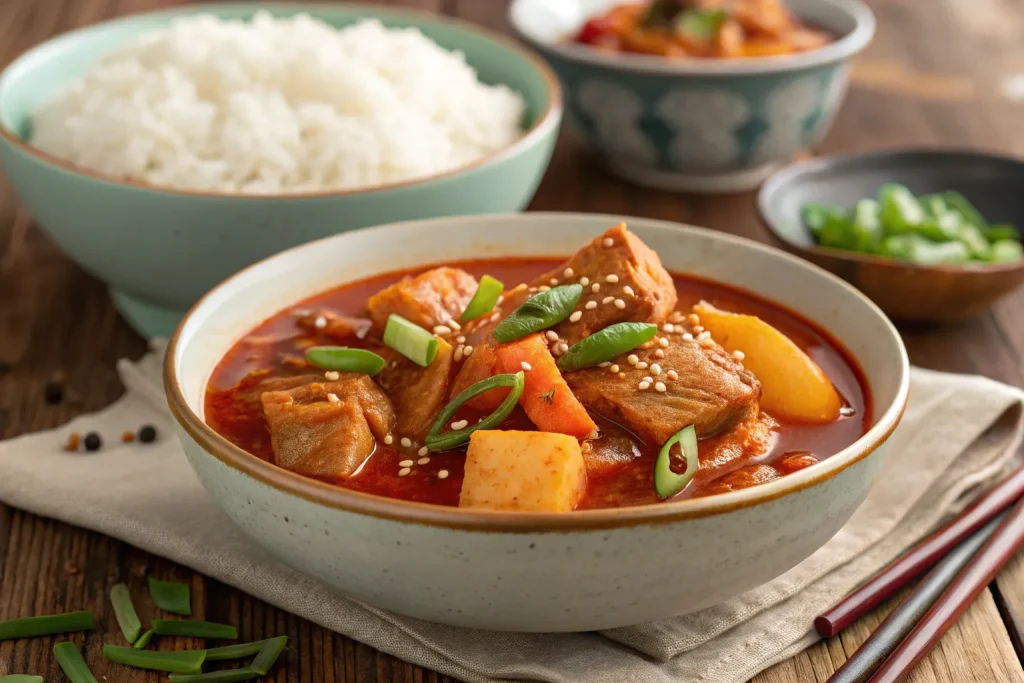
A few small details can take this dish to the next level. From browning the chicken to adjusting spice levels, these chef’s tips will help you achieve the perfect stew every time.
- Brown the chicken before simmering for a deeper flavor.
- Adjust spice level by adding or reducing gochujang.
- Use chicken on the bone for maximum richness.
- Skim any excess fat from the surface for a cleaner broth.
Conclusion
This Korean Chicken Stew (Dakdoritang) is hearty, flavorful, and perfect for bringing comfort to your table. Packed with tender chicken, vegetables, and the bold taste of Korean spices, it’s an easy one-pot dish that’s sure to become a family favorite. Serve it with rice, enjoy it with loved ones, and let it warm you from the inside out.