
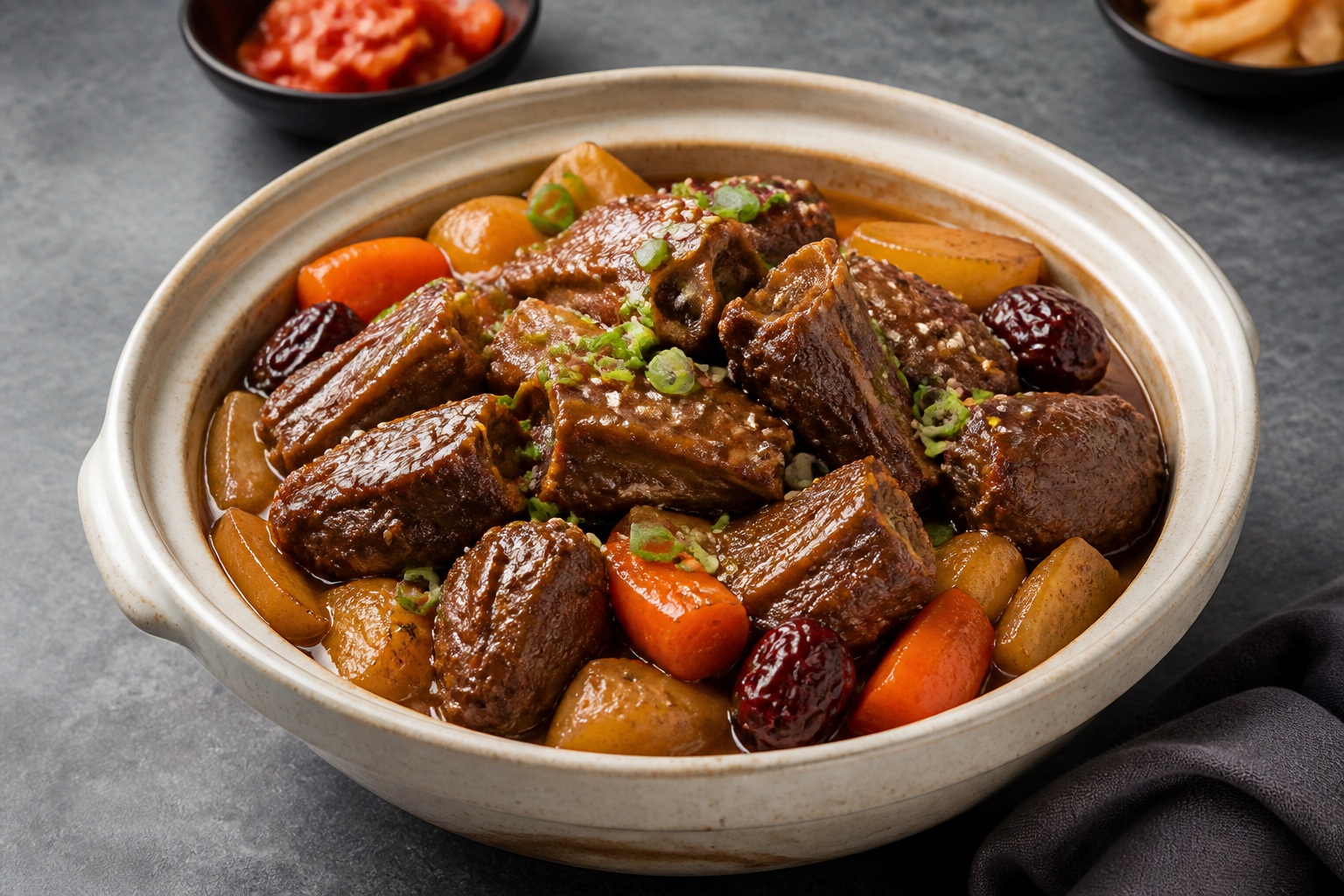
Korean Braised Short Ribs (Galbi Jjim)
Galbi jjim is the kind of dish that makes the whole house smell amazing. Meaty short ribs simmer in a sweet-savory sauce until they’re fall-off-the-bone tender, with vegetables that soak up every drop of flavor. It’s festive enough for holidays but cozy enough for a quiet weekend dinner.
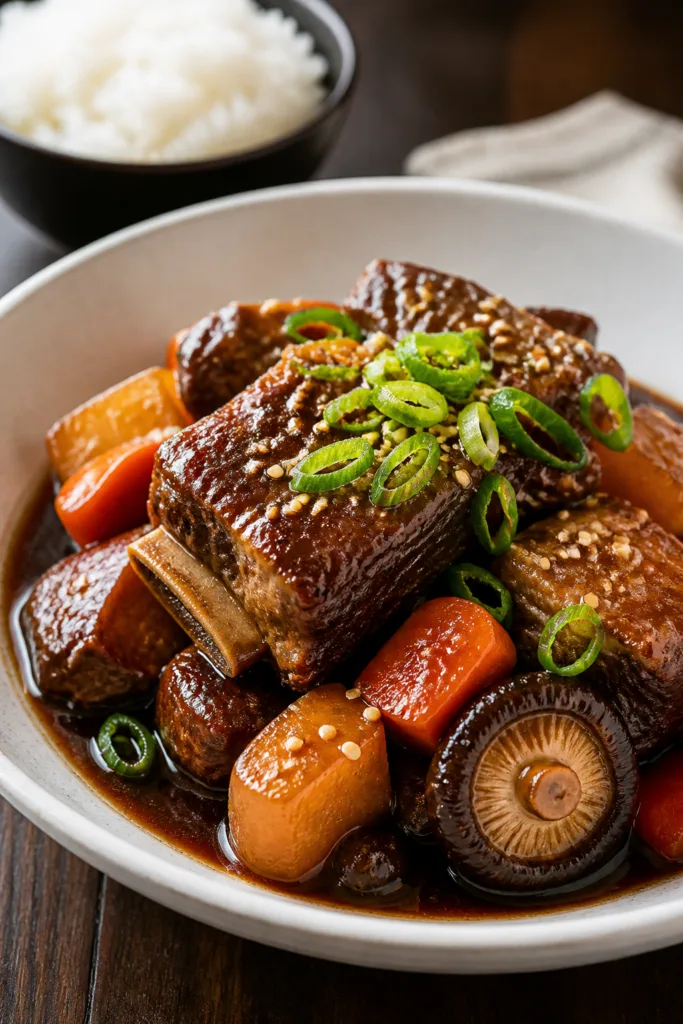
If you’ve never tried making it at home, don’t worry it’s straightforward and incredibly rewarding. One pot, low heat, and a little patience are all you need.
What Makes This Recipe So Good
- Deep flavor with simple steps: The short ribs simmer low and slow in a soy-based sauce that builds layer after layer of richness.
- Tender, buttery texture: Braising breaks down the meat so it’s spoon-tender without drying out.
- Balanced sweet-salty-sesame profile: Pear and brown sugar add gentle sweetness that rounds out the savory soy and aromatics.
- One-pot comfort: Everything cooks together, so cleanup is easy and the flavors mingle beautifully.
- Great for make-ahead: Tastes even better the next day, and reheats like a dream.
What You’ll Need
- 3 to 3.5 pounds beef short ribs (English-cut, bone-in)
- 1 large Korean or Asian pear (or Bosc pear), peeled and grated
- 1 small yellow onion, grated or finely minced
- 6 cloves garlic, minced
- 1-inch piece ginger, grated
- 3/4 cup soy sauce (regular, not low-sodium unless preferred)
- 1/4 cup brown sugar
- 2 tablespoons honey
- 1/2 cup mirin (or cooking sake; sub apple juice if needed)
- 1 to 1.5 cups water or unsalted beef stock
- 2 tablespoons toasted sesame oil
- Freshly ground black pepper, to taste
- 2 medium carrots, cut into large chunks
- 1 medium daikon radish or 2 potatoes, peeled and cut into chunks
- 6 to 8 dried jujubes (Korean dates) (optional)
- 6 to 8 shiitake mushrooms, stems removed (fresh or soaked dried)
- 2 to 3 scallions, sliced
- 1 tablespoon toasted sesame seeds, for garnish
How to Make It
- Prep the ribs: Soak the short ribs in cold water for 20 to 30 minutes to draw out excess blood. Rinse and pat dry.
- Parboil (optional but recommended): Cover ribs with water in a pot, bring to a boil for 5 minutes, then drain and rinse.This helps create a cleaner, clearer sauce.
- Make the braising sauce: In a bowl, combine pear, onion, garlic, ginger, soy sauce, brown sugar, honey, mirin, sesame oil, a few grinds of black pepper, and 1 cup water or stock. Stir well.
- Sear for extra flavor: Heat a heavy pot or Dutch oven over medium-high. Lightly oil the pot and sear ribs on all sides until browned.Work in batches to avoid steaming.
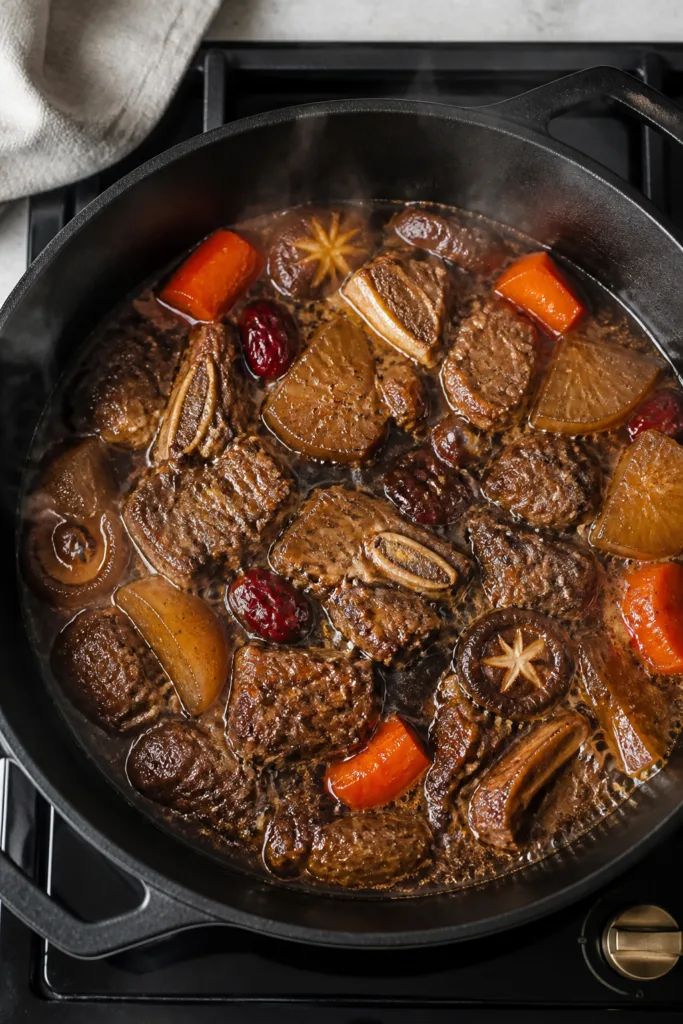
- Add sauce and simmer: Return all ribs to the pot. Pour in the sauce. Liquid should come about two-thirds up the ribs; add more water if needed.Bring to a gentle boil, then reduce to low, cover, and simmer 1 hour.
- Add vegetables: Stir in carrots, daikon or potatoes, jujubes, and mushrooms. Cover and continue to simmer 30 to 45 minutes, until ribs are very tender and vegetables are soft but not falling apart.
- Adjust and thicken: If the sauce is too thin, uncover and simmer 10 to 15 minutes to reduce. If too salty, add a splash of water or a pinch more sugar to balance.
- Finish and garnish: Skim excess fat if desired.Taste and adjust seasoning. Top with scallions and sesame seeds. Serve hot with steamed rice.
Keeping It Fresh
- Fridge: Store in an airtight container for up to 4 days.The flavors deepen overnight.
- Freeze: Cool completely, then freeze in portions for up to 2 months. Thaw in the fridge and reheat gently on the stove.
- Fat cap tip: Chill, then lift off the solidified fat for a cleaner, lighter sauce when reheating.
Why This Is Good for You
- Protein-rich: Short ribs provide iron, zinc, and B vitamins, which support energy and immunity.
- Collagen boost: Slow braising breaks down connective tissue, adding body to the sauce and a satisfying mouthfeel.
- Whole ingredients: Pear, garlic, ginger, and mushrooms bring antioxidants and natural sweetness, reducing the need for heavy additives.
Common Mistakes to Avoid
- Rushing the braise: Tough meat is a sign it needs more time, not higher heat. Keep it low and slow.
- Skipping the soak or parboil: This can leave the broth cloudy and overly rich.A quick rinse makes a difference.
- Crowding the sear: Overloading the pot steams the ribs. Brown in batches for deeper flavor.
- Overcooking vegetables: Add them after the first hour so they keep their shape.
- Not balancing salt and sweetness: Taste at the end. A splash of water, extra pear, or a pinch of sugar can smooth sharp edges.
Alternatives
- Protein swaps: Try bone-in beef chuck short rib alternatives, beef shank, or even oxtail for a richer gelled sauce.
- Fruit options: Use apple if you can’t find Asian pear.A small amount of pineapple works, but don’t overdo it or the meat can get mushy.
- Low-sodium version: Use low-sodium soy and adjust sugar and salt at the end.
- No alcohol: Replace mirin with apple juice plus a tiny splash of rice vinegar.
- Vegetable add-ins: Chestnuts, lotus root, or sweet potato bring great texture and sweetness.
FAQ
Do I need a Dutch oven?
A heavy pot helps maintain steady heat, but any deep pot with a tight lid works. You can also use a slow cooker after searing; cook on low for 6 to 8 hours.
Can I make this in advance?
Yes. In fact, it’s better the next day. Reheat gently and skim any fat for a cleaner taste.
How do I know the ribs are done?
The meat should be very tender and pull away from the bone with little resistance. If it’s still chewy, keep simmering.
Is it okay to use boneless short ribs?
You can, but bones add flavor and body to the sauce. If using boneless, consider adding a bit of beef stock for depth.
What should I serve with galbi jjim?
Steamed short-grain rice, kimchi, and simple greens like blanched spinach or a crisp salad balance the richness.
In Conclusion
Galbi jjim is comfort food with polish: tender beef, glossy sauce, and vegetables that taste like they’ve been hugged by flavor. It’s simple to make, satisfying to eat, and perfect for sharing. Once you try it at home, it might become your go-to special meal no reservation needed.