
Kalguksu Knife Cut Noodle Soup – Comforting, Hand-Cut Noodles in a Savory Broth
Kalguksu is the kind of bowl you crave on a chilly day: soft, hand-cut wheat noodles swimming in a clean, savory broth with tender vegetables. It’s simple, cozy, and full of texture. The noodles are the star bouncy, slightly chewy, and deeply satisfying.
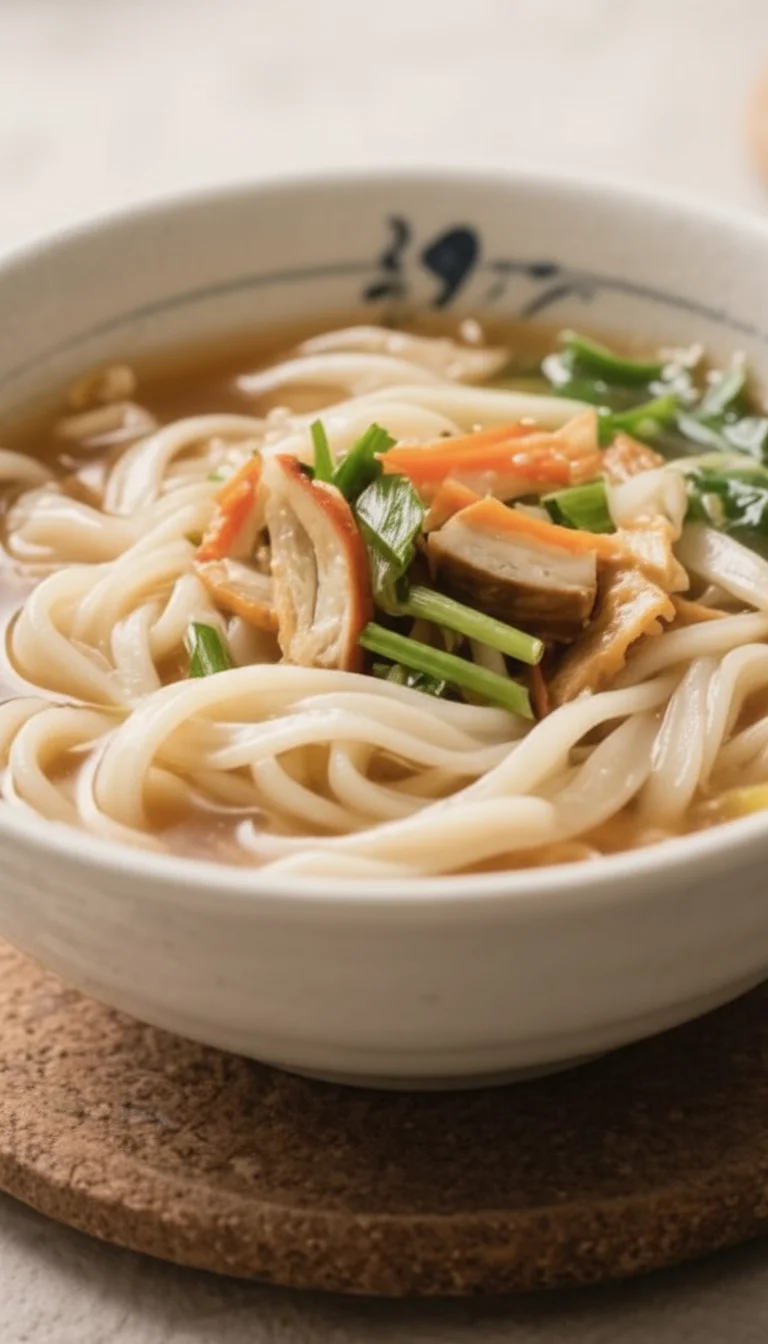
You don’t need a fancy setup to make it, just a rolling pin, a sharp knife, and a pot. If you love comfort food that feels homemade, this soup belongs in your rotation.
Why This Recipe Works
- Hand-cut noodles = better texture. Rolling and slicing the dough makes wide, rustic noodles that hold broth beautifully.
- Light, flavorful broth. Anchovy-kelp stock builds a clean base without heaviness. Chicken or vegetable broth works too.
- Quick-cooking veggies. Zucchini and potato soften fast and add body to the soup.
- Simple pantry dough. Flour, salt, and water—no eggs needed—for a tender, elastic noodle.
- Balanced seasoning. A touch of garlic, soy sauce, and sesame oil rounds out the flavor without overpowering it.
What You’ll Need
- For the broth:
- 8 cups water
- 8-10 dried anchovies (heads and guts removed) and 1 piece dried kelp (kombu), about 4×4 inches
- 1 small onion, halved
- 3 cloves garlic, smashed
- 1 teaspoon kosher salt, plus more to taste
- 1 tablespoon soy sauce (light or regular)
- For the noodles:
- 2 1/2 cups all-purpose flour, plus more for dusting
- 1/2 teaspoon kosher salt
- 3/4 cup hot water (almost boiling), plus 1-2 tablespoons more as needed
- 1 teaspoon neutral oil (optional, for easier kneading)
- Veggies and add-ins:
- 1 medium potato, peeled and sliced into thin matchsticks
- 1 small zucchini, cut into thin matchsticks
- 1/2 cup napa cabbage or regular cabbage, thinly sliced (optional)
- 2 green onions, thinly sliced
- 1/2 teaspoon sesame oil
- Freshly ground black pepper
- To serve (optional):
- Gim (roasted seaweed), torn
- Chopped chives or extra scallions
- Kimchi on the side
How to Make It
- Make the broth. Add water, anchovies, kelp, onion, and garlic to a pot.Bring to a gentle boil, then simmer 15 minutes. Remove kelp at 10 minutes to avoid bitterness. Strain and return the clear broth to the pot.Season with salt and soy sauce.
- Mix the dough. In a bowl, combine flour and salt. Pour in hot water and stir with chopsticks or a fork until shaggy. Add oil if using.Knead 5-7 minutes until smooth and elastic, adding a sprinkle of water if dry.
- Rest the dough. Wrap or cover and let it rest 20-30 minutes. This relaxes gluten and makes rolling easier.
- Prep vegetables. Julienne the potato and zucchini. Slice the cabbage and green onions.Keep them ready by the stove.
- Roll and fold. Dust your surface and rolling pin. Roll the dough into a large, thin sheet, about 1/16-1/8 inch thick. Dust lightly with flour, then fold the sheet into thirds like a letter.
- Slice the noodles. Using a sharp knife, cut the folded dough into 1/4-inch wide strips.Unfurl and toss with a little flour to prevent sticking. Aim for rustic, not perfect.
- Cook the veggies. Bring the broth back to a boil. Add potato and cabbage, simmer 3-4 minutes until starting to soften.
- Cook the noodles. Shake off excess flour and add noodles to the pot, gently stirring to separate.Simmer 3-4 minutes until tender but springy.
- Finish the soup. Stir in zucchini and green onions. Cook 1-2 minutes more. Add sesame oil and a few grinds of black pepper.Taste and adjust salt or soy.
- Serve hot. Ladle into bowls. Top with torn gim and extra scallions if you like. Enjoy with kimchi on the side.
Keeping It Fresh
- Same-day is best. The noodles keep their bounce right after cooking.
- Storing leftovers: Cool completely, then refrigerate up to 2 days.The noodles will soften in broth but still taste great.
- Freezing: Freeze raw, cut noodles on a floured tray, then bag for up to 1 month. Cook from frozen directly in boiling broth.
- Reheating: Warm gently over medium heat. Add a splash of water or broth to loosen.
Benefits of This Recipe
- Comforting and light. Satisfying without being heavy or greasy.
- Budget-friendly. Basic pantry dough and simple vegetables.
- Customizable. Easy to adapt for dietary needs or what you have on hand.
- Hands-on and relaxing. Making noodles is therapeutic and fun.
What Not to Do
- Don’t overcook the noodles. They turn mushy fast.Taste early.
- Don’t skip resting the dough. Tight dough is hard to roll and cuts unevenly.
- Don’t leave kelp in too long. It can make the broth bitter.
- Don’t overcrowd the pot. The noodles need space to move and cook evenly.
Variations You Can Try
- Chicken kalguksu: Use chicken stock and add shredded cooked chicken at the end.
- Seafood version: Add clams or mussels in the last 5 minutes for briny sweetness.
- Spicy kalguksu: Stir in a spoon of gochujang or a sprinkle of gochugaru to the broth.
- Veggie-heavy: Add mushrooms, corn, or spinach for more texture and color.
- Gluten-free hack: Use fresh rice cakes (tteok) instead of noodles, or try a sturdy gluten-free flour blend for hand-cut noodles.
FAQ
Can I use store-bought noodles?
Yes. Fresh knife-cut wheat noodles or thick udon are good substitutes. Adjust cooking time based on the package.
What if I can’t find anchovies and kelp?
Use low-sodium chicken or vegetable broth. Add a splash of fish sauce for depth if you have it.
How thin should I roll the dough?
Aim for about 1/16-1/8 inch. Thinner gives a delicate bite; thicker feels heartier. Keep them even so they cook uniformly.
Why use hot water in the dough?
Hot water relaxes the gluten, making the dough softer and easier to roll, with a tender chew.
Can I make the dough ahead?
Yes. Wrap tightly and refrigerate up to 24 hours. Bring to room temperature before rolling.
How do I keep noodles from sticking?
Dust lightly with flour after slicing and give them a gentle toss. Shake off excess flour before cooking to avoid cloudy broth.
Final Thoughts
Kalguksu is proof that a few simple ingredients can make a deeply comforting meal. The hand-cut noodles add a homemade touch you can taste in every bite. Keep the broth clean, cook the noodles just right, and finish with fresh veggies. It’s warm, honest food—perfect for slow evenings and second helpings.
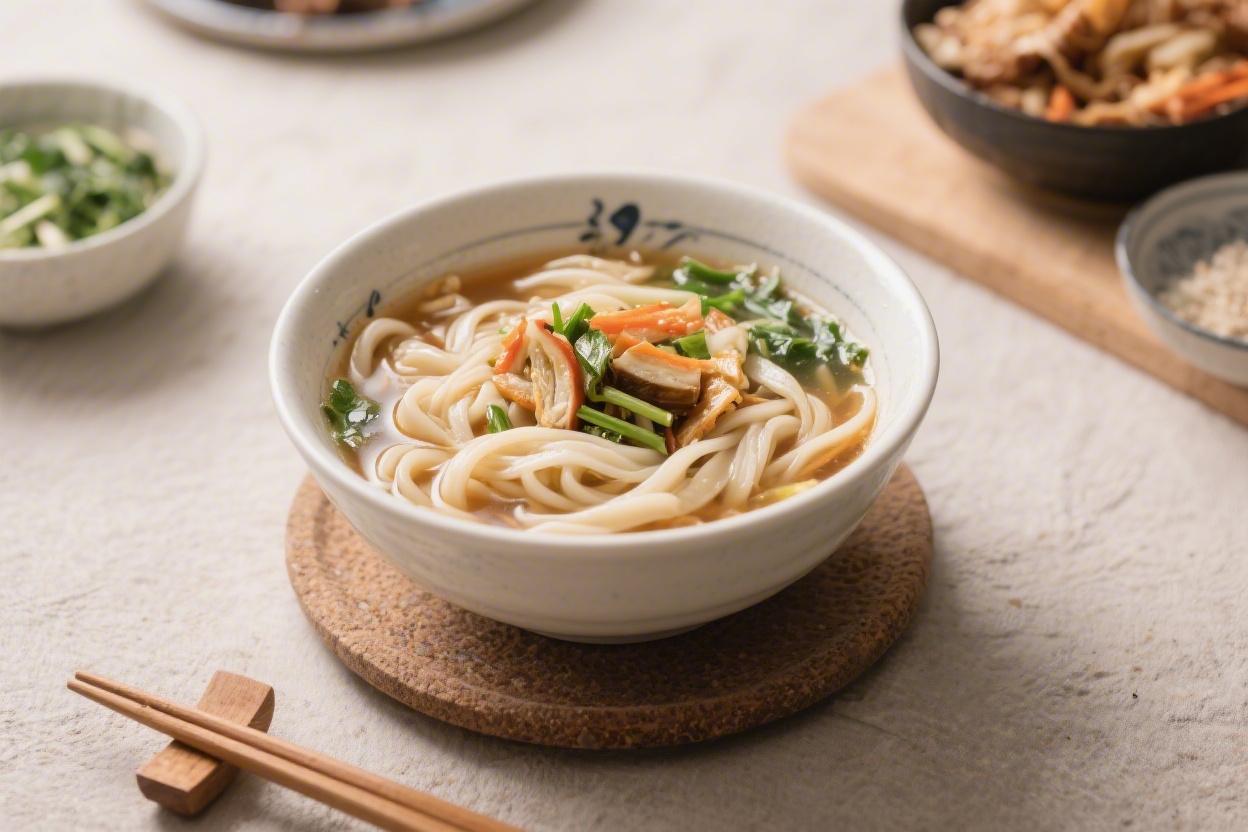
Kalguksu Knife Cut Noodle Soup - Comforting, Hand-Cut Noodles in a Savory Broth
Ingredients
Method
- Make the broth. Add water, anchovies, kelp, onion, and garlic to a pot. Bring to a gentle boil, then simmer 15 minutes. Remove kelp at 10 minutes to avoid bitterness. Strain and return the clear broth to the pot. Season with salt and soy sauce.
- Mix the dough. In a bowl, combine flour and salt. Pour in hot water and stir with chopsticks or a fork until shaggy. Add oil if using. Knead 5-7 minutes until smooth and elastic, adding a sprinkle of water if dry.
- Rest the dough. Wrap or cover and let it rest 20-30 minutes. This relaxes gluten and makes rolling easier.
- Prep vegetables. Julienne the potato and zucchini. Slice the cabbage and green onions. Keep them ready by the stove.
- Roll and fold. Dust your surface and rolling pin. Roll the dough into a large, thin sheet, about 1/16-1/8 inch thick. Dust lightly with flour, then fold the sheet into thirds like a letter.
- Slice the noodles. Using a sharp knife, cut the folded dough into 1/4-inch wide strips. Unfurl and toss with a little flour to prevent sticking. Aim for rustic, not perfect.
- Cook the veggies. Bring the broth back to a boil. Add potato and cabbage, simmer 3-4 minutes until starting to soften.
- Cook the noodles. Shake off excess flour and add noodles to the pot, gently stirring to separate. Simmer 3-4 minutes until tender but springy.
- Finish the soup. Stir in zucchini and green onions. Cook 1-2 minutes more. Add sesame oil and a few grinds of black pepper. Taste and adjust salt or soy.
- Serve hot. Ladle into bowls. Top with torn gim and extra scallions if you like. Enjoy with kimchi on the side.
Printable Recipe Card
Want just the essential recipe details without scrolling through the article? Get our printable recipe card with just the ingredients and instructions.