
Jjamppong Spicy Seafood Noodle Soup
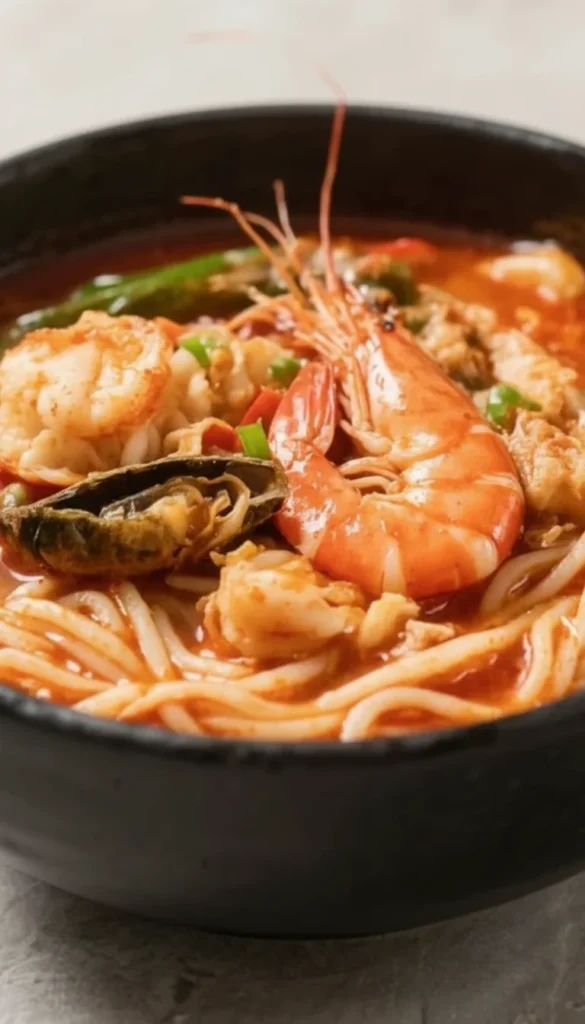
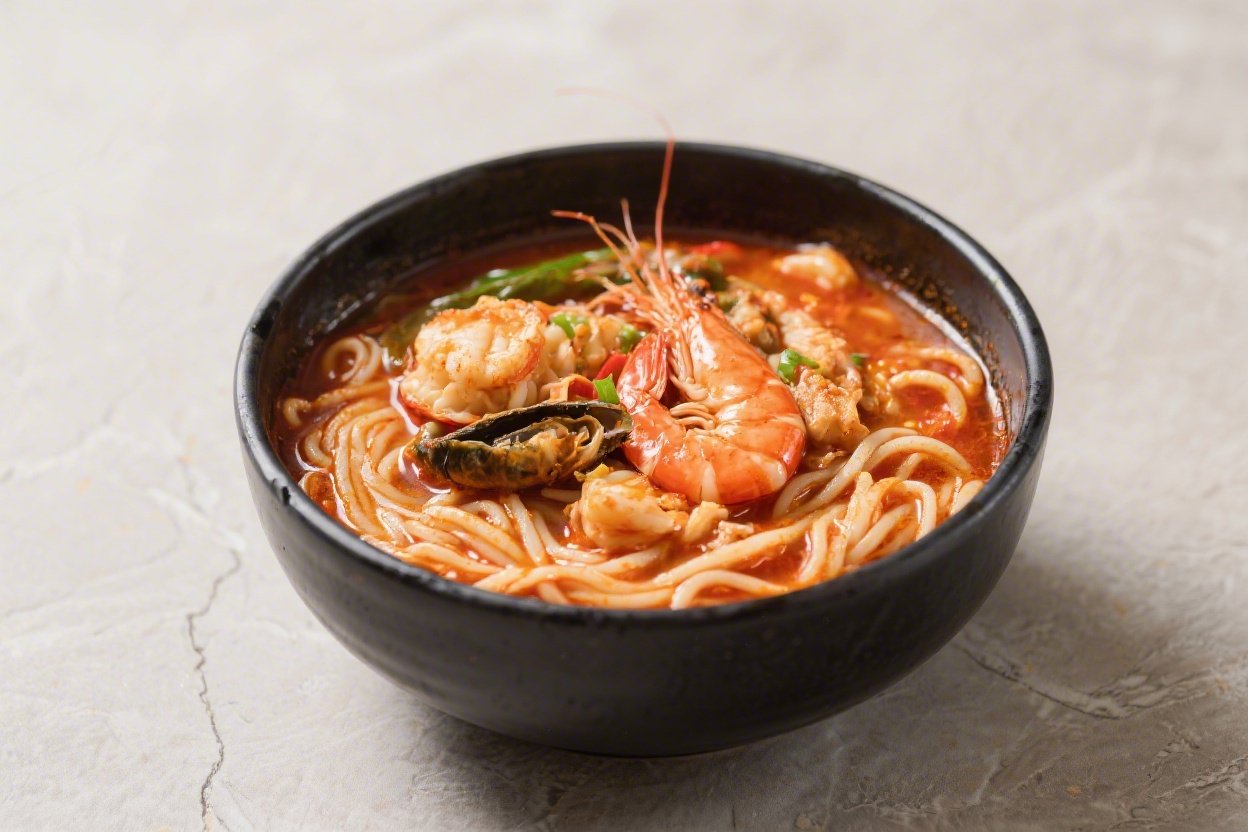
If you’re craving a bowl of something rich, spicy, and deeply satisfying, jjamppong hits the spot. This Korean-Chinese classic combines chewy noodles, mixed seafood, and fiery broth in a way that feels both hearty and fresh. It’s the kind of soup that warms you up fast and wakes up your taste buds.
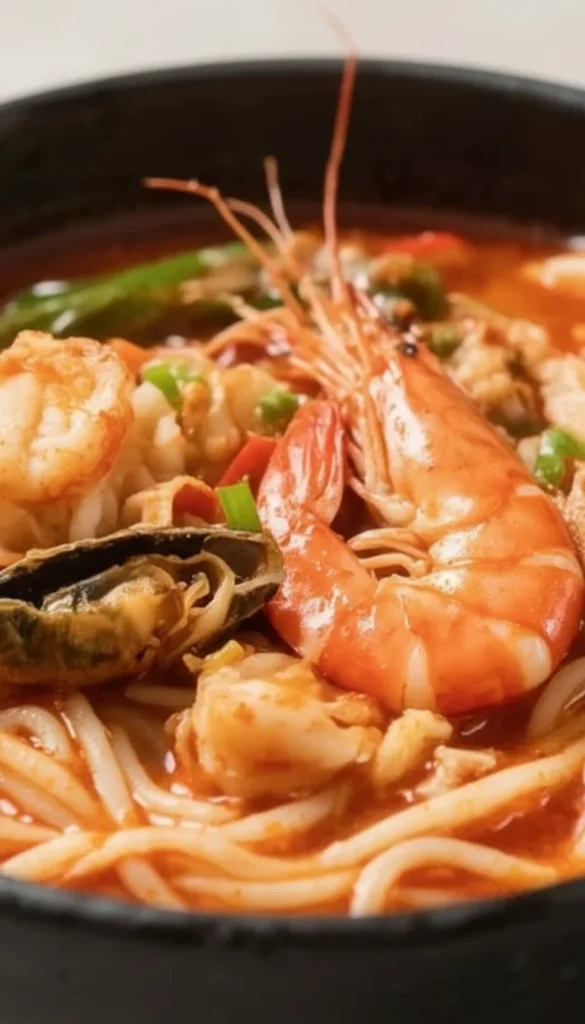
Better yet, it’s surprisingly simple to make at home with a few key ingredients. Once you try it, you’ll want it in your regular rotation.
What Makes This Recipe So Good
- Bold, layered flavor: Chili oil, garlic, and gochugaru create a deep, spicy base that’s not just hot—it’s flavorful.
- Loads of texture: Tender noodles, crunchy vegetables, and juicy seafood make every bite interesting.
- Weeknight-friendly: With prepped ingredients, it comes together in about 30 minutes.
- Flexible: Use whatever seafood you have shrimp, squid, clams, or mussels all work well.
- Comfort with a kick: It’s cozy like a noodle soup, but with a bright, spicy edge.
Ingredients
- Noodles: 12 oz fresh wheat noodles (jjajangmyeon or udon-style) or dried ramen
- Seafood mix: 8–10 oz total (shrimp, squid, mussels, clams, or a frozen seafood medley)
- Pork (optional): 4–6 oz thinly sliced pork belly or shoulder
- 1 small onion, sliced
- 1 cup Napa cabbage, chopped
- 1 small carrot, julienned
- 1 cup mushrooms (shiitake or oyster), sliced
- 1 small zucchini, matchsticks (optional)
- 2 green onions, sliced (white and green parts separated)
- 3–4 cloves garlic, minced
- 1 tsp fresh ginger, minced
- Chili base: 2 tbsp neutral oil + 1–2 tbsp Korean chili flakes (gochugaru)
- 1 tbsp gochujang (optional, for body)
- 1 tbsp soy sauce
- 1 tbsp oyster sauce (optional)
- 6 cups chicken stock or anchovy-kelp broth
- 1 tsp sugar (balances the heat)
- 1–2 tsp sesame oil
- Salt and black pepper to taste
Step-by-Step Instructions
- Prep the seafood. Rinse and pat dry. If using mussels or clams, scrub and debeard.Slice squid into rings. Season lightly with salt and pepper.
- Cook the noodles. Boil according to package directions until just shy of done. Rinse briefly to stop cooking.Drain and set aside.
- Make the chili oil base. Heat neutral oil in a large pot over medium. Add gochugaru and stir for 20–30 seconds until fragrant. Don’t burn it.
- Build the aromatics. Add garlic, ginger, and the white parts of the green onions.Stir 30 seconds. Add onion and cook until slightly softened.
- Add pork (if using). Stir-fry until no longer pink. This adds richness and depth to the broth.
- Stir in the vegetables. Add cabbage, carrot, mushrooms, and zucchini.Cook 2–3 minutes until just starting to soften.
- Season the base. Add soy sauce, oyster sauce, gochujang (if using), and sugar. Stir well to coat everything.
- Pour in the broth. Add 6 cups stock and bring to a rolling boil. Taste and adjust salt and pepper.
- Add the seafood. Drop in shrimp and squid first; simmer 1–2 minutes.Add mussels or clams and cook until shells open. Don’t overcook.
- Finish the soup. Stir in sesame oil and the green parts of the green onions. The broth should be bright red and aromatic.
- Assemble. Portion noodles into bowls.Ladle the hot soup and seafood over the noodles. Serve immediately.
Keeping It Fresh
- Store broth and noodles separately. Noodles left in broth get soggy fast.
- Refrigeration: Keep broth and seafood up to 2 days in an airtight container.
- Reheat gently. Simmer the broth; add noodles just before serving to warm through.
- Freeze the broth only. Seafood and veggies don’t freeze well; make those fresh when ready to eat.
Benefits of This Recipe
- High-protein and nutrient-rich: Seafood brings lean protein, omega-3s, and minerals.
- Vegetable-packed: Cabbage, mushrooms, and carrots add fiber and vitamins.
- Customizable heat: Adjust gochugaru and gochujang to fit your spice level.
- Restaurant-level flavor at home: No special equipment needed.
Common Mistakes to Avoid
- Burning the chili flakes. If they turn too dark, the broth tastes bitter. Keep heat moderate.
- Overcooking seafood. Add in stages and pull off heat once shrimp are pink and shells have opened.
- Boiling noodles in the soup. This clouds the broth and overcooks noodles.
- Skipping seasoning checks. Taste at each stage especially after adding broth.
Alternatives
- Protein swap: Use chicken thigh or firm tofu instead of pork or seafood.
- Vegetarian version: Use veggie stock, extra mushrooms, tofu, and a splash of kombu-soy for depth.
- Noodle options: Udon, ramen, or thick wheat noodles all work.Even rice noodles in a pinch.
- Mild version: Halve the gochugaru and skip gochujang. Add more soy and a touch of vinegar for balance.
- Extra smoky: Add a small pinch of smoked paprika alongside gochugaru.
FAQ
How spicy is jjamppong?
It’s typically medium-hot, but you control the heat. Use less gochugaru for a gentler broth or add more for a fiery kick.
Can I make it ahead?
Yes, make the broth ahead and keep noodles separate. Reheat the broth and add fresh or reheated noodles right before serving.
What if I don’t have gochugaru?
Use a mix of mild chili flakes and a bit of cayenne. Taste as you go—cayenne is hotter and less fragrant.
Which seafood works best?
Shrimp and squid are classic, with clams or mussels for brininess. A frozen seafood mix is fine for convenience.
Can I reduce the sodium?
Use low-sodium stock and season lightly with soy sauce. Add brightness with a splash of rice vinegar or a squeeze of lime instead of extra salt.
In Conclusion
Jjamppong is bold, comforting, and easier to make than it looks. With a spicy, fragrant broth and plenty of seafood and vegetables, it delivers big flavor in a single bowl. Keep the noodles separate, watch the heat, and don’t overcook the seafood. Once you nail the basics, you can tweak it to suit your taste and make it your own.
Ingredients
Method
- Prep the seafood. Rinse and pat dry. If using mussels or clams, scrub and debeard. Slice squid into rings. Season lightly with salt and pepper.
- Cook the noodles. Boil according to package directions until just shy of done. Rinse briefly to stop cooking. Drain and set aside.
- Make the chili oil base. Heat neutral oil in a large pot over medium. Add gochugaru and stir for 20–30 seconds until fragrant. Don’t burn it.
- Build the aromatics. Add garlic, ginger, and the white parts of the green onions. Stir 30 seconds. Add onion and cook until slightly softened.
- Add pork (if using). Stir-fry until no longer pink. This adds richness and depth to the broth.
- Stir in the vegetables. Add cabbage, carrot, mushrooms, and zucchini. Cook 2–3 minutes until just starting to soften.
- Season the base. Add soy sauce, oyster sauce, gochujang (if using), and sugar. Stir well to coat everything.
- Pour in the broth. Add 6 cups stock and bring to a rolling boil. Taste and adjust salt and pepper.
- Add the seafood. Drop in shrimp and squid first; simmer 1–2 minutes. Add mussels or clams and cook until shells open. Don’t overcook.
- Finish the soup. Stir in sesame oil and the green parts of the green onions. The broth should be bright red and aromatic.
- Assemble. Portion noodles into bowls. Ladle the hot soup and seafood over the noodles. Serve immediately.
Printable Recipe Card
Want just the essential recipe details without scrolling through the article? Get our printable recipe card with just the ingredients and instructions.