
Jeyuk Bokkeum Spicy Pork Stir Fry
Jeyuk Bokkeum is a fast, fiery Korean stir fry that hits every craving at once: savory, spicy, slightly sweet, and deeply satisfying. Thin-sliced pork cooks quickly and soaks up a gochujang-based sauce that clings to every bite. It’s perfect over a bowl of hot rice with a side of crisp lettuce or kimchi.
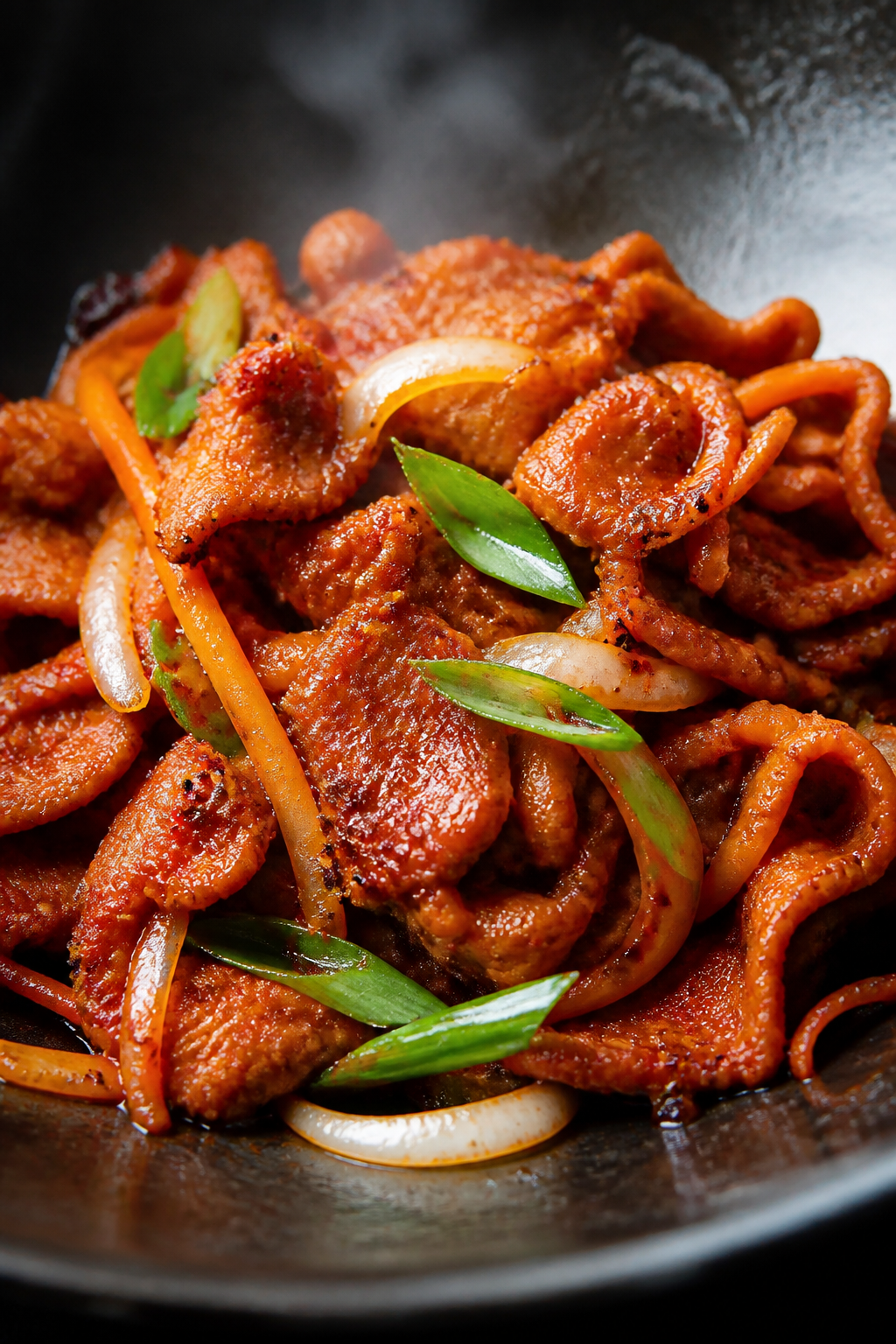
The best part? You can prep the sauce ahead and have dinner ready in under 30 minutes.
Why This Recipe Works
- Marinating boosts flavor fast: A short marinade with gochujang, soy sauce, and aromatics penetrates thin pork slices quickly.
- High heat, quick cook: Stir-frying keeps the pork tender while caramelizing the sauce for a smoky, restaurant-style finish.
- Balanced sauce: Gochujang brings heat and depth, gochugaru adds a gentle kick, and a touch of sugar or honey rounds it out.
- Flexible ingredients: You can swap in different cuts of pork or add extra veggies without losing the soul of the dish.
Ingredients
- 1 lb (450 g) thinly sliced pork shoulder or pork belly
- 1 small onion, sliced
- 1 small carrot, julienned (optional)
- 1/2 bell pepper, sliced (optional)
- 2 scallions, cut into 1-inch pieces
- 1–2 tbsp neutral oil (canola or vegetable)
For the marinade/sauce:
- 3 tbsp gochujang (Korean chili paste)
- 1–2 tbsp gochugaru (Korean chili flakes), to taste
- 2 tbsp soy sauce
- 1 tbsp sugar or honey
- 1 tbsp rice wine or mirin
- 1 tbsp sesame oil
- 4 cloves garlic, minced
- 1 tsp grated ginger
- 1–2 tbsp water (to loosen, if needed)
- Optional: 1–2 tsp doenjang (Korean soybean paste) for extra depth
To serve: Steamed short-grain rice, toasted sesame seeds, lettuce leaves, and kimchi
How to Make It
- Slice the pork: If not pre-sliced, place pork in the freezer for 30 minutes to firm up, then slice thinly against the grain.
- Mix the sauce: In a bowl, combine gochujang, gochugaru, soy sauce, sugar, rice wine, sesame oil, garlic, ginger, and water. Add doenjang if using.Adjust spice and sweetness to taste.
- Marinate: Toss pork with the sauce until evenly coated. Marinate 15–30 minutes at room temp (or up to 8 hours in the fridge).
- Prep veggies: Slice onion, carrot, bell pepper, and scallions so everything is ready before cooking.
- Heat the pan: Use a large skillet or wok. Add oil and heat over medium-high until shimmering.
- Stir-fry aromatics and veg: Add onion and carrot first.Cook 2 minutes until slightly softened. Add bell pepper.
- Add the pork: Spread the pork in a single layer. Let it sear for 30–45 seconds before stirring, then cook, stirring often, 4–6 minutes until just cooked through and lightly caramelized.
- Finish with scallions: Toss in scallions and cook 30 seconds.If sauce looks too thick, splash in a tablespoon of water to loosen.
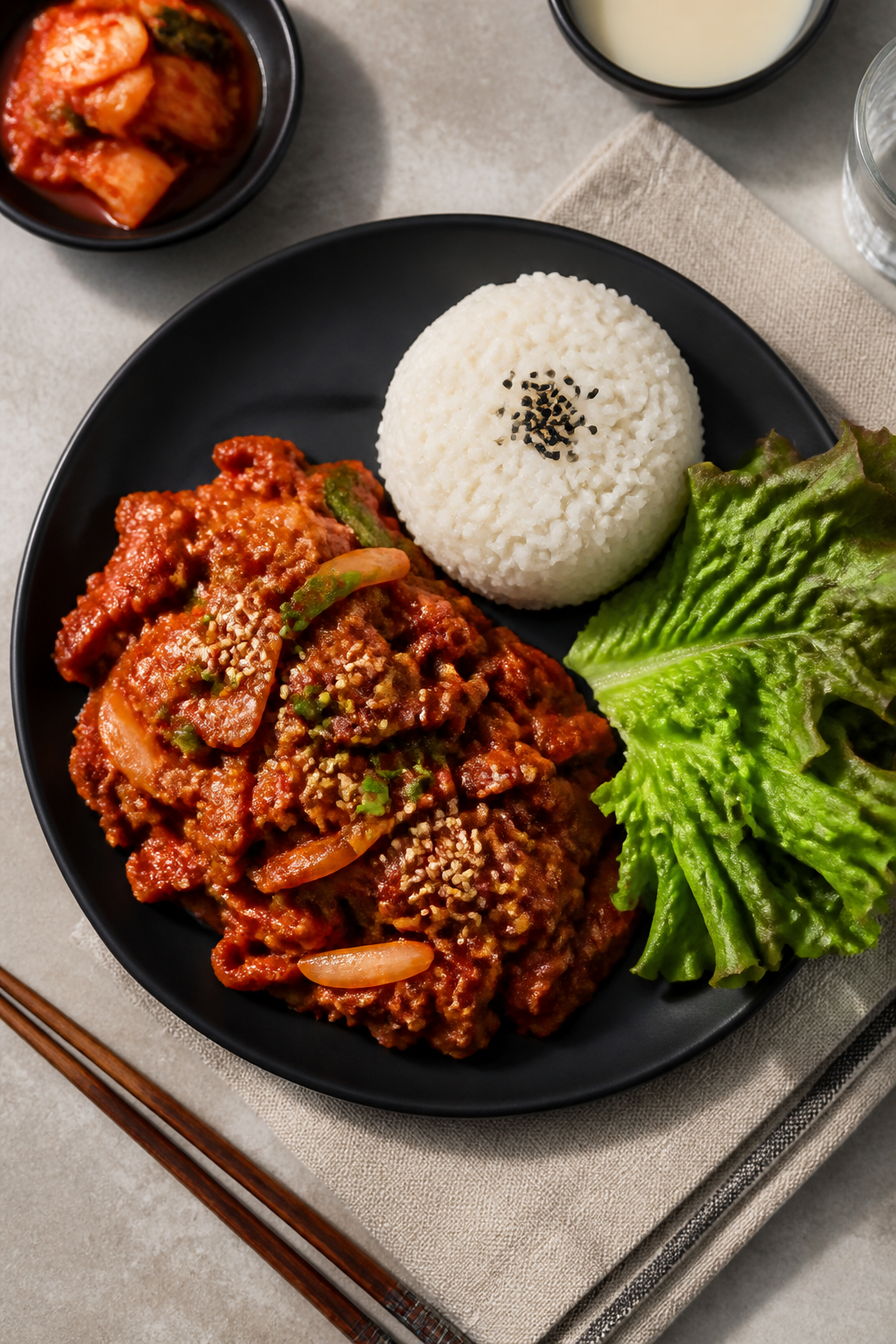
- Serve hot: Sprinkle sesame seeds. Serve with rice, lettuce leaves for wraps, and kimchi on the side.
Keeping It Fresh
- Storage: Refrigerate leftovers in an airtight container for up to 3 days.
- Reheat: Warm gently in a skillet over medium heat with a splash of water to revive the sauce.
- Make-ahead tip: Mix the sauce up to 1 week ahead and keep refrigerated. Marinate the pork the morning you plan to cook.
- Freezing: Freeze raw pork already coated in sauce for up to 2 months.Thaw in the fridge overnight, then stir-fry.
Health Benefits
- Protein-rich: Pork provides high-quality protein for muscle repair and satiety.
- Capsaicin boost: Chili peppers in gochujang and gochugaru may support metabolism and provide antioxidants.
- Balanced meal: Pairing with rice and vegetables offers carbs for energy and fiber for digestion.
- Customizable fat levels: Choose pork shoulder for a leaner option or pork belly for richer flavor, depending on your goals.
Common Mistakes to Avoid
- Overcrowding the pan: Too much pork at once steams instead of sears. Cook in batches if needed.
- Skipping the short sear: Letting the pork sit briefly before stirring encourages caramelization and better flavor.
- Overcooking: Thin slices cook fast. Pull from heat as soon as they’re just done.
- Unbalanced sauce: Taste the marinade.Add a pinch of sugar for balance if it’s too sharp, or more gochugaru for extra heat.
Alternatives
- Protein swaps: Use thin-sliced chicken thigh, firm tofu, or mushrooms. Adjust cooking time as needed.
- Veggie add-ins: Cabbage, zucchini, or mushrooms soak up the sauce well. Keep slices thin for quick cooking.
- Heat control: Reduce or omit gochugaru for milder heat, or add a fresh chili for extra kick.
- No gochujang? Mix chili paste with a touch of miso, soy, and honey as a quick stand-in.Flavor won’t be identical, but it works in a pinch.
FAQ
What cut of pork is best?
Pork shoulder is ideal because it’s flavorful and tender when sliced thin. Pork belly gives a richer, juicier result. If you prefer leaner, pork loin works but can dry out more easily—watch the timing.
Can I make it less spicy?
Yes.
Use less gochugaru and choose a milder gochujang. You can also add a little extra sugar or a splash of water to soften the heat.
How do I slice pork thinly at home?
Partially freeze the meat for 30–45 minutes, then use a sharp knife to slice against the grain. Aim for slices about 1/8 inch (3 mm) thick.
What should I serve with Jeyuk Bokkeum?
Steamed short-grain rice, lettuce leaves for wrapping, kimchi, and simple banchan like seasoned spinach or bean sprouts make a great spread.
Can I cook this in a nonstick pan?
Absolutely. A nonstick skillet works well and reduces sticking. Just keep the heat high and avoid overcrowding.
Is marinating overnight okay?
Yes, up to 8 hours in the fridge is great. Any longer and the meat can get overly salty and lose texture.
Final Thoughts
Jeyuk Bokkeum delivers big flavor with minimal fuss. With a quick marinade and a hot pan, you get tender pork coated in a bold, glossy sauce that begs for rice. Keep the sauce ingredients on hand and this becomes a reliable, crowd-pleasing weeknight staple. Adjust the heat, throw in your favorite veggies, and make it your own.
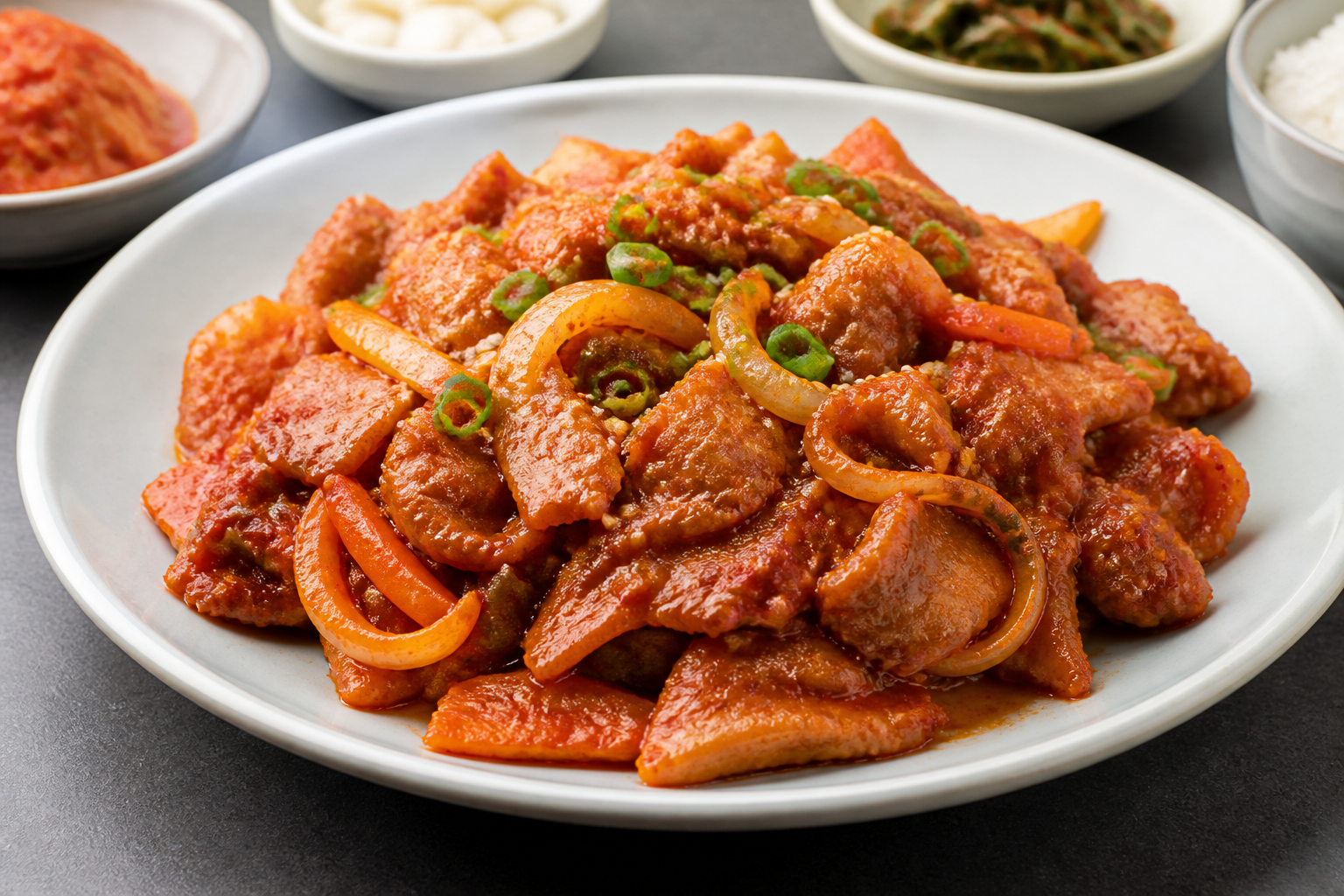
Jeyuk Bokkeum Spicy Pork Stir Fry - A Bold, Weeknight-Friendly Korean Classic
Ingredients
Method
- Slice the pork: If not pre-sliced, place pork in the freezer for 30 minutes to firm up, then slice thinly against the grain.
- Mix the sauce: In a bowl, combine gochujang, gochugaru, soy sauce, sugar, rice wine, sesame oil, garlic, ginger, and water. Add doenjang if using. Adjust spice and sweetness to taste.
- Marinate: Toss pork with the sauce until evenly coated. Marinate 15–30 minutes at room temp (or up to 8 hours in the fridge).
- Prep veggies: Slice onion, carrot, bell pepper, and scallions so everything is ready before cooking.
- Heat the pan: Use a large skillet or wok. Add oil and heat over medium-high until shimmering.
- Stir-fry aromatics and veg: Add onion and carrot first. Cook 2 minutes until slightly softened. Add bell pepper.
- Add the pork: Spread the pork in a single layer. Let it sear for 30–45 seconds before stirring, then cook, stirring often, 4–6 minutes until just cooked through and lightly caramelized.
- Finish with scallions: Toss in scallions and cook 30 seconds. If sauce looks too thick, splash in a tablespoon of water to loosen.
- Serve hot: Sprinkle sesame seeds. Serve with rice, lettuce leaves for wraps, and kimchi on the side.
Printable Recipe Card
Want just the essential recipe details without scrolling through the article? Get our printable recipe card with just the ingredients and instructions.