
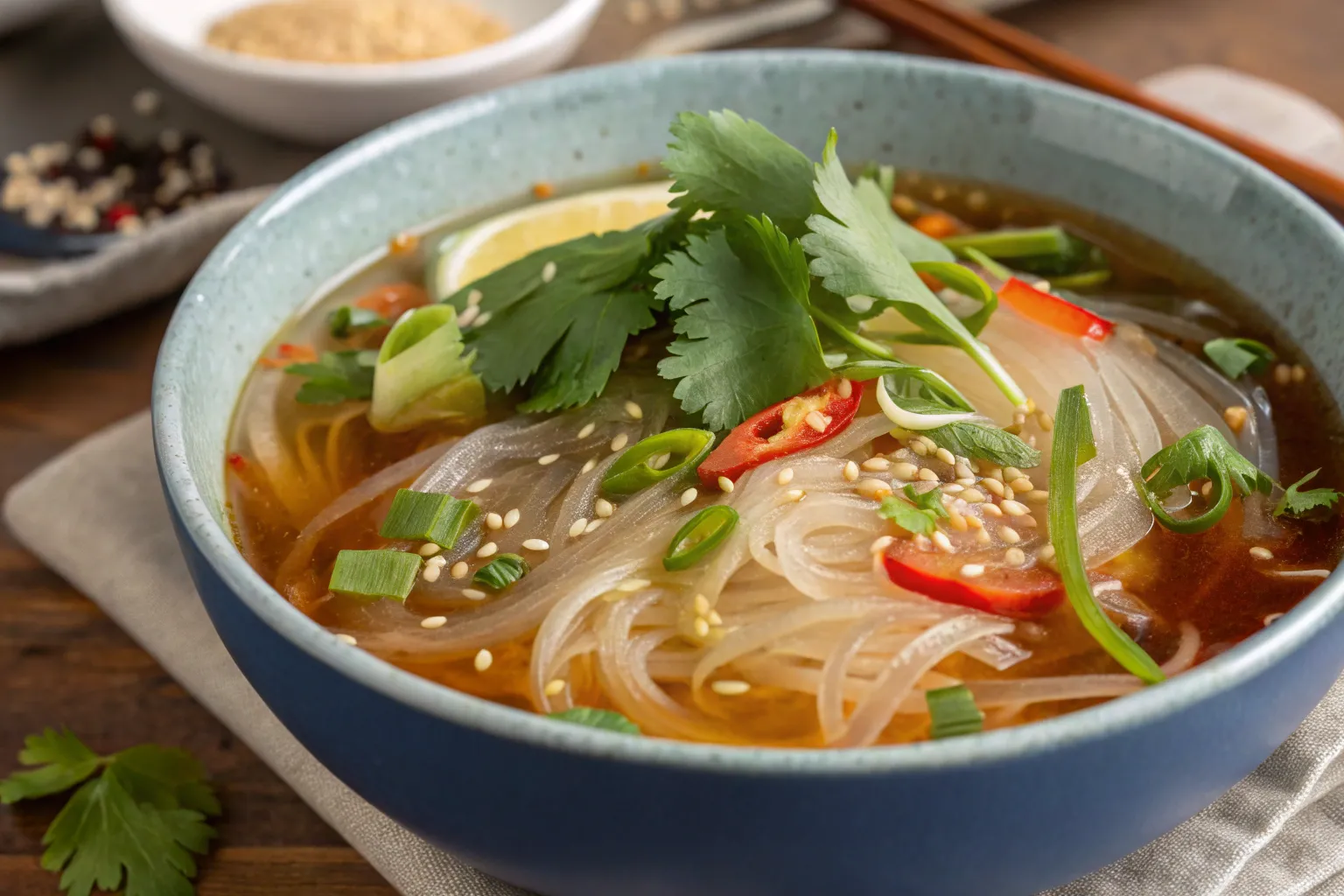
Irresistible Japanese Glass Noodle Soup to Savor
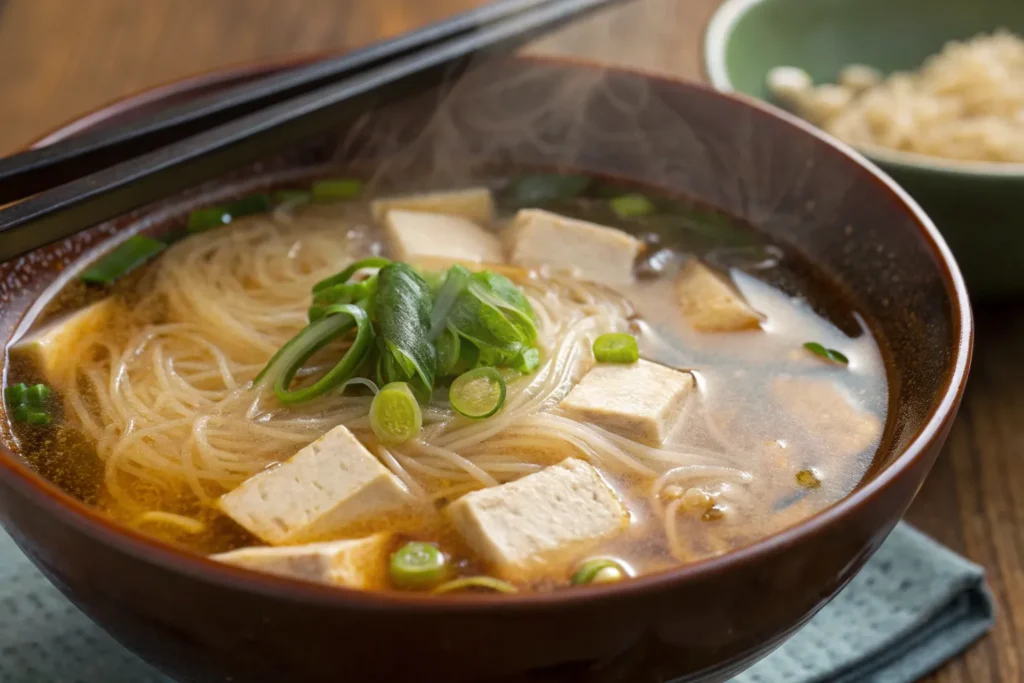
Irresistible Japanese Glass Noodle Soup is a light yet deeply comforting dish inspired by traditional Japanese flavors. Made with delicate glass noodles, a savory broth and simple aromatics, this soup feels soothing, clean and satisfying. It’s perfect for cold evenings, light lunches or whenever you want something warm that doesn’t feel heavy.
Why You’ll Love This Recipe
This soup is quick to prepare, gentle on the stomach and full of umami flavor. Glass noodles soak up the broth beautifully, creating a comforting texture without being dense. The ingredients are simple and flexible, allowing you to customize it with vegetables or protein while keeping the authentic Japanese feel.
Nutritional Info
Glass noodles are naturally gluten-free and low in fat. The broth provides hydration and minerals, while added vegetables contribute fiber and vitamins. When paired with tofu, eggs or seafood, this soup becomes a balanced, nourishing meal without excess calories.
Time Taken
This soup takes about 20 minutes from start to finish. It’s ideal for busy days when you want a homemade meal with minimal effort.
Ingredients
- Glass noodles soaked according to package instructions
- Vegetable or chicken broth
- Garlic minced
- Ginger grated
- Soy sauce or tamari
- Sesame oil
- Green onions sliced
- Mushrooms sliced
- Carrots julienned
- Spinach or bok choy
- Optional tofu, shrimp or egg
Instructions

Bring the broth to a gentle simmer in a pot and add garlic and ginger. Stir in soy sauce and sesame oil to build flavor. Add mushrooms and carrots and cook until tender. Add the soaked glass noodles and cook briefly until they turn translucent and soft. Stir in spinach or bok choy at the end so it wilts gently. Serve hot, topped with green onions and your choice of protein if using.
You Must Know
Glass noodles cook very quickly, so add them near the end to avoid over-softening. Taste the broth before serving and adjust seasoning gradually, as soy sauce strength can vary.
Storage Tips
Store leftovers in an airtight container in the refrigerator for up to two days. Keep in mind that noodles will continue absorbing broth, so add extra liquid when reheating.
Ingredient Substitutions
- Use dashi for a more traditional Japanese flavor
- Replace soy sauce with coconut aminos for lower sodium
- Add miso paste for deeper umami
- Swap vegetables based on availability
- Use rice noodles if glass noodles are unavailable
Serving Suggestions

Serve this soup on its own for a light meal or pair it with rice balls, steamed dumplings or a simple cucumber salad. It also works well as a starter before a larger Japanese-inspired meal.
Cultural and Historical Context
Glass noodles, often made from mung bean starch, are widely used across East Asian cuisines. In Japanese cooking, light noodle soups emphasize balance, clarity and natural flavors rather than heaviness. This soup reflects the Japanese philosophy of simplicity and comfort through thoughtful seasoning.
Seasonal Adaptations
In winter, add mushrooms and tofu for warmth and body. In spring, include fresh greens and scallions. During summer, keep the broth lighter and serve smaller portions for a refreshing yet nourishing dish.
Success Stories
Home cooks love this soup for its simplicity and calming flavor. Many describe it as a go-to comfort recipe during busy weeks or when feeling under the weather. It’s especially appreciated for being both light and satisfying.
Freezer Meal Conversion
This soup is best enjoyed fresh. If freezing, freeze only the broth and vegetables without the noodles. Add freshly cooked glass noodles when reheating for best texture.
Pro Tips
- Soak noodles separately to control texture
- Slice vegetables thinly for even cooking
- Simmer gently to preserve clarity of the broth
Chef’s Special Tips
- Finish with a few drops of chili oil for warmth
- Add a soft-boiled egg for richness
- Garnish with toasted sesame seeds or nori strips
Conclusion
Irresistible Japanese Glass Noodle Soup is a comforting, flavorful dish that proves simple ingredients can create something truly special. Light, soothing and deeply satisfying, it’s perfect for any time you crave warmth without heaviness. Try this recipe today and enjoy a bowl of Japanese-inspired comfort made right at home.
FAQs
What are Japanese glass noodles made from?
Japanese glass noodles are typically made from mung bean starch. They become transparent when cooked and have a light, slippery texture.
Are glass noodles gluten-free?
Yes. Glass noodles are naturally gluten-free, but always check the packaging to ensure there are no added ingredients.
Can I make this soup vegetarian or vegan?
Absolutely. Use vegetable broth and skip animal-based proteins. Tofu or mushrooms are excellent plant-based additions.
How do I prevent the noodles from getting mushy?
Soak or cook the noodles separately and add them to the soup just before serving. Avoid overcooking.
Can I add protein to this soup?
Yes. Shrimp, chicken, tofu or a soft-boiled egg work very well and complement the broth.
Can I use miso in this soup?
Yes. Add miso at the end of cooking and remove the soup from direct heat to preserve its flavor.
How long does this soup keep in the fridge?
It stays fresh for up to two days when stored properly, though the noodles will continue absorbing broth.
Can I freeze Japanese glass noodle soup?
Freeze only the broth and vegetables. Add freshly cooked noodles when reheating for best texture.
Is this soup suitable when feeling unwell?
Yes. It’s light, hydrating and soothing, making it a great option when you need gentle comfort food.
What toppings work best for this soup?
Green onions, sesame seeds, nori strips, chili oil or a squeeze of lime all add extra flavor and freshness.
Printable Recipe Card
Want just the essential recipe details without scrolling through the article? Get our printable recipe card with just the ingredients and instructions.