
Gimbap Korean Sushi Rolls Recipe
Gimbap is Korea’s beloved seaweed rice roll colorful, satisfying, and easy to pack for lunch or picnics. It looks like sushi, but the flavors are uniquely Korean: sesame-scented rice, crisp veggies, and savory fillings. You don’t need special training or fancy tools to make it at home.
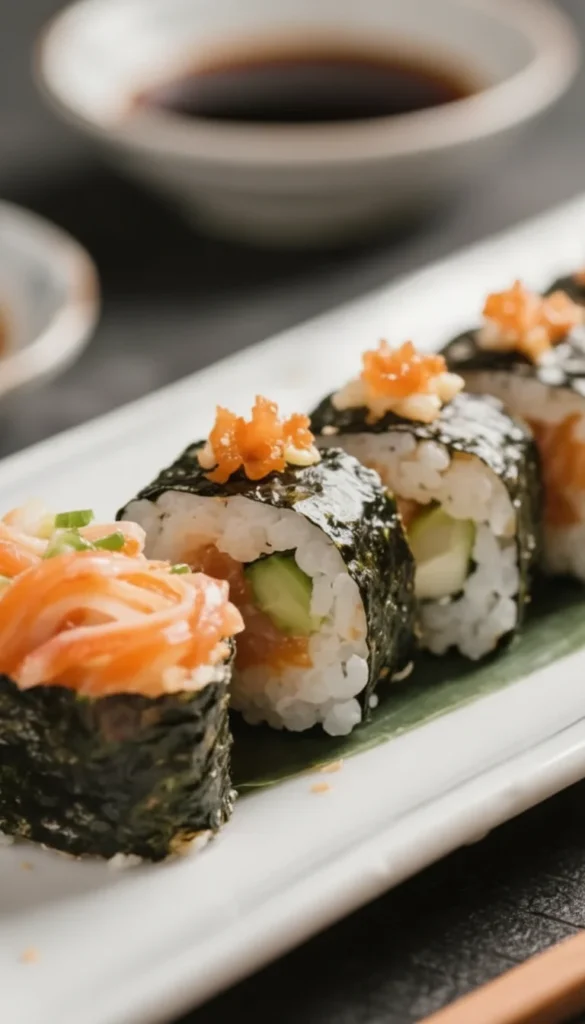
With a little prep and a tight roll, you’ll get neat slices that taste fresh and balanced. This version is classic, flexible, and beginner-friendly.
Why This Recipe Works
- Seasoned rice, not vinegared rice: Gimbap uses sesame oil and salt, giving it a nutty, savory base that pairs with the fillings.
- Balanced textures: Crunchy carrot and cucumber meet soft egg and savory protein for a satisfying bite.
- Rolls hold together: Warm rice and a light oil coating help the seaweed adhere, so slices stay neat.
- Make-ahead friendly: Great at room temperature, so it travels well without getting soggy.
Ingredients
- For the rice:
- 2 cups uncooked short-grain white rice (sushi rice or Korean rice)
- 2 1/4 cups water (for cooking)
- 1–1 1/2 tbsp sesame oil
- 1 tsp fine salt (to taste)
- 1–2 tsp toasted sesame seeds (optional)
- For the fillings:
- 5 sheets roasted seaweed (gim/nori)
- 4 eggs, beaten with a pinch of salt (for a rolled omelet)
- 1 medium carrot, cut into thin matchsticks
- 1 small cucumber, seeded and cut into long strips
- 5–6 strips pickled radish (danmuji)
- 6–8 oz imitation crab sticks, cooked bulgogi beef, tuna-mayo, or baked tofu (choose one)
- 1–2 tsp neutral oil (for cooking egg and carrot)
- Pinch of salt and sugar (for seasoning vegetables lightly)
- For finishing:
- 1–2 tsp sesame oil (to brush the rolls)
- Extra toasted sesame seeds (optional)
Step-by-Step Instructions
- Cook the rice: Rinse the rice until the water runs mostly clear. Cook with the measured water.While warm, gently fold in sesame oil, salt, and sesame seeds. Let it cool to just warm, not hot.
- Make the egg: Heat a lightly oiled pan over medium-low. Pour in beaten eggs to form a thin omelet.Cook, flip once, then roll and slice into long strips.
- Prep the vegetables: Lightly sauté carrot sticks with a pinch of salt and a tiny pinch of sugar until just tender-crisp, 1–2 minutes. Pat cucumber strips dry to remove excess moisture.
- Prepare your protein: If using crab sticks, separate them. If using bulgogi, slice thin.For tuna, mix drained tuna with a bit of mayo and pepper. For tofu, pan-sear strips until golden.
- Set up your rolling station: Place a seaweed sheet, shiny side down, on a bamboo mat or a clean kitchen towel wrapped in plastic.
- Spread the rice: With damp fingers, spread a thin, even layer of rice over about 2/3 of the sheet, leaving the top third uncovered. Do not overpack.
- Add fillings: Lay egg, carrot, cucumber, pickled radish, and protein horizontally across the middle of the rice.Keep layers neat and not too bulky.
- Roll it up: Use the mat to lift the bottom edge over the fillings, tucking tightly. Keep rolling while gently pressing to secure the shape. Seal the edge by pressing; the warmth and a light touch of rice help it stick.
- Finish and slice: Brush the outside lightly with sesame oil for shine and flavor.Using a sharp, lightly oiled knife, slice into 1/2-inch pieces, wiping the blade as needed.
- Repeat: Continue with remaining sheets and fillings. Sprinkle with sesame seeds if you like.
Storage Instructions
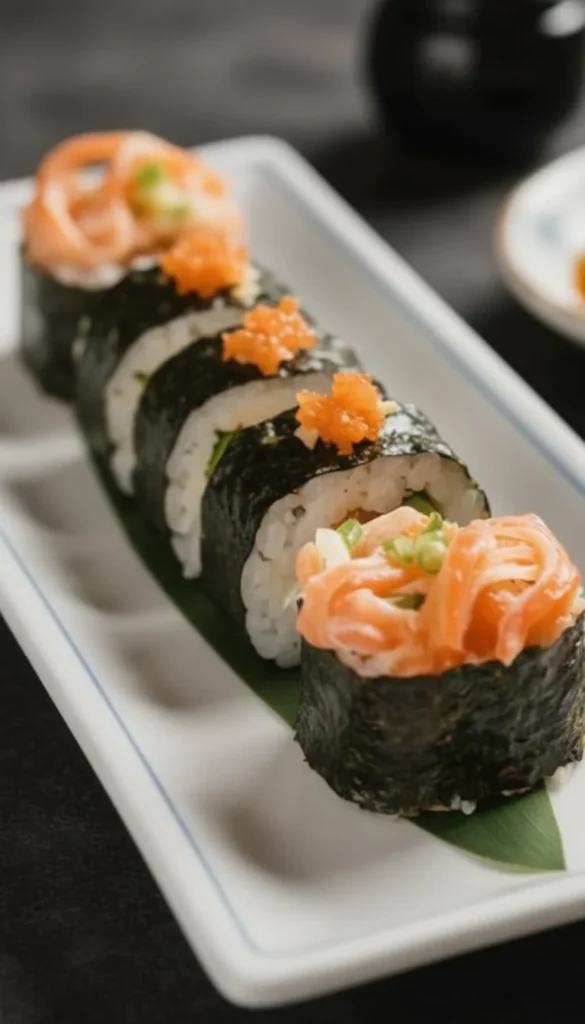
- Short term: Keep at room temperature for up to 4 hours, covered to prevent drying.
- Refrigeration: Wrap rolls tightly in plastic and store up to 24 hours. Rice will firm up; let sit at room temp 20–30 minutes before eating.
- Do not freeze: Freezing damages texture of rice and seaweed.
- Leftover tip: Pan-sear chilled slices in a little oil for a crispy, warm snack.
Why This is Good for You
- Balanced meal: Carbs from rice, protein from egg or tofu/meat, and fiber from veggies make it satisfying.
- Omega and minerals: Seaweed provides iodine and minerals; tuna option adds protein.
- Lighter than takeout: Minimal oil and lots of vegetables keep it fresh and nourishing.
Pitfalls to Watch Out For
- Rice too hot or too wet: It can tear the seaweed and make rolling messy.Cool to warm before assembling.
- Overstuffing: Leads to bursting seams. Use modest amounts in even layers.
- Damp vegetables: Excess moisture makes soggy rolls. Pat cucumbers dry and avoid watery fillings.
- Dull knife: Compresses rolls and pulls fillings out.Keep your knife sharp and lightly oiled.
Alternatives
- Protein swaps: Spam, canned tuna-mayo, bulgogi, shredded rotisserie chicken, or marinated baked tofu.
- Veggie boosts: Blanched spinach (seasoned with sesame oil and salt), sautéed mushrooms, or avocado.
- Rice options: Half white, half short-grain brown for more fiber. Cauliflower rice doesn’t hold as well but can work in a pinch if bound with a little mayo.
- Spice lovers: Add a smear of gochujang-mayo or pickled jalapeños for heat.
FAQ
Is gimbap the same as sushi?
No. While both are seaweed-wrapped rice rolls, gimbap uses sesame oil–seasoned rice and Korean-style fillings.
Sushi rice is seasoned with vinegar, sugar, and salt.
Can I make it without a bamboo mat?
Yes. Use a clean kitchen towel wrapped in plastic wrap. It provides grip and helps you roll tightly.
How do I keep the seaweed from tearing?
Use warm, not hot, rice and spread it gently with damp fingers. Don’t overload the fillings, and roll with steady, even pressure.
What can I serve with gimbap?
Serve with kimchi, pickled radish, or a simple miso-style soup. A light soy-sesame dip is optional, but traditional gimbap is usually eaten as is.
Can I make it vegan?
Absolutely. Use baked tofu or seasoned mushrooms instead of egg or meat, and keep the rest of the fillings plant-based.
Wrapping Up
Gimbap is simple, colorful, and endlessly adaptable. With seasoned rice, crisp veggies, and your favorite protein, you can roll a satisfying meal in minutes. Keep the layers light, roll tight, and slice with a sharp knife. It’s an easy win for lunch boxes, picnics, or a quick, tasty snack.
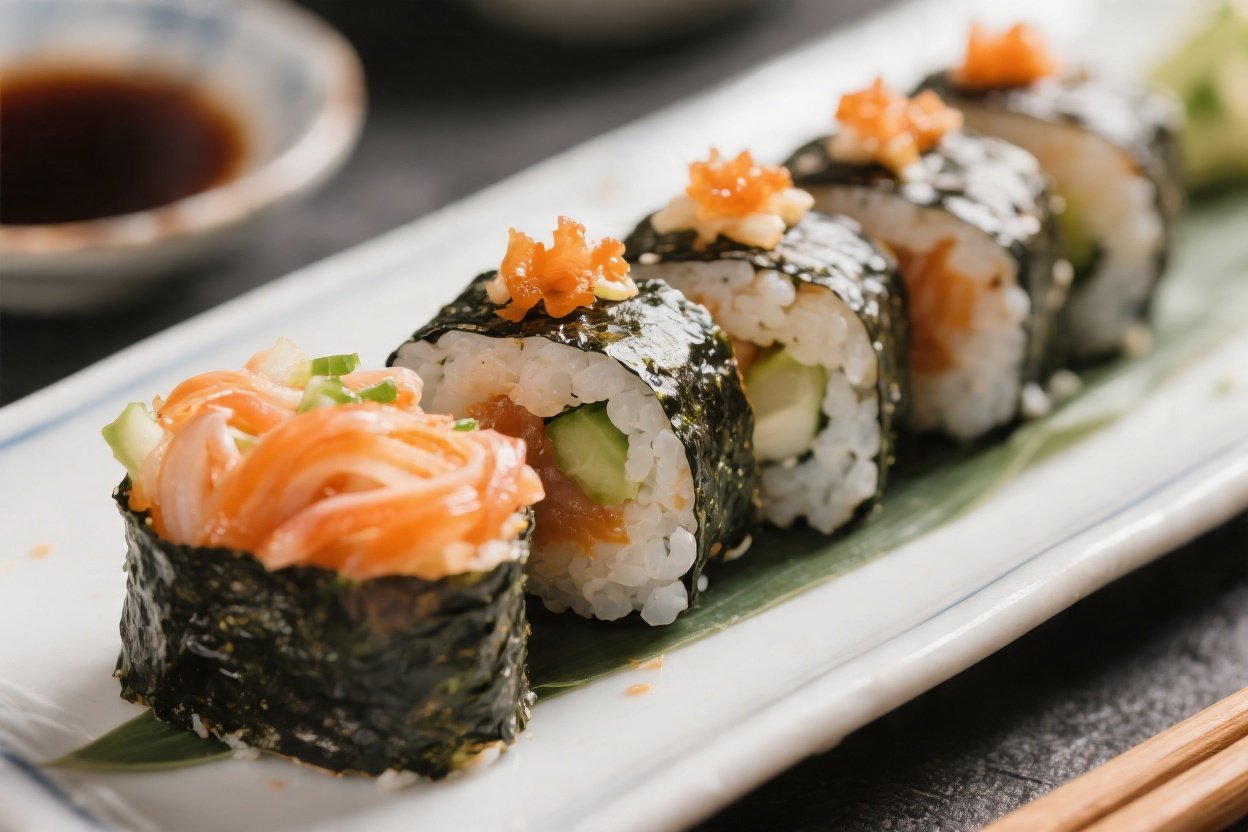
Ingredients
Method
- Cook the rice: Rinse the rice until the water runs mostly clear. Cook with the measured water. While warm, gently fold in sesame oil, salt, and sesame seeds. Let it cool to just warm, not hot.
- Make the egg: Heat a lightly oiled pan over medium-low. Pour in beaten eggs to form a thin omelet. Cook, flip once, then roll and slice into long strips.
- Prep the vegetables: Lightly sauté carrot sticks with a pinch of salt and a tiny pinch of sugar until just tender-crisp, 1–2 minutes. Pat cucumber strips dry to remove excess moisture.
- Prepare your protein: If using crab sticks, separate them. If using bulgogi, slice thin. For tuna, mix drained tuna with a bit of mayo and pepper. For tofu, pan-sear strips until golden.
- Set up your rolling station: Place a seaweed sheet, shiny side down, on a bamboo mat or a clean kitchen towel wrapped in plastic.
- Spread the rice: With damp fingers, spread a thin, even layer of rice over about 2/3 of the sheet, leaving the top third uncovered. Do not overpack.
- Add fillings: Lay egg, carrot, cucumber, pickled radish, and protein horizontally across the middle of the rice. Keep layers neat and not too bulky.
- Roll it up: Use the mat to lift the bottom edge over the fillings, tucking tightly. Keep rolling while gently pressing to secure the shape. Seal the edge by pressing; the warmth and a light touch of rice help it stick.
- Finish and slice: Brush the outside lightly with sesame oil for shine and flavor. Using a sharp, lightly oiled knife, slice into 1/2-inch pieces, wiping the blade as needed.
- Repeat: Continue with remaining sheets and fillings. Sprinkle with sesame seeds if you like.
Printable Recipe Card
Want just the essential recipe details without scrolling through the article? Get our printable recipe card with just the ingredients and instructions.