
Gamjatang Pork Bone Soup Recipe
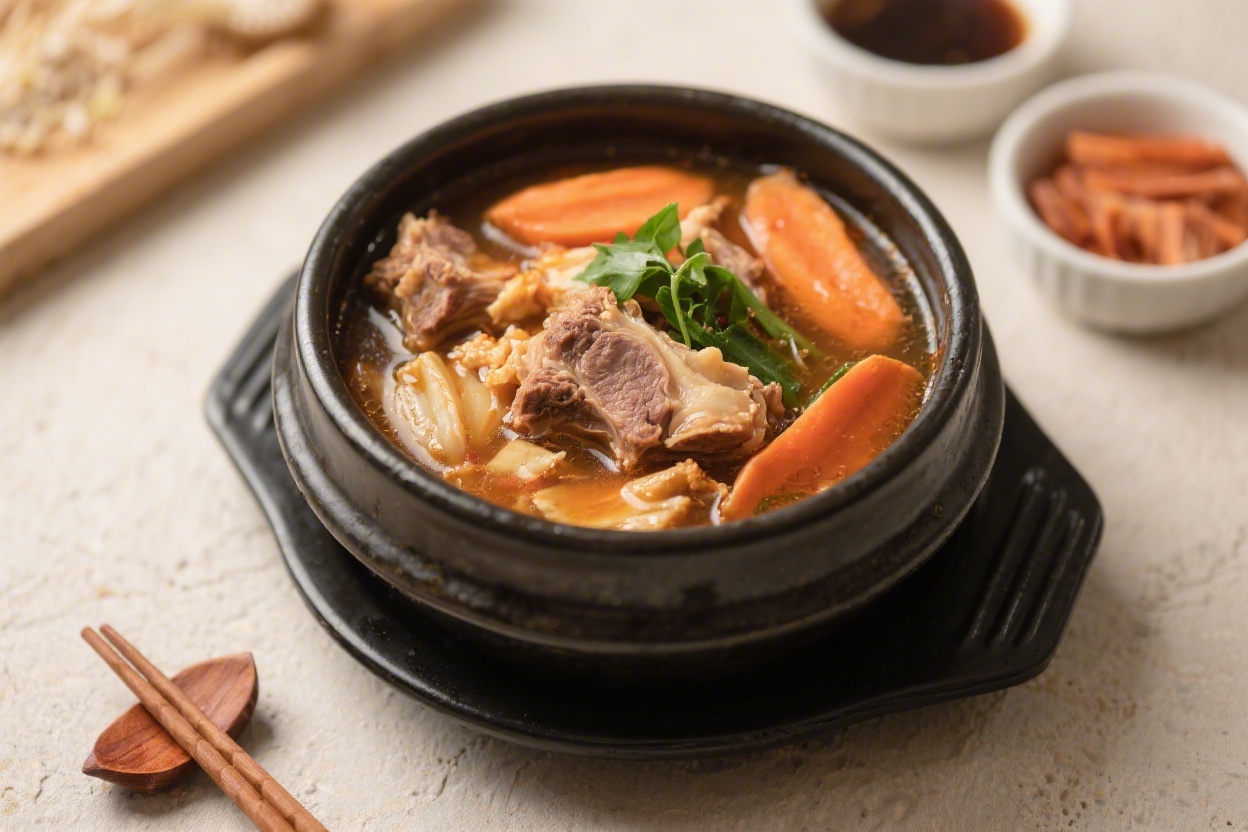
Gamjatang is the kind of soup that warms you from the inside out. It’s rich, spicy, and deeply savory, with tender pork bones and potatoes that soak up all the flavor. If you love big, bold Korean flavors, this is a must-try.
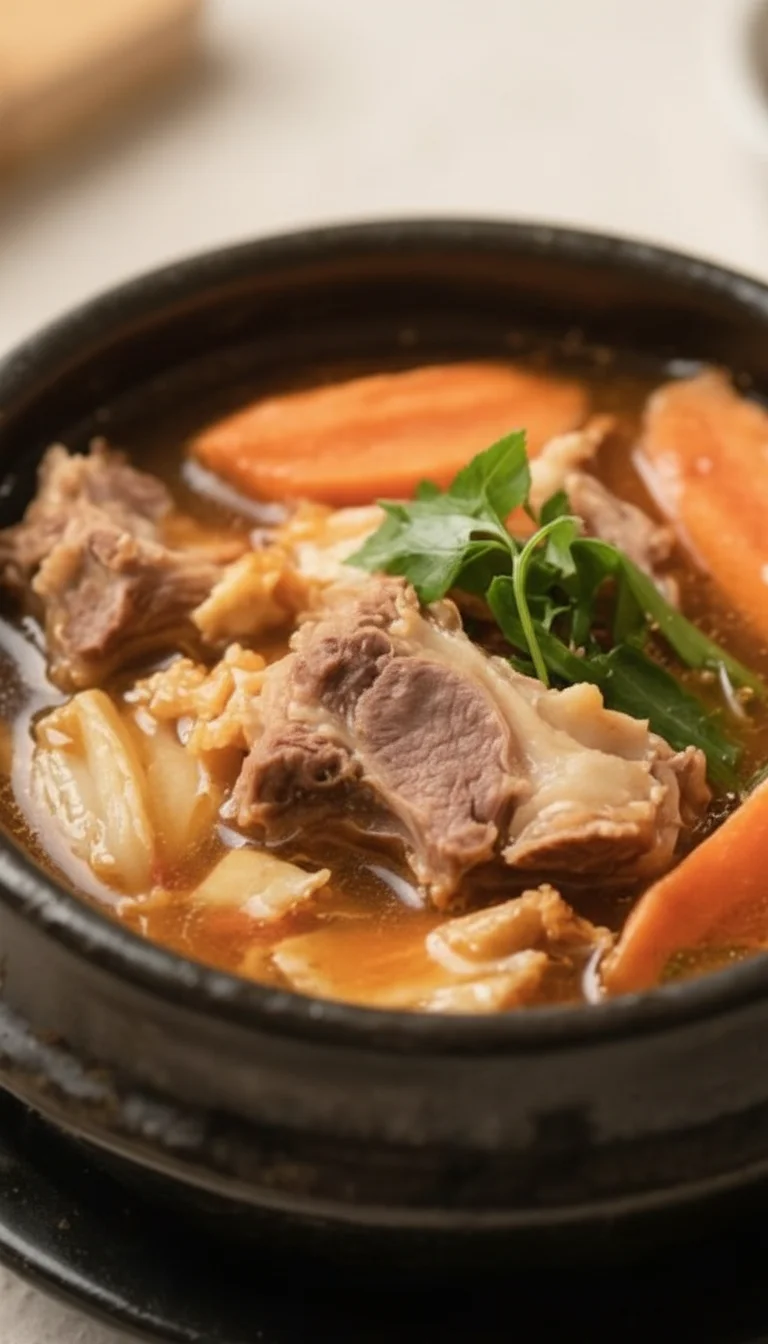
It takes a bit of time, but most of it is hands-off simmering, and the payoff is huge. Serve it bubbling hot with rice, and you’ve got a meal that hits every note.
What Makes This Special
This soup builds flavor in layers first by blanching and then slow-simmering pork neck bones until the broth turns milky and rich. Then it gets a punchy mix of gochugaru (Korean chili flakes), doenjang (soybean paste), and garlic that gives it depth and heat.
Napa cabbage, potatoes, and perilla leaves add freshness and texture. The result is a balanced bowl that feels rustic yet cozy.
Ingredients
- 2–2.5 lbs pork neck bones (or pork spine bones), rinsed
- 2 medium potatoes, peeled and cut into large chunks
- 1/2 small napa cabbage, cut into 2-inch pieces
- 1 medium onion, quartered
- 6 cloves garlic, minced (plus 3 whole for broth)
- 1-inch piece ginger, sliced
- 2 scallions, cut into 2-inch pieces
- 1 tbsp whole black peppercorns (optional)
- 6–8 cups water
- 3 tbsp gochugaru (Korean chili flakes; adjust to taste)
- 2 tbsp gochujang (Korean chili paste)
- 2 tbsp doenjang (Korean soybean paste)
- 1 tbsp soy sauce
- 1–2 tsp fish sauce (optional, for depth)
- 1 tbsp perilla seed powder (deulkkae garu; optional but traditional)
- 1–2 cups perilla leaves (or a handful of shiso/basil if unavailable)
- 1 tbsp sesame oil
- Salt, to taste
- Cooked white rice, for serving
Step-by-Step Instructions
- Blanch the bones: Place pork bones in a large pot, cover with cold water, and bring to a rolling boil for 5–7 minutes. Drain and rinse the bones under cold water to remove scum.Rinse the pot.
- Start the broth: Return the bones to the pot with 6–8 cups of water, the onion, ginger, 3 whole garlic cloves, peppercorns, and scallion pieces. Bring to a boil, then lower to a gentle simmer. Cook uncovered for 60–90 minutes until the broth looks milky and the meat is tender.
- Make the seasoning paste: In a bowl, mix gochugaru, gochujang, doenjang, soy sauce, minced garlic, fish sauce (if using), perilla seed powder, and sesame oil to form a thick paste.
- Skim and season: Skim off excess fat from the broth.Remove and discard the onion, ginger, and peppercorns. Stir in the seasoning paste until dissolved.
- Add vegetables: Add potatoes and napa cabbage. Simmer 15–20 minutes, until the potatoes are fork-tender and the cabbage is soft.
- Finish and adjust: Stir in perilla leaves.Taste and adjust with salt, a splash of soy sauce, or more gochugaru for heat. The broth should be savory, slightly nutty, and pleasantly spicy.
- Serve hot: Ladle into bowls with plenty of broth, meat, potatoes, and cabbage. Serve with steamed rice on the side.
How to Store
- Refrigerate: Cool completely, then store in airtight containers for up to 4 days.
- Freeze: Freeze in meal-sized portions for up to 2 months.Leave a little headspace as liquids expand.
- Reheat: Simmer gently on the stove. Add a splash of water if the broth has thickened.
Why This is Good for You
- Protein and minerals: Pork bones and connective tissues contribute collagen and minerals to the broth.
- Vegetable power: Potatoes, napa cabbage, and perilla leaves add fiber, vitamin C, and antioxidants.
- Balanced meal: With rice on the side, you get a satisfying mix of carbs, protein, and fats.
Pitfalls to Watch Out For
- Skipping the blanch: If you don’t blanch the bones, the broth can taste muddy and look cloudy with off flavors.
- Boiling too hard:</-strong> A violent boil can make the broth greasy and scatter bits everywhere. Keep it at a steady simmer.
- Underseasoning: The broth needs enough salt and paste to shine.Taste near the end and adjust.
- Overcooking potatoes: They can fall apart and thicken the soup too much. Add them in the last 20 minutes.
Alternatives
- Different cuts: Use pork ribs or shank if neck bones aren’t available. Expect a slightly different texture but still great flavor.
- Milder version: Reduce gochugaru and skip fish sauce.Add more doenjang for savory depth without extra heat.
- No perilla? Use a mix of spinach and a few basil leaves for aroma. You can also skip it entirely.
- Vegetable boosts: Add soybean sprouts, Korean radish, or mushrooms in the last 15 minutes for extra body.
- Pressure cooker: Cook bones with aromatics on High for 25–30 minutes; quick-release, then continue from seasoning step on the stovetop.
FAQ
Can I make this less spicy?
Yes. Cut the gochugaru in half, and add a little more doenjang for body. You can also serve chili oil on the side so everyone can adjust heat at the table.
What can I use instead of doenjang?
Miso paste works in a pinch. Use a darker miso (like red or mixed) and reduce the amount slightly, then adjust salt to taste.
How do I get the meat really tender?
Time and a gentle simmer. If the meat still clings to the bone after 90 minutes, keep simmering in 15-minute increments until it loosens easily.
Is perilla seed powder necessary?
It’s traditional and adds a nutty, toasty note, but it’s optional. If you skip it, consider a small sprinkle of toasted sesame seeds at the end.
Can I make it ahead?
Absolutely. The flavors deepen overnight. Chill, remove any solidified fat, and reheat gently before serving.
Final Thoughts
Gamjatang delivers big comfort with simple, honest ingredients. Once you get the rhythm blanch, simmer, season it becomes a reliable, crowd-pleasing soup you’ll crave. Pair it with rice and some kimchi, and you’ve got a complete, soul-satisfying meal any night of the week.
Ingredients
Method
- Blanch the bones: Place pork bones in a large pot, cover with cold water, and bring to a rolling boil for 5–7 minutes. Drain and rinse the bones under cold water to remove scum. Rinse the pot.
- Start the broth: Return the bones to the pot with 6–8 cups of water, the onion, ginger, 3 whole garlic cloves, peppercorns, and scallion pieces. Bring to a boil, then lower to a gentle simmer. Cook uncovered for 60–90 minutes until the broth looks milky and the meat is tender.
- Make the seasoning paste: In a bowl, mix gochugaru, gochujang, doenjang, soy sauce, minced garlic, fish sauce (if using), perilla seed powder, and sesame oil to form a thick paste.
- Skim and season: Skim off excess fat from the broth. Remove and discard the onion, ginger, and peppercorns. Stir in the seasoning paste until dissolved.
- Add vegetables: Add potatoes and napa cabbage. Simmer 15–20 minutes, until the potatoes are fork-tender and the cabbage is soft.
- Finish and adjust: Stir in perilla leaves. Taste and adjust with salt, a splash of soy sauce, or more gochugaru for heat. The broth should be savory, slightly nutty, and pleasantly spicy.
- Serve hot: Ladle into bowls with plenty of broth, meat, potatoes, and cabbage. Serve with steamed rice on the side.
Printable Recipe Card
Want just the essential recipe details without scrolling through the article? Get our printable recipe card with just the ingredients and instructions.