
Easy Korean Galbitang Beef Rib Soup Recipe for Cozy Family Dinners
Galbitang is the kind of soup that makes the whole house feel warm. Tender beef short ribs simmer in a clear, savory broth with daikon and glass noodles, and the result is light yet deeply satisfying. It’s perfect for a family dinner because it’s gentle on the palate, kid-friendly, and great for leftover.
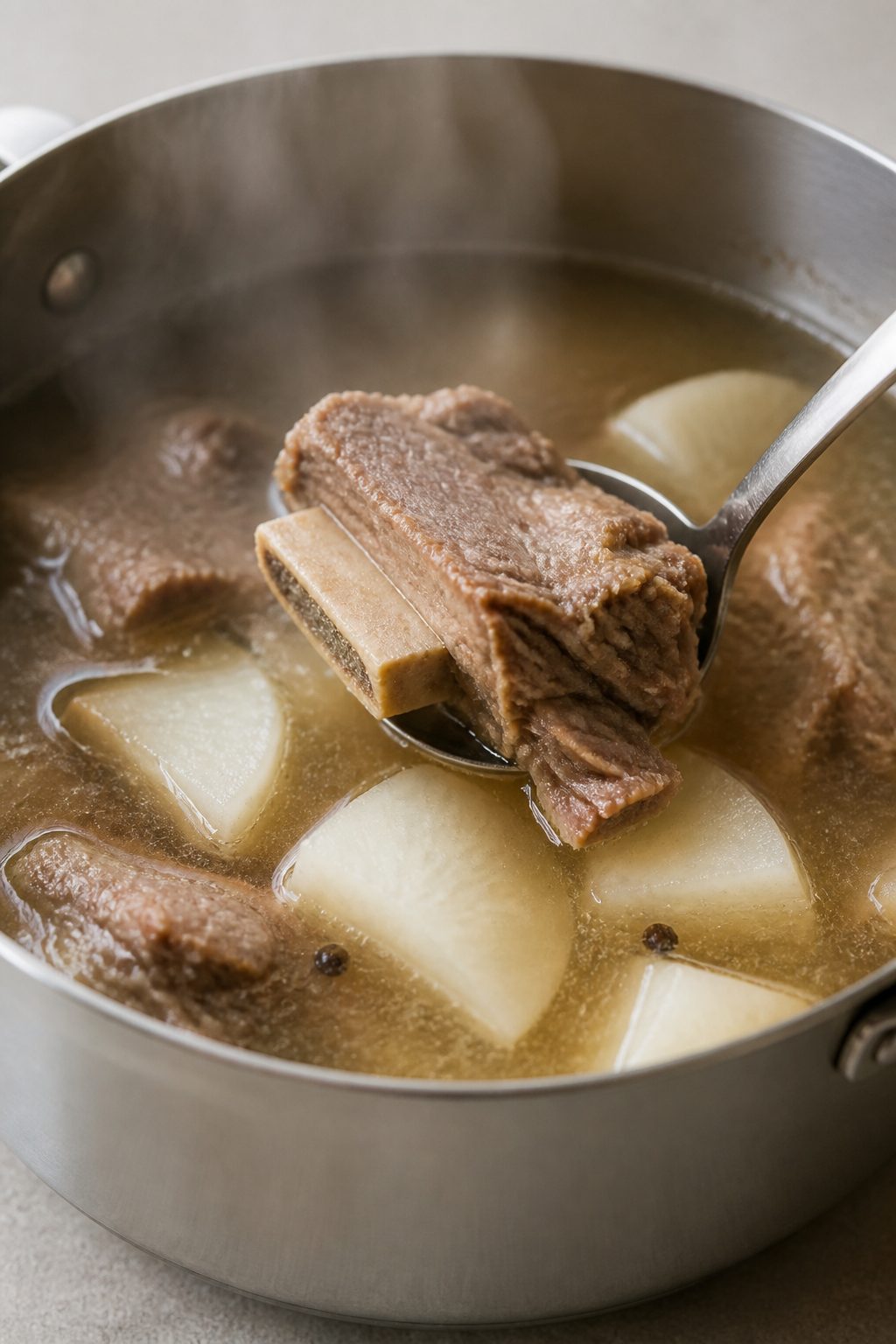
the steps simple without losing the classic flavor. If you want a comforting bowl that feels special but not fussy, this is it.
What Makes This Special
- Clean, clear broth: A quick blanch and rinse keeps the soup bright and not greasy.
- Short ingredient list: You’ll use pantry basics plus a few Korean staples for authentic taste.
- Balanced flavor: Light, savory broth with sweet daikon and soft noodles—comfort without heaviness.
- Family-friendly: Mild, customizable seasoning at the table with salt and pepper.
- Great make-ahead: The broth tastes even better the next day.
Shopping List
- Beef short ribs (flanken or English cut): 2–2.5 lb
- Daikon radish: 1 medium, peeled
- Onion: 1 medium
- Garlic: 6–8 cloves, lightly crushed
- Ginger: 1-inch piece, sliced (optional but recommended)
- Green onions (scallions): 4–5, divided (white parts for broth, green for garnish)
- Korean glass noodles (dangmyeon, sweet potato starch noodles): 4–6 oz
- Whole black peppercorns: 1 teaspoon (or ground black pepper to finish)
- Soy sauce: 1–2 tablespoons, to taste
- Sea salt: to taste
- Toasted sesame oil: 1 teaspoon, optional
- Water: 10–12 cups
Step-by-Step Instructions
- Soak the ribs: Rinse short ribs under cold water, then soak in a large bowl of cold water for 20–30 minutes to pull out excess blood. Change the water once.This helps keep the broth clear.
- Quick blanch: Place ribs in a pot, cover with fresh cold water, and bring to a rolling boil. Boil 5 minutes. Drain, rinse the ribs under warm water, and rinse the pot to remove scum.
- Build the broth: Return ribs to the clean pot.Add 10–12 cups water, onion (halved), crushed garlic, ginger, white parts of green onions, and peppercorns. Bring to a boil, then lower to a gentle simmer.
- Simmer low and slow: Partially cover and simmer for 1.5–2 hours, skimming any foam or fat. The meat should be very tender and nearly falling off the bone.
- Prep vegetables and noodles: Peel and cut daikon into 1-inch chunks or thick half-moons.Soak glass noodles in warm water for 20 minutes, then drain.
- Add daikon: Remove onion and ginger slices from the pot. Add daikon and simmer 20–25 minutes until just tender.
- Season the broth: Add 1 tablespoon soy sauce and 1 teaspoon salt. Taste and adjust with more salt or soy.The broth should be savory but still clean.
- Finish with noodles: Add soaked glass noodles and cook 3–5 minutes, just until soft and springy.
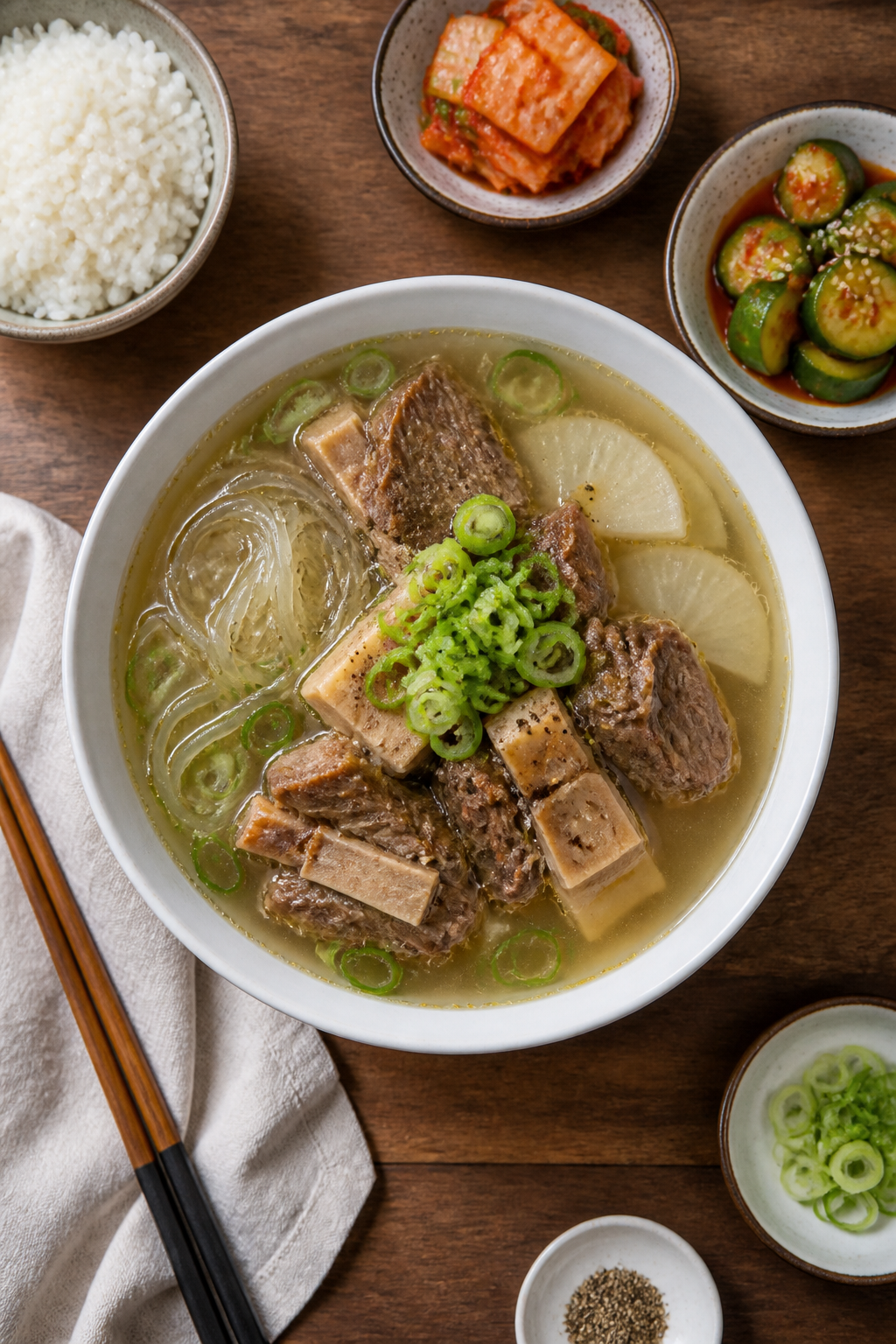
- Garnish and serve: Ladle into bowls. Top with sliced green onion, a crack of black pepper, and a few drops of sesame oil if you like. Serve with steamed rice and extra salt at the table.
How to Store
- Fridge: Cool completely, then store in airtight containers for up to 4 days.The flavors deepen overnight.
- Remove fat cap: After chilling, lift off the solidified fat for an even cleaner broth.
- Freeze: Freeze broth and meat (without noodles) for up to 3 months. Add fresh noodles when reheating.
- Reheat gently: Warm on the stovetop over medium heat to keep the meat tender.
Health Benefits
- Protein-rich: Beef short ribs provide protein for muscle repair and satiety.
- Mineral support: Slow simmering draws out minerals and collagen for a soothing, restorative broth.
- Light yet filling: Clear soup with daikon keeps it lower in fat and easy on digestion.
- Hydration and electrolytes: Warm, well-seasoned broth supports hydration and comfort.
Common Mistakes to Avoid
- Skipping the blanch: Not blanching leads to cloudy, gamey broth.
- Boiling too hard: A rolling boil the whole time emulsifies fat and makes the broth murky. Keep it at a gentle simmer.
- Overseasoning early: Salt intensifies as it reduces.Season after the daikon has cooked.
- Overcooking noodles: Dangmyeon gets mushy fast. Add them at the end and watch closely.
Alternatives
- Protein swaps: Use beef shank or oxtail; extend simmer time for tenderness.
- No daikon? Use turnips or a mix of carrots and potatoes for sweetness and body.
- Gluten-free: Use tamari instead of soy sauce; dangmyeon noodles are naturally gluten-free.
- Bolder flavor: Add a splash of fish sauce or a few dried shiitakes during the simmer, then remove.
- Spicy kick: Serve with gochugaru flakes or sliced fresh chili on the side.
FAQ
Can I make this in an Instant Pot?
Yes. Pressure cook blanched ribs with aromatics and water for 35–40 minutes, natural release 15 minutes, then add daikon on sauté mode until tender. Finish with noodles and seasoning.
Why is my broth cloudy?
Cloudiness usually comes from skipping the blanch, not skimming, or keeping the pot at a hard boil. Next time, blanch, rinse, and maintain a gentle simmer.
Do I have to use glass noodles?
No. You can serve the soup without noodles or use thin wheat noodles. If swapping, cook them separately to avoid starchiness in the broth.
How do I make it richer?
Simmer 30–45 minutes longer, add a few marrow bones, or leave a bit more fat. Just keep the heat low and skim occasionally.
What should I serve with galbitang?
Steamed rice, kimchi, and simple banchan like cucumber salad or seasoned spinach round out the meal beautifully.
Wrapping Up
Galbitang proves that comfort doesn’t have to be heavy or complicated. With a clean broth, tender ribs, and just a handful of ingredients, it’s a reliable family favorite. Keep the simmer gentle, season to taste, and enjoy a warm bowl any night of the week. Leftovers only get better, so make a little extra you’ll be glad you did.
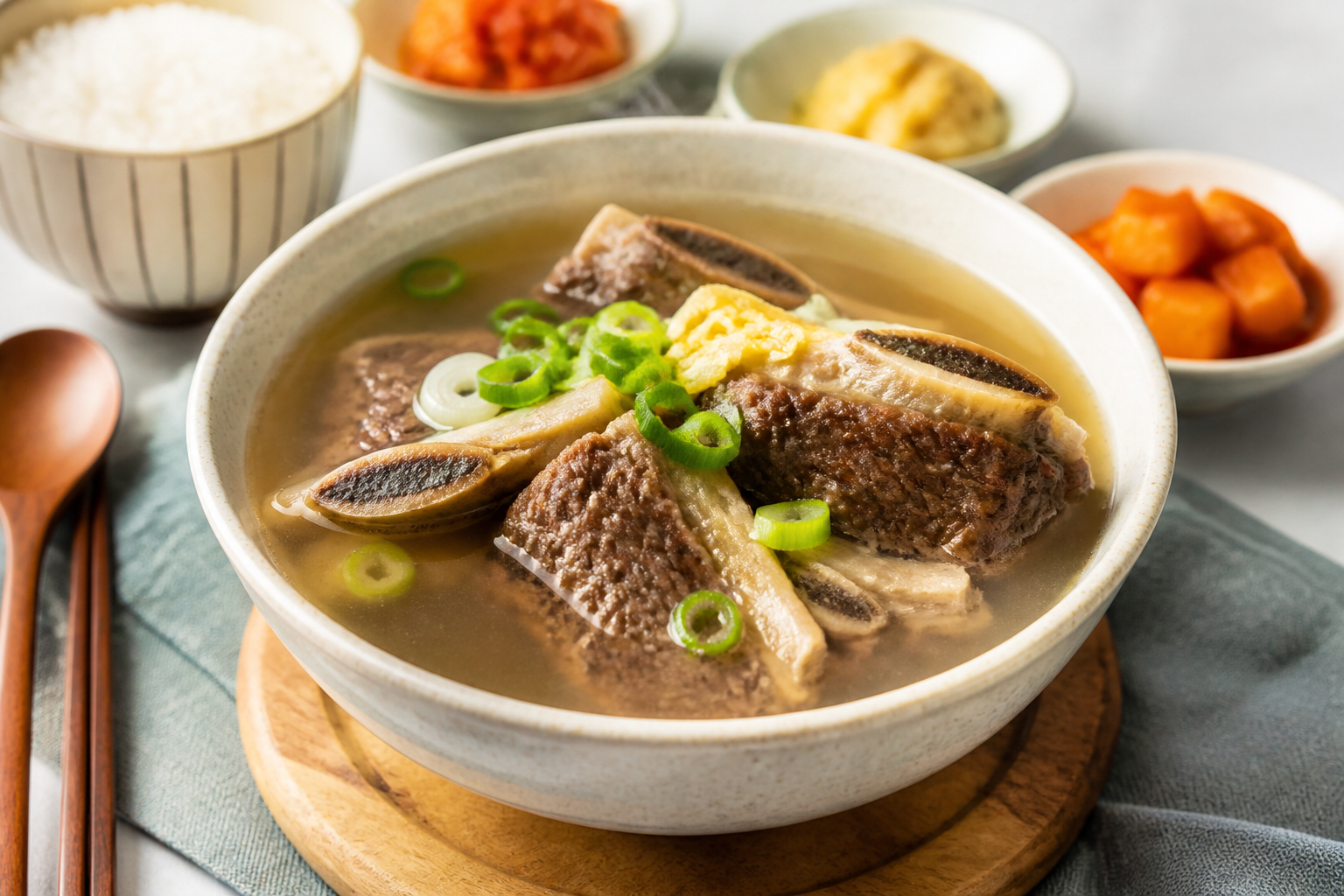
Easy Korean Galbitang Beef Rib Soup Recipe for Cozy Family Dinners - Clear, Comforting, and Weeknight-Friendly
Ingredients
Method
- Soak the ribs: Rinse short ribs under cold water, then soak in a large bowl of cold water for 20–30 minutes to pull out excess blood. Change the water once. This helps keep the broth clear.
- Quick blanch: Place ribs in a pot, cover with fresh cold water, and bring to a rolling boil. Boil 5 minutes. Drain, rinse the ribs under warm water, and rinse the pot to remove scum.
- Build the broth: Return ribs to the clean pot. Add 10–12 cups water, onion (halved), crushed garlic, ginger, white parts of green onions, and peppercorns. Bring to a boil, then lower to a gentle simmer.
- Simmer low and slow: Partially cover and simmer for 1.5–2 hours, skimming any foam or fat. The meat should be very tender and nearly falling off the bone.
- Prep vegetables and noodles: Peel and cut daikon into 1-inch chunks or thick half-moons. Soak glass noodles in warm water for 20 minutes, then drain.
- Add daikon: Remove onion and ginger slices from the pot. Add daikon and simmer 20–25 minutes until just tender.
- Season the broth: Add 1 tablespoon soy sauce and 1 teaspoon salt. Taste and adjust with more salt or soy. The broth should be savory but still clean.
- Finish with noodles: Add soaked glass noodles and cook 3–5 minutes, just until soft and springy.
- Garnish and serve: Ladle into bowls. Top with sliced green onion, a crack of black pepper, and a few drops of sesame oil if you like. Serve with steamed rice and extra salt at the table.
Printable Recipe Card
Want just the essential recipe details without scrolling through the article? Get our printable recipe card with just the ingredients and instructions.