
Easy Korean Bossam Boiled Pork Belly Recipe for Beginners
Bossam is Korean boiled pork belly that’s tender, savory, and perfect for wrapping in lettuce with a little kimchi. If you’re new to Korean cooking, this dish is a great place to start. The cooking is mostly hands-off, and the ingredients are easy to find.
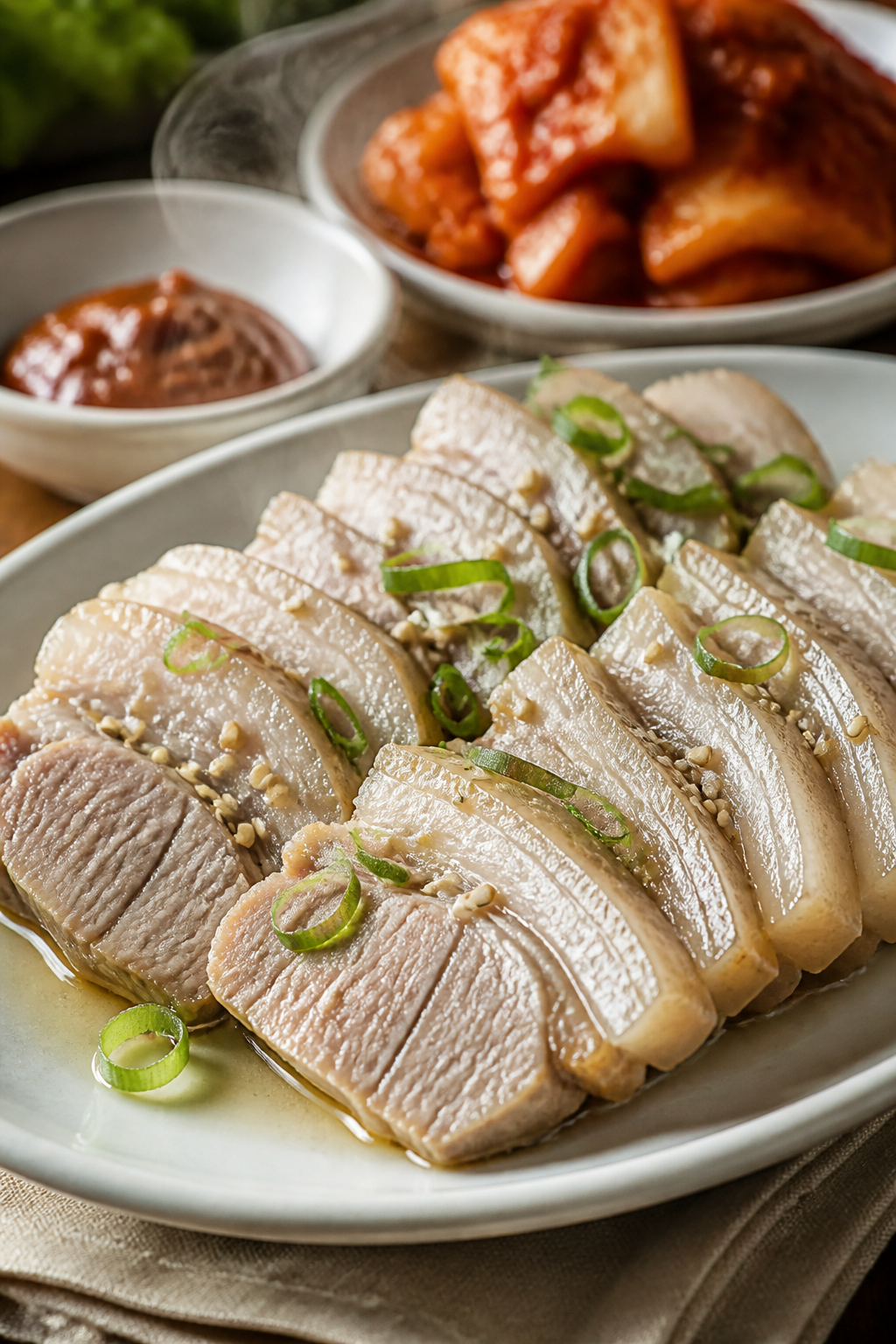
You’ll get juicy slices of pork, a fragrant broth, and a meal that feels special without being complicated. Let’s keep it simple, delicious, and beginner-friendly.
Why This Recipe Works
- Gentle simmering keeps the pork belly tender and moist instead of chewy.
- Aromatic broth with garlic, ginger, onion, and soy sauce adds flavor without marinating.
- Balanced seasoning creates savory meat that pairs perfectly with crisp lettuce and spicy kimchi.
- Beginner-friendly steps rely on timing and simple slicing—no special techniques needed.
What You’ll Need
- 2 pounds (900 g) pork belly, in one solid slab
- 10 cups water (enough to cover the meat)
- 1 small onion, halved
- 8–10 garlic cloves, smashed
- 1-inch piece ginger, sliced
- 3 scallions, cut into large pieces (optional)
- 1/3 cup soy sauce
- 2 tablespoons rice wine or sake (optional but recommended)
- 1 tablespoon sugar or honey
- 1 teaspoon whole black peppercorns (or 1/2 teaspoon ground)
- 1–2 bay leaves (optional)
- 1/2 cup Korean radish or daikon, thick slices (optional but classic)
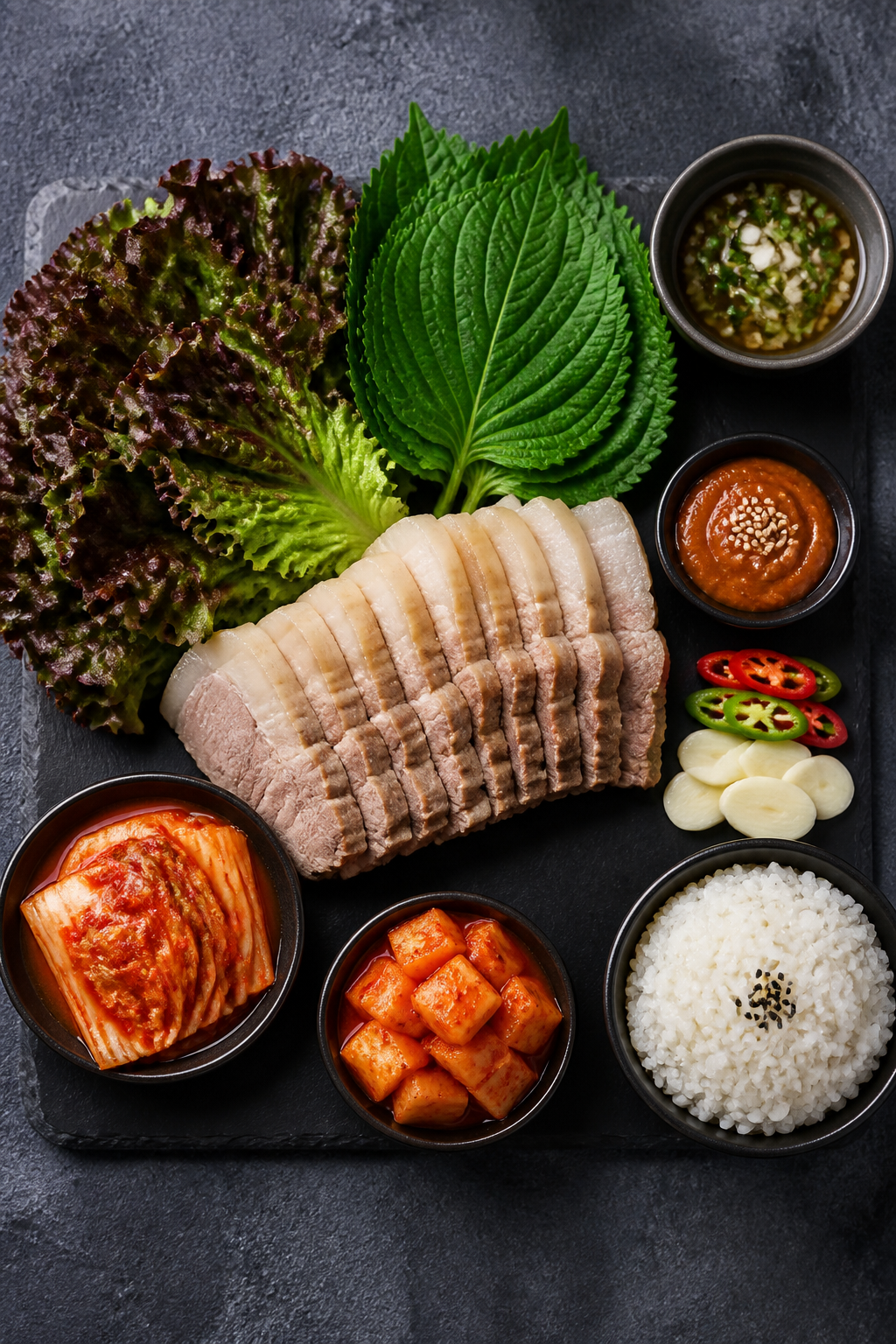
- For serving: red or green leaf lettuce, perilla leaves (if available), napa kimchi or radish kimchi, sliced fresh chilies, raw garlic slices, ssamjang (Korean dipping sauce), and steamed rice
Instructions
- Rinse and prep: Rinse the pork belly under cold water and pat dry. Trim any loose bits.Keep the slab whole for even cooking.
- Build the broth: In a large pot, add water, onion, garlic, ginger, scallions, soy sauce, rice wine, sugar, peppercorns, bay leaves, and radish/daikon if using.
- Add the pork: Gently place the pork belly into the pot. Liquid should cover it by at least 1 inch. If not, add a little more water.
- Bring to a boil, then simmer: Bring to a strong boil over high heat for 5 minutes.Skim off any foam. Reduce to a gentle simmer, cover partially, and cook for 60–75 minutes, turning the pork once halfway through.
- Check doneness: The pork is ready when a chopstick or fork slides in easily and the center is no longer pink. Internal temperature should be about 195–200°F (90–93°C) for ultra-tender slices.
- Rest and slice: Remove the pork and rest for 10–15 minutes.Slice across the grain into 1/4-inch (0.5 cm) pieces. Thicker slices are fine if you prefer a meatier bite.
- Warm serving option: Keep slices moist by ladling a bit of hot broth over them or keeping them tented with foil.
- Serve: Set out lettuce, perilla leaves, kimchi, ssamjang, chilies, and garlic slices. To eat, place pork on a leaf, add a dab of ssamjang and a bit of kimchi, wrap, and enjoy.
Storage Instructions
- Refrigerate: Cool completely, then store sliced pork with a little broth in an airtight container for up to 4 days.
- Freeze: Portion with broth in freezer bags for up to 2 months.Thaw overnight in the fridge.
- Reheat: Gently warm in a covered pan with a splash of broth or water over low heat until just hot. Avoid microwaving on high; it can toughen the meat.
Health Benefits
- High in protein: Supports muscle repair and keeps you full.
- Broth-based cooking: Uses water and aromatics instead of heavy sauces or frying.
- Balanced plate: Pairing with lettuce, perilla, and kimchi adds fiber, vitamins, and probiotics.
- Customizable fat level: You can trim the fat cap after cooking or choose leaner slices when serving.
What Not to Do
- Don’t boil aggressively the whole time. A hard boil toughens the meat. Keep it at a gentle simmer.
- Don’t slice right away. Resting helps the juices redistribute and keeps slices tender.
- Don’t underseason the broth. The pork draws flavor from it; taste and adjust salt/soy if needed.
- Don’t overcook to dryness. Check around 60 minutes; continue only until tender.
Alternatives
- No soy sauce? Use tamari or a light mix of fish sauce and salt.Start small and taste.
- No rice wine? Substitute with dry white wine or skip and add a splash of apple juice.
- Spice boost: Add 1–2 dried chilies or a spoon of gochujang to the broth for gentle heat.
- Different cut: Pork shoulder works. Increase simmer time to 90–110 minutes until tender.
- Glaze finish: For a glossy look, brush sliced pork with a mix of 1 tablespoon soy sauce and 1 teaspoon honey warmed with a little broth.
FAQ
Can I make this ahead?
Yes. Cook, cool, and slice the pork, then store with some broth. Reheat gently before serving. It actually slices cleaner when chilled.
Is pork belly too fatty?
Bossam is meant to be rich, but you can trim the fat cap after cooking or serve thinner slices with lots of lettuce and kimchi to balance it out.
What can I use instead of ssamjang?
Mix 2 parts doenjang (soybean paste) with 1 part gochujang, a drizzle of sesame oil, a little minced garlic, and a pinch of sugar. In a pinch, miso mixed with chili paste works.
How do I know it’s tender enough?
A fork should slide in with little resistance, and slices should be moist, not crumbly. If it feels tight, simmer another 10–15 minutes and test again.
Can I use an Instant Pot?
Yes. Pressure cook on High for 35 minutes with natural release for 15 minutes, then quick release. Rest and slice as usual.
In Conclusion
Bossam looks impressive but is surprisingly simple. With a gentle simmer and a well-seasoned broth, you’ll get tender pork that pairs beautifully with fresh greens and tangy kimchi. Keep the steps easy, taste as you go, and enjoy a cozy, shareable meal that’s perfect for beginners.
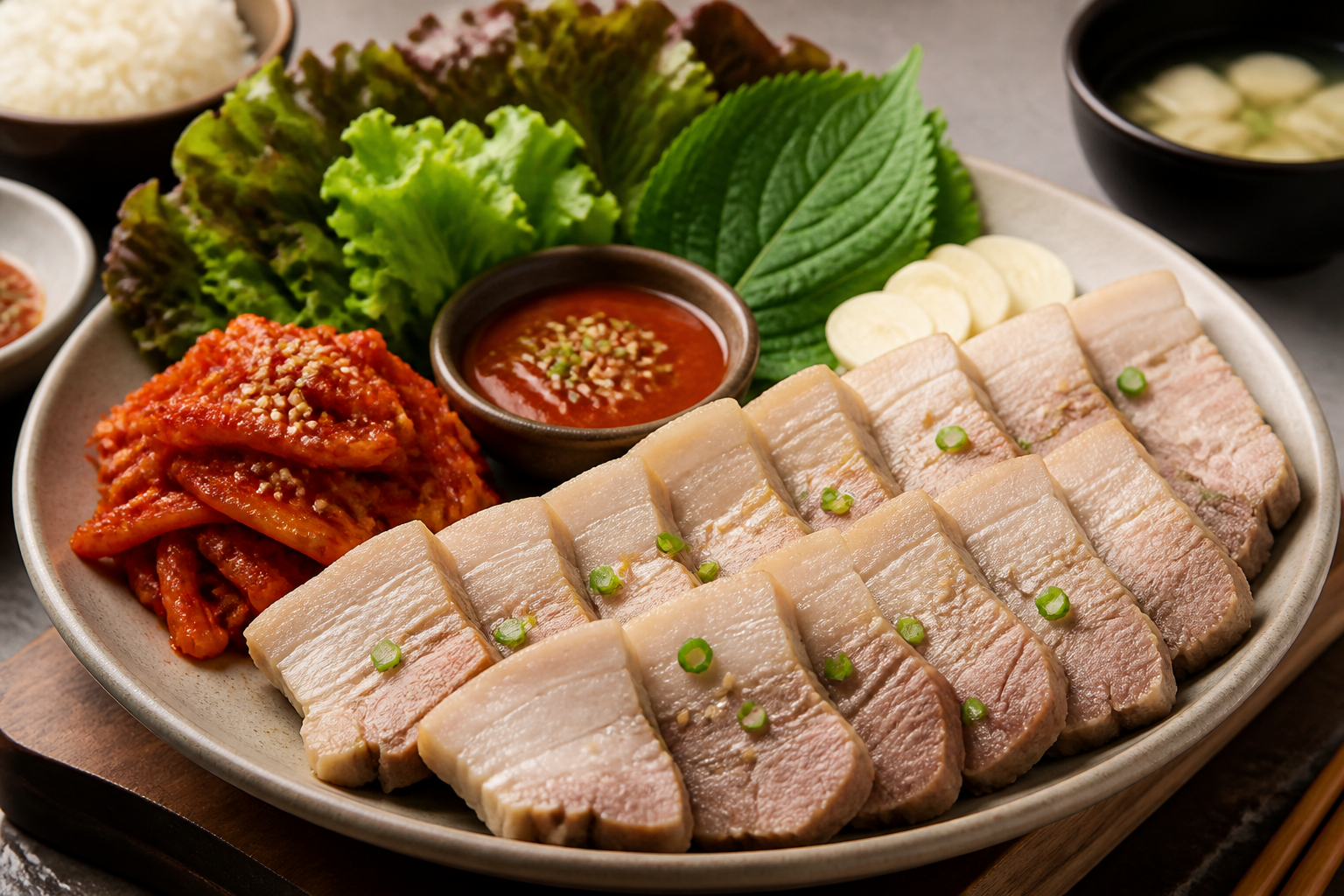
Easy Korean Bossam Boiled Pork Belly Recipe for Beginners - Tender, Flavorful, and Simple
Ingredients
Method
- Rinse and prep: Rinse the pork belly under cold water and pat dry. Trim any loose bits. Keep the slab whole for even cooking.
- Build the broth: In a large pot, add water, onion, garlic, ginger, scallions, soy sauce, rice wine, sugar, peppercorns, bay leaves, and radish/daikon if using.
- Add the pork: Gently place the pork belly into the pot. Liquid should cover it by at least 1 inch. If not, add a little more water.
- Bring to a boil, then simmer: Bring to a strong boil over high heat for 5 minutes. Skim off any foam. Reduce to a gentle simmer, cover partially, and cook for 60–75 minutes, turning the pork once halfway through.
- Check doneness: The pork is ready when a chopstick or fork slides in easily and the center is no longer pink. Internal temperature should be about 195–200°F (90–93°C) for ultra-tender slices.
- Rest and slice: Remove the pork and rest for 10–15 minutes. Slice across the grain into 1/4-inch (0.5 cm) pieces. Thicker slices are fine if you prefer a meatier bite.
- Warm serving option: Keep slices moist by ladling a bit of hot broth over them or keeping them tented with foil.
- Serve: Set out lettuce, perilla leaves, kimchi, ssamjang, chilies, and garlic slices. To eat, place pork on a leaf, add a dab of ssamjang and a bit of kimchi, wrap, and enjoy.
Printable Recipe Card
Want just the essential recipe details without scrolling through the article? Get our printable recipe card with just the ingredients and instructions.