
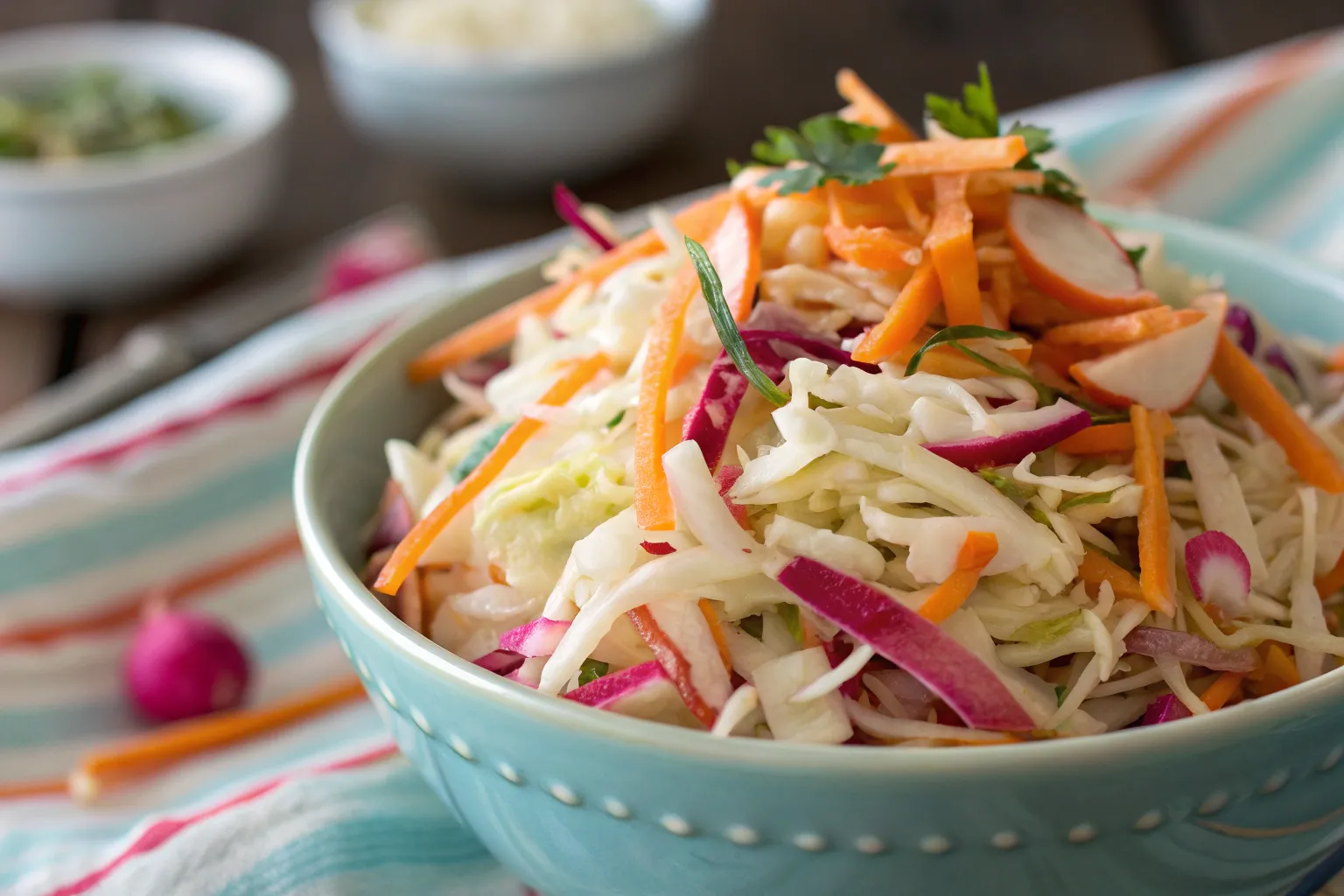
Classic Gut-Boosting Fermented Cabbage Slaw

Fermented foods are the cornerstone of gut health, and Classic Gut-Boosting Fermented Cabbage Slaw is a delicious, tangy, and nourishing way to support digestion. Unlike traditional slaws with mayonnaise or heavy dressings, this version harnesses the power of fermentation, transforming humble cabbage into a probiotic-rich superfood. Whether you’re looking to improve your digestion, enhance immunity, or simply enjoy a crunchy, tangy side, this fermented cabbage slaw delivers. It’s vibrant, crisp, and incredibly versatile, perfect alongside grilled meats, sandwiches, or as part of a wholesome salad bowl.
What Is Fermented Cabbage Slaw?
Fermented cabbage slaw is shredded cabbage and often carrots, onions, or other vegetables, fermented in a simple brine of salt and water. Over several days, beneficial bacteria (probiotics) break down the sugars in the cabbage, creating lactic acid that gives the slaw its signature tang. The fermentation process not only enhances flavor but also boosts the nutrient profile, improving vitamin availability and supporting a healthy gut microbiome. Unlike vinegar-based slaws, fermented slaw is alive with friendly bacteria that promote digestion and overall wellness.
Why You’ll Love This Slaw
- Rich in probiotics for gut health
- Naturally tangy and refreshing
- Low-calorie, nutrient-dense, and vegan
- Easy to make with simple ingredients
- Perfect for meal prep
- Versatile, pairs with any protein or grain
Ingredients
- 1 medium green cabbage, shredded
- 2 medium carrots, peeled and shredded
- 1 small onion, thinly sliced
- 1–2 tablespoons sea salt or kosher salt
- Optional additions:
- 1 teaspoon caraway seeds
- 1 teaspoon mustard seeds
- 1 small jalapeño, sliced for heat
- ½ teaspoon crushed red pepper flakes
Tip: Use non-iodized salt to avoid inhibiting fermentation.
How to Make Fermented Cabbage Slaw
Step 1: Prepare the Vegetables
Shred cabbage and carrots finely. Thinly slice the onion. Combine all vegetables in a large bowl.
Step 2: Massage with Salt
Sprinkle salt evenly over the vegetables. Massage for 5–10 minutes, pressing and squeezing until the cabbage softens and releases its natural juices.
Step 3: Pack Into a Jar
Transfer the mixture to a clean glass jar or fermentation crock. Press down firmly to submerge the vegetables under their own brine. Leave about 1–2 inches of headspace at the top.
Step 4: Optional Flavor Additions
Add caraway seeds, mustard seeds, or chili slices for extra flavor.
Step 5: Ferment
Cover the jar with a cloth or a loosely fitting lid to allow gases to escape. Store at room temperature (65–75°F) for 3–7 days. Taste daily until the slaw reaches your desired tanginess.
Step 6: Refrigerate
Once fermented to your liking, seal the jar with a tight lid and store in the refrigerator. The flavors will continue to develop slowly.
Flavor and Texture
Fermented cabbage slaw is tangy, crunchy, and refreshing. The natural fermentation brings a mild sourness balanced by the subtle sweetness of carrots. The texture remains crisp yet tender, and optional spices like caraway or chili add aromatic depth and a touch of heat. Every bite is alive with probiotics, making it a functional, gut-friendly dish that’s both delicious and nourishing.
Tips for Perfect Fermentation
- Use a fermentation weight or a small clean jar to keep cabbage submerged.
- Avoid using metal lids that directly contact the brine for extended periods—glass is best.
- Ensure all vegetables are submerged to prevent mold.
- Start tasting at day 3; fermentation speed varies by temperature.
- Cooler rooms slow fermentation; warmer rooms speed it up.
Variations
Spicy Fermented Slaw
Add sliced jalapeños, red pepper flakes, or a touch of ginger for a kick.
Sweet & Tangy
Include thinly sliced apples or beets for natural sweetness.
Asian-Inspired
Add grated daikon, ginger, and a splash of coconut aminos for a mild umami flavor.
Caraway & Mustard Seed
Classic Eastern European flavors give a nutty, aromatic twist.
Make-Ahead and Storage
- Refrigeration: Fermented slaw keeps in the fridge for 2–4 months. The flavor continues to develop over time.
- Serving Tip: Stir before serving to mix the brine back in.
- Batch Prep: Ferment in multiple smaller jars for easier portioning and faster fermentation.
When to Serve Fermented Cabbage Slaw
- As a side with roasted or grilled meats
- Alongside fish or seafood
- Topping for tacos, sandwiches, or grain bowls
- On charcuterie boards
- As a refreshing salad on hot days
Health Benefits
- Rich in Probiotics: Supports digestion, immunity, and nutrient absorption.
- High in Fiber: Aids in bowel regularity.
- Low-Calorie, Nutrient-Dense: High in vitamin C, K, and antioxidants.
- Supports Gut Health: Improves microbiome diversity and overall digestive wellness.
Serving Ideas
- Gut-Boosting Bowl: Add slaw atop grains, roasted vegetables, and protein for a balanced, probiotic-rich meal.
- Sandwich Topping: Swap mayonnaise for tangy fermented slaw on burgers, wraps, or sandwiches.
- Taco or Burrito Addition: Adds crunch, acidity, and flavor to tacos and bowls.
- Side Dish: Serve alongside roasted chicken, pork, or fish for a refreshing balance.
Conclusion
Classic Gut-Boosting Fermented Cabbage Slaw is more than a side dish, it’s a functional, nourishing food that supports digestion, boosts your microbiome, and adds flavor and crunch to meals. With minimal effort and simple ingredients, you can make a batch that keeps for months, continually developing richer, tangier flavors over time. Whether you enjoy it as a side, topping, or snack, this fermented slaw is a delicious way to include probiotics and fiber in your diet. Simple, versatile, and gut-friendly, it’s a recipe you’ll return to again and again. 🥬✨🦠
Frequently Asked Questions(FAQs)
What is fermented cabbage slaw?
Fermented cabbage slaw is shredded cabbage (often with other vegetables) that’s salted and left to naturally ferment, creating a tangy, probiotic-rich side dish.
How long does it take to ferment?
Fermentation usually takes 3–7 days at room temperature, depending on the temperature and your taste preference. Taste daily until it reaches the desired tanginess.
Do I need a starter culture?
No starter is required. The natural bacteria on the cabbage and other vegetables initiate fermentation.
Can I use red cabbage instead of green?
Yes, red cabbage works well. It adds a slightly sweeter flavor and a vibrant color to your slaw.
Can I add other vegetables?
Absolutely. Carrots, beets, radishes, and bell peppers are great additions to add color, texture, and flavor.
Do I need special equipment to ferment cabbage slaw?
No special equipment is necessary. A clean glass jar or fermentation crock and a way to keep the vegetables submerged in brine are sufficient.
Is fermented cabbage slaw safe to eat for everyone?
Yes, it’s generally safe, but those with severe digestive issues should consult a healthcare provider before consuming fermented foods.
How long does it last in the fridge?
Once refrigerated, fermented slaw lasts 2–4 months. It will gradually become tangier over time.
Can I add vinegar to speed up tanginess?
While vinegar is not necessary for traditional fermentation, a small splash can be added after fermentation if you want extra tang.
Can I use table salt?
It’s best to use non-iodized salt like sea salt or kosher salt, as iodine can inhibit fermentation.
Is fermented slaw the same as sauerkraut?
Not exactly. Sauerkraut is typically just cabbage and salt, while fermented slaw can include additional vegetables, spices, and flavorings.
How should I serve fermented cabbage slaw?
Serve it as a side, as a topping for tacos or sandwiches, or mixed into grain bowls for a probiotic-rich boost.