
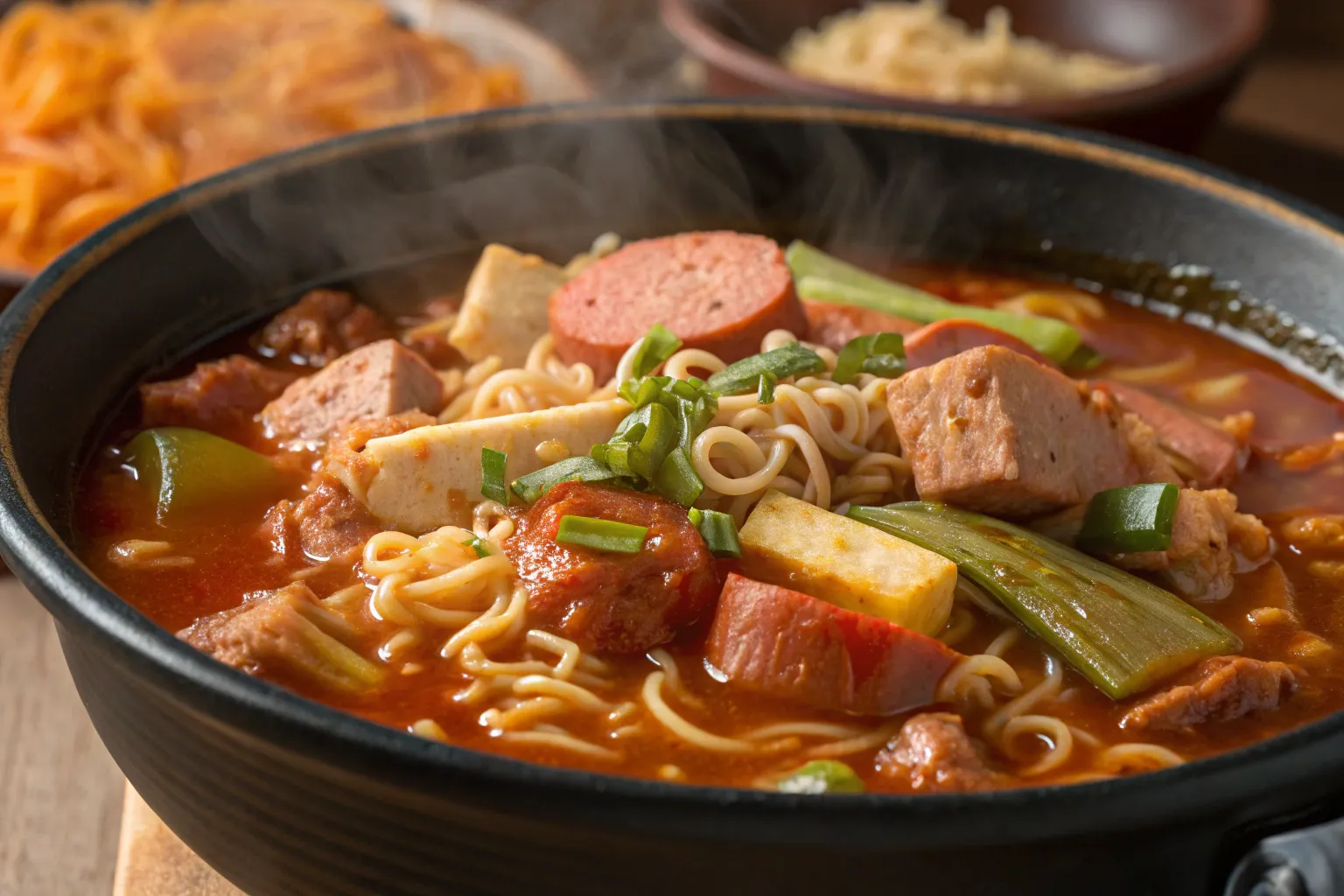
Budae Jjigae (Korean Army Stew)

Budae Jjigae, or Korean Army Stew, is a hearty, spicy, and comforting dish that blends traditional Korean flavors with convenient pantry ingredients. Originating after the Korean War, it was created using surplus processed foods like spam, hot dogs, and canned beans combined with kimchi, gochujang, and vegetables. Today, it’s a beloved communal stew, perfect for sharing with family and friends during cold evenings or casual gatherings.
Why You’ll Love This Recipe
This stew is packed with flavor, texture, and umami from a mix of savory meats, tangy kimchi, spicy chili paste, and soft tofu. It’s versatile, quick to make, and perfect for a one-pot meal. The combination of ingredients creates a unique sweet-spicy balance with satisfying heartiness. Everyone can customize it with their favorite proteins and vegetables, making it a fun and interactive meal.
Nutritional Info
Budae Jjigae is rich in protein and fiber from meat, tofu, and vegetables. The stew also provides probiotics from kimchi and is moderately high in sodium due to processed meats and sauces. Adjusting the amount of processed meats and using low-sodium broth can make it lighter while keeping the flavor intact.
Time Taken
Prep time: 10–15 minutes
Cooking time: 15–20 minutes
Total time: 30–35 minutes
Ingredients
- Spam or ham, sliced
- Hot dogs or sausages, sliced
- Kimchi
- Onion, sliced
- Mushrooms (shiitake or enoki)
- Tofu, cut into cubes
- Rice cakes (tteokbokki style)
- Cabbage or bok choy
- Garlic, minced
- Gochujang (Korean chili paste)
- Gochugaru (Korean chili flakes)
- Soy sauce
- Sugar
- Chicken or beef broth
- Green onions, sliced
- Optional: instant ramen noodles
Instructions

Arrange sliced meats, tofu, kimchi, mushrooms, and vegetables in a large shallow pot. In a small bowl, mix gochujang, soy sauce, sugar, garlic, and a little broth to form a flavorful sauce. Pour the sauce over the arranged ingredients. Add remaining broth until partially covering the ingredients. Bring to a boil over medium-high heat, then reduce to a simmer for 10–15 minutes. Optionally, add instant ramen noodles and cook until soft. Garnish with green onions before serving. Serve hot and enjoy directly from the pot.
You Must Know
Budae Jjigae is best served immediately while the broth is hot and the meats are tender. The dish is meant to be communal, so using a shallow wide pot allows everyone to reach their favorite ingredients. Adjust the spiciness with more or less gochugaru or gochujang.
Storage Tips
Store leftover stew in an airtight container in the refrigerator for up to two days. Reheat on the stovetop and add a splash of water or broth to restore consistency. Avoid freezing noodles as they can become mushy.
Ingredient Substitutions
- Replace spam and hot dogs with cooked chicken, pork, or beef slices.
- Use different vegetables like zucchini, carrots, or bell peppers.
- Swap rice cakes for cooked potatoes or sweet potatoes for variation.
- For vegetarian versions, omit meat and use extra tofu and mushrooms.
Serving Suggestions

Serve with steamed rice, kimchi, or pickled vegetables on the side. It’s also delicious with a fried egg on top or paired with simple banchan (Korean side dishes).
Cultural and Historical Context
Budae Jjigae was created in post-war Korea using surplus American army rations like Spam, hot dogs, and canned beans, combined with Korean staples like kimchi and gochujang. The dish symbolizes resourcefulness and resilience while merging Western and Korean flavors. It has since become a popular comfort food in Korea and internationally.
Seasonal Adaptations
- Winter: Add extra kimchi, mushrooms, and noodles for a hearty, warming stew.
- Summer: Use lighter vegetables and reduce processed meats for a lighter version.
- Spring/Fall: Include seasonal greens like bok choy, napa cabbage, or zucchini for freshness.
Success Stories
Many home cooks enjoy making Budae Jjigae for family dinners and gatherings because it’s interactive, flavorful, and comforting. Restaurants often serve it bubbling hot at the table, making it a favorite for group meals.
Freezer Meal Conversion
You can prep the meat, sauce, and vegetables separately and freeze them. Combine and cook fresh when ready to serve. Avoid freezing tofu and noodles as their texture changes.
Pro Tips
- Arrange ingredients aesthetically for even cooking and easy serving.
- Adjust the broth level according to preference; some like it soupy, others thick.
- Add instant noodles at the end to prevent overcooking.
Chef’s Special Tips
Toast sesame seeds over the stew before serving for extra aroma. Drizzle a little sesame oil for richness. For a smokier flavor, sauté kimchi lightly before adding to the stew.
Conclusion
Budae Jjigae is a hearty, spicy, and comforting dish that combines history, flavor, and convenience. It’s perfect for sharing, customizable to taste, and easy to prepare at home. Try this recipe to bring a taste of Korea’s iconic army stew to your table.
FAQs
Can I make Budae Jjigae less spicy?
Yes. Reduce the amount of gochujang and gochugaru, or add more broth to mellow the heat.
Can I use other meats instead of Spam and hot dogs?
Yes. Sliced chicken, pork, beef, or even bacon works well. Adjust cooking times accordingly.
Can this dish be made vegetarian?
Yes. Omit the processed meats and use extra tofu, mushrooms, and vegetables. Use vegetable broth instead of meat-based broth.
Do I have to use kimchi?
While kimchi adds traditional tang and depth, you can omit it or use fermented cabbage or pickled vegetables as a substitute.
Can I make this ahead of time?
You can prep the ingredients and sauce in advance, but it’s best to cook and serve immediately for the freshest flavors and textures.
What can I serve with Budae Jjigae?
Serve with steamed rice, pickled vegetables, and banchan (Korean side dishes). A fried egg on top is optional and popular.
Can I freeze leftovers?
You can freeze the broth and meats separately, but noodles and tofu don’t freeze well. Reheat the stew fresh for best texture.
Can I add instant ramen noodles?
Yes. Add them near the end of cooking to avoid overcooking.
Why is my stew too salty?
Processed meats and gochujang contain salt. Reduce soy sauce or broth saltiness, and taste as you go.
Can I make it in one pot?
Yes. A wide, shallow pot works best for even cooking and communal serving.
Printable Recipe Card
Want just the essential recipe details without scrolling through the article? Get our printable recipe card with just the ingredients and instructions.