
Bibim Guksu Spicy Cold Noodles – A Bright, Refreshing Korean Favorite
Bibim guksu is the kind of dish you crave on a warm day: cool noodles, a sweet-spicy kick, and crisp veggies that make every bite pop. It’s quick to put together and doesn’t require turning on the oven. The star is the sauce tangy, garlicky, and full of gochujang heat balanced with a touch of sweetness.
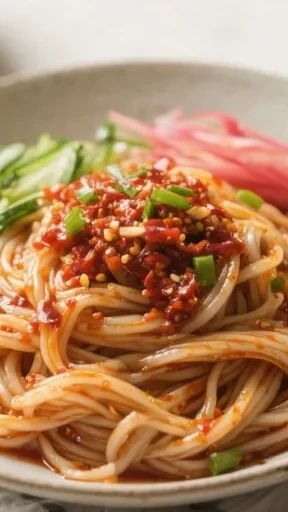
If you love bold flavor without heavy effort, this bowl is your answer.
Why This Recipe Works
- Balanced flavors: Gochujang brings heat and depth, rice vinegar adds tang, and sugar or honey rounds it out.
- Texture contrast: Springy noodles meet crunchy cucumbers and carrots for satisfying bites.
- Cold rinse technique: Rinsing and rubbing the noodles removes excess starch, keeping them bouncy, not sticky.
- Customizable: Add an egg, canned tuna, or kimchi to make it heartier without complicating the recipe.
Ingredients
- Noodles: 8 oz (225 g) somyeon/somen (thin wheat noodles)
- Vegetables: 1 small cucumber (julienned), 1 small carrot (julienned), 1 cup napa cabbage or lettuce (shredded), 2 radishes (thinly sliced), 1 cup mung bean sprouts (optional)
- Protein/Extras (optional): 1 soft- or hard-boiled egg (halved), 1 small can tuna (drained), 1/2 cup kimchi (sliced), 1/2 Korean or Asian pear (thinly sliced)
- Garnishes: 1 tablespoon toasted sesame seeds, 1 scallion (thinly sliced), roasted seaweed strips (optional)
- Sauce:
- 2 tablespoons gochujang (Korean red chili paste)
- 1 tablespoon gochugaru (Korean chili flakes), optional for extra heat
- 1 1/2 tablespoons soy sauce
- 2 tablespoons rice vinegar
- 1 1/2 tablespoons sugar or honey
- 1 tablespoon sesame oil
- 1 clove garlic (grated)
- 1 teaspoon grated ginger (optional)
- 1–2 tablespoons cold water (to loosen as needed)
- For boiling: Salt for cooking water
How to Make It
- Prep the vegetables: Julienne the cucumber and carrot. Shred the cabbage or lettuce. Slice radishes thin.Set everything in the fridge to keep it crisp.
- Make the sauce: In a bowl, whisk gochujang, soy sauce, rice vinegar, sugar or honey, sesame oil, garlic, and optional gochugaru and ginger. Add cold water, 1 tablespoon at a time, until pourable but still thick.
- Cook the noodles: Bring a large pot of salted water to a rolling boil. Add somyeon and cook 3–4 minutes or until just tender.
- Rinse and chill: Drain and immediately rinse noodles under very cold water.Rub gently with your hands to remove starch. Drain well.
- Toss with sauce: In a large bowl, combine cold noodles with the sauce until evenly coated.
- Assemble: Top with cucumber, carrot, cabbage or lettuce, and radishes. Add egg, tuna, kimchi, or pear if using.
- Garnish and serve: Sprinkle sesame seeds, scallions, and seaweed strips.Taste and adjust with more vinegar for tang, sugar for sweetness, or gochugaru for heat.
Storage Instructions
- Keep components separate: Store noodles, sauce, and veggies in separate containers for up to 3 days.
- If already mixed: Eat within 24 hours. The noodles will soften over time.
- Refreshing leftovers: Add a splash of rice vinegar, a drizzle of sesame oil, and a few ice cubes to perk up chilled noodles before serving.
- Eggs and tuna: Store covered and consume within 2 days.
Health Benefits
- Light yet satisfying: Thin wheat noodles with lots of vegetables make a balanced, lower-calorie meal.
- Healthy fats: Sesame oil and seeds provide heart-friendly unsaturated fats.
- Fiber and antioxidants: Cucumber, carrot, cabbage, and radish add crunch, vitamins A and C, and gut-friendly fiber.
- Protein options: Egg or tuna boosts satiety and supports muscle repair.
What Not to Do
- Don’t skip the cold rinse: Warm, starchy noodles will clump and dull the flavors.
- Don’t overdress: Too much sauce can make noodles pasty. Start with less, add more as needed.
- Don’t use thick noodles: This dish shines with thin, quick-cooking noodles like somyeon or somen.
- Don’t forget acidity: The vinegar keeps the flavor bright.Without it, the sauce tastes flat.
Variations You Can Try
- Vegan: Skip egg and tuna, and add baked tofu or edamame.
- Extra fruity: Add thin slices of Korean pear, apple, or even a few cubes of chilled watermelon for a sweet contrast.
- Nutty boost: Stir a spoonful of tahini or peanut butter into the sauce for creaminess and extra body.
- More crunch: Top with roasted peanuts or almond slivers.
- Kimchi-forward: Mix in chopped kimchi and a splash of kimchi brine for tang and depth.
FAQ
Can I use other noodles?
Yes. Somen, thin spaghetti, or even rice vermicelli work in a pinch. Just watch cook times and cool thoroughly.
How spicy is this?
Medium heat as written. For milder noodles, reduce gochujang and skip gochugaru. For spicier, add more gochugaru or a dash of chili oil.
Can I make the sauce ahead?
Absolutely. Mix and refrigerate for up to 1 week. Stir before using and thin with cold water if it thickens.
What if I don’t have rice vinegar?
Use apple cider vinegar or white wine vinegar. Start with a bit less, then adjust to taste.
How do I prevent soggy noodles?
Rinse in ice-cold water, rub off excess starch, and drain very well. Toss right before serving and keep veggies separate until the end.
In Conclusion
Bibim guksu is bold, bright, and fast perfect for busy days and warm weather. With a punchy sauce and crisp toppings, it’s a crowd-pleaser you can customize in minutes. Keep the noodles cold, the flavors balanced, and you’ll have a refreshing bowl that never gets old.
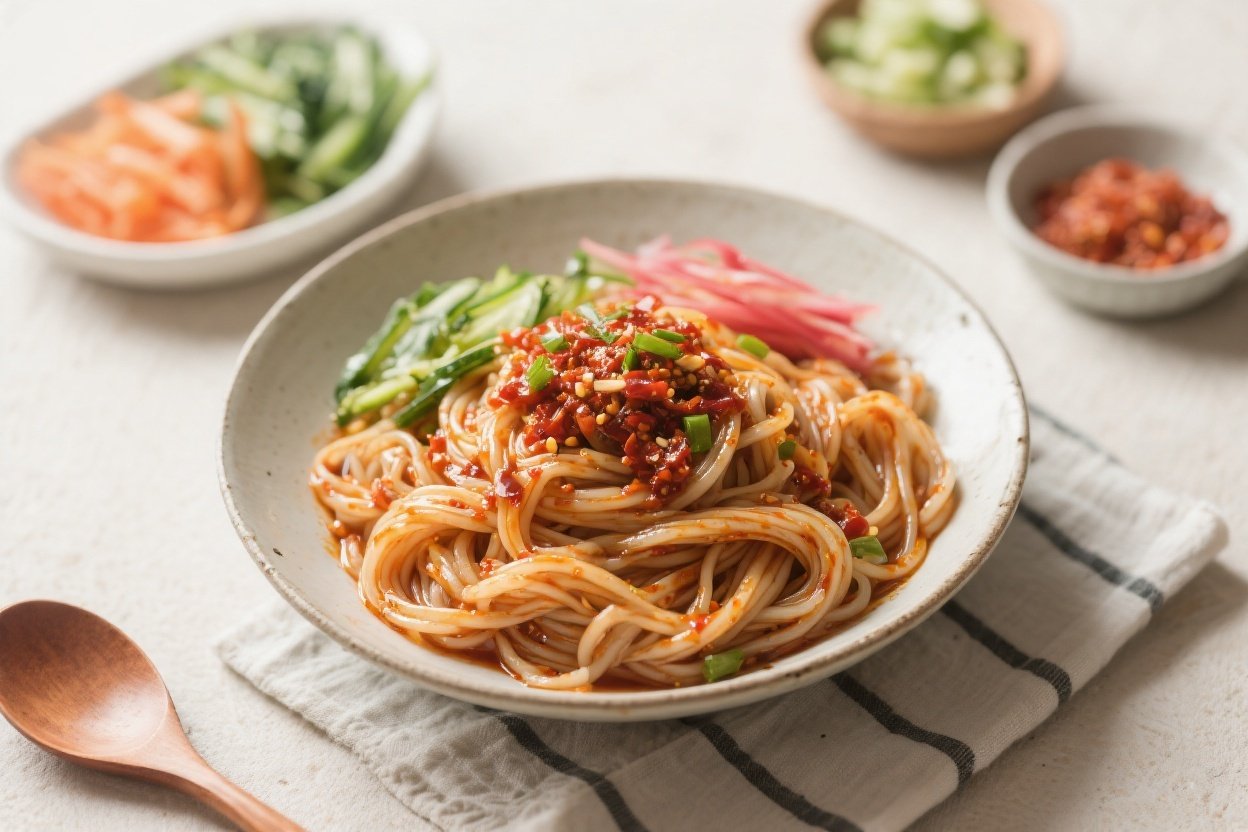
Ingredients
Method
- Prep the vegetables: Julienne the cucumber and carrot. Shred the cabbage or lettuce. Slice radishes thin. Set everything in the fridge to keep it crisp.
- Make the sauce: In a bowl, whisk gochujang, soy sauce, rice vinegar, sugar or honey, sesame oil, garlic, and optional gochugaru and ginger. Add cold water, 1 tablespoon at a time, until pourable but still thick.
- Cook the noodles: Bring a large pot of salted water to a rolling boil. Add somyeon and cook 3–4 minutes or until just tender.
- Rinse and chill: Drain and immediately rinse noodles under very cold water. Rub gently with your hands to remove starch. Drain well.
- Toss with sauce: In a large bowl, combine cold noodles with the sauce until evenly coated.
- Assemble: Top with cucumber, carrot, cabbage or lettuce, and radishes. Add egg, tuna, kimchi, or pear if using.
- Garnish and serve: Sprinkle sesame seeds, scallions, and seaweed strips. Taste and adjust with more vinegar for tang, sugar for sweetness, or gochugaru for heat.
Printable Recipe Card
Want just the essential recipe details without scrolling through the article? Get our printable recipe card with just the ingredients and instructions.