
Baked Halibut With Olives and Tomatoes
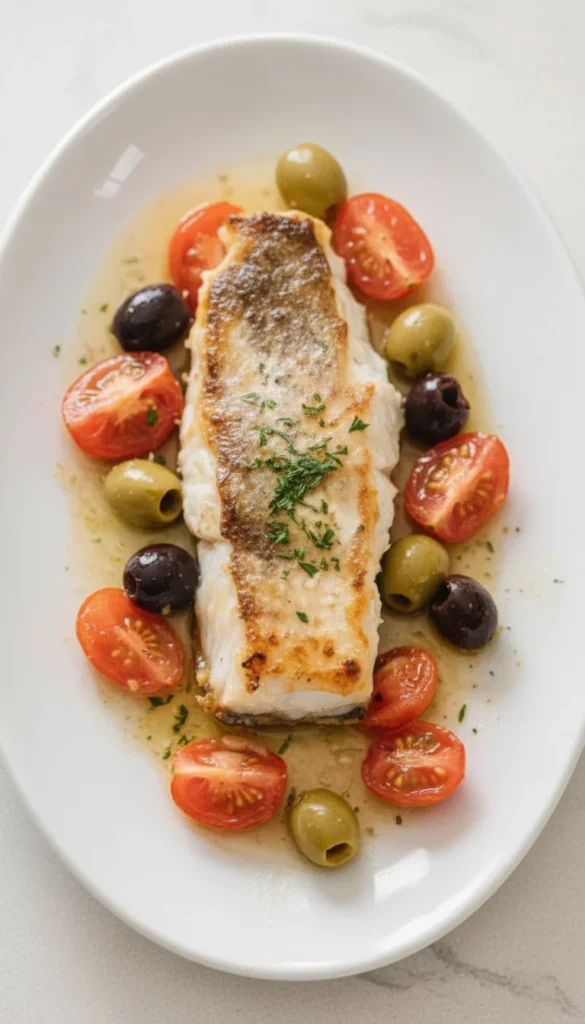
This baked halibut is the kind of dinner that looks impressive but takes almost no effort. Juicy cherry tomatoes burst in the oven, briny olives add punch, and garlic brings everything together. The halibut stays tender and flaky, soaking up all those Mediterranean flavors.
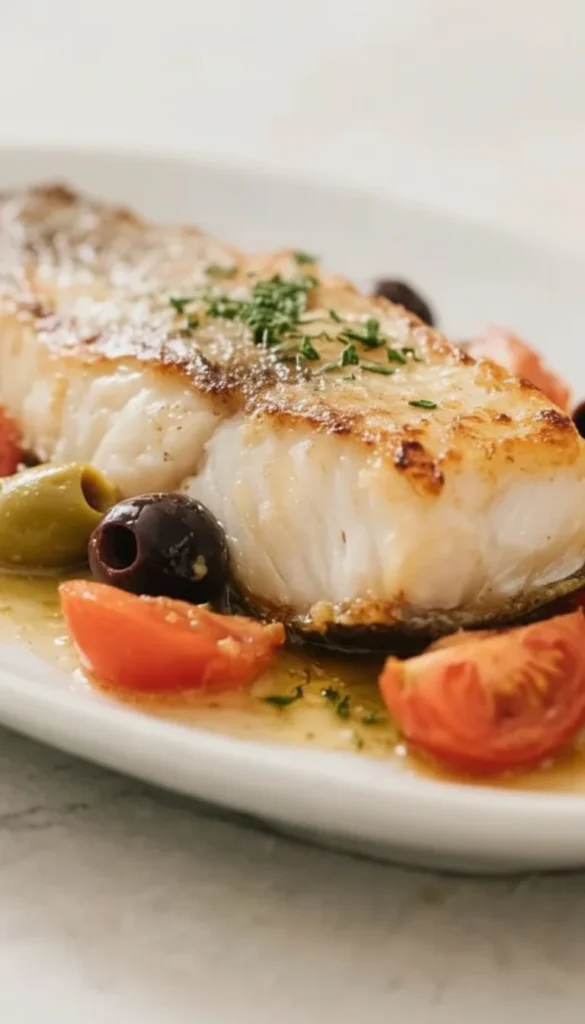
It’s light, fresh, and perfect for busy nights or easy entertaining. You’ll spend more time enjoying it than cooking it.
What Makes This Special
This recipe shines because it’s fast, forgiving, and full of flavor. The oven does most of the work, and the sauce essentially makes itself in the pan.
Tomatoes release their juices, which mingle with olive oil, lemon, and garlic to create a bright, silky base. Halibut’s mild flavor is the perfect canvas for salty olives and fresh herbs. Plus, clean-up is minimalone pan and you’re done.
What You’ll Need
- 1.5 to 2 pounds halibut fillets (about 4 portions, skinless if possible)
- 2 cups cherry or grape tomatoes, halved
- 1/2 cup pitted olives (Kalamata or mixed), roughly chopped
- 3 cloves garlic, thinly sliced
- 2 tablespoons extra-virgin olive oil
- 1 tablespoon fresh lemon juice, plus extra wedges for serving
- 1 teaspoon lemon zest (optional but great)
- 1/2 teaspoon red pepper flakes (optional, for gentle heat)
- Salt and freshly ground black pepper
- Fresh herbs (2 tablespoons chopped parsley, basil, or a mix)
Step-by-Step Instructions
- Preheat the oven: Set to 400°F (200°C).Line a baking dish with parchment or lightly oil it.
- Prep the base: In the baking dish, toss tomatoes, olives, and garlic with olive oil, lemon juice, lemon zest, red pepper flakes, a big pinch of salt, and black pepper. Spread into an even layer.
- Season the fish: Pat halibut dry. Season both sides with salt and pepper.Place fillets on top of the tomato-olive mixture.
- Bake: Cook for 10–14 minutes, depending on thickness. Halibut is done when it flakes easily and is opaque in the center. Aim for an internal temperature of 130–135°F (54–57°C) for juicy results.
- Rest and finish: Let the fish rest 3 minutes.Spoon the pan juices over the top. Scatter fresh herbs and add extra lemon if you like.
- Serve: Pair with crusty bread, couscous, roasted potatoes, or a simple green salad.
How to Store
- Refrigerate: Store leftovers in an airtight container for up to 2 days.
- Reheat gently: Warm in a 275°F (135°C) oven for 8–10 minutes or until just heated through. Avoid microwaving on high to prevent dryness.
- Use cold: Flake chilled leftover halibut into salads or grain bowls.It stays moist and tastes great with the tomato-olive juices.
Why This is Good for You
Halibut is a lean source of high-quality protein and provides selenium and vitamin B12. Tomatoes bring lycopene, an antioxidant that loves a little olive oil to help with absorption. Olives and extra-virgin olive oil supply heart-healthy fats. The dish is naturally gluten-free and can fit into Mediterranean-style eating with ease.
Common Mistakes to Avoid
- Overcooking the fish: Halibut dries out quickly. Start checking at 10 minutes and use a thermometer if possible.
- Skipping the seasoning: Salt the tomatoes and the fish. Balanced seasoning makes the flavors pop.
- Using a too-small pan: Crowding traps steam.Give the tomatoes room so they blister and sweeten.
- Forgetting to rest: A short rest keeps juices in the fish and lets flavors settle.
Variations You Can Try
- Add capers: A tablespoon adds bright, briny zing.
- Swap the fish: Try cod, haddock, or sea bass. Adjust cook time for thickness.
- Boost the veggies: Add sliced fennel, thin red onion, or zucchini rounds to the pan.
- Spice route: Stir in smoked paprika or za’atar for a different flavor profile.
- Herb mix: Use parsley and basil in summer; thyme and oregano in cooler months.
- Olive twist: Mix green Castelvetrano olives with Kalamatas for color and texture.
FAQ
How do I know when halibut is done?
Look for opaque flesh that flakes easily with a fork and an internal temperature of 130–135°F (54–57°C). If it still looks translucent in the center, give it another minute or two.
Can I use frozen halibut?
Yes. Thaw it fully in the fridge overnight, then pat dry very well before seasoning. Excess moisture can prevent good texture and dilute the pan juices.
What if I don’t have cherry tomatoes?
Use diced ripe tomatoes. Drain any excess liquid so the sauce doesn’t get watery. Add a pinch of sugar if the tomatoes taste very tart.
Is halibut sustainable?
Check local guidance or look for certifications like MSC. Pacific halibut is often a better option than some Atlantic sources. When in doubt, ask your fishmonger for the most responsible choice.
Can I make it dairy-free or gluten-free?
It’s naturally both. Just watch what you serve on the side. Polenta, rice, or potatoes are easy gluten-free pairings.
How can I prevent a fishy smell?
Use very fresh fish, keep it cold, and cook it the day you buy it if possible. A quick rinse and thorough pat-dry also help.
Final Thoughts
Baked Halibut with Olives and Tomatoes is a reliable go-to: bright, briny, and ready in under 30 minutes. It tastes restaurant-quality without the fuss, and it’s easy to customize with what you have. Keep this one in your weeknight rotation you’ll get great flavor with barely any cleanup.
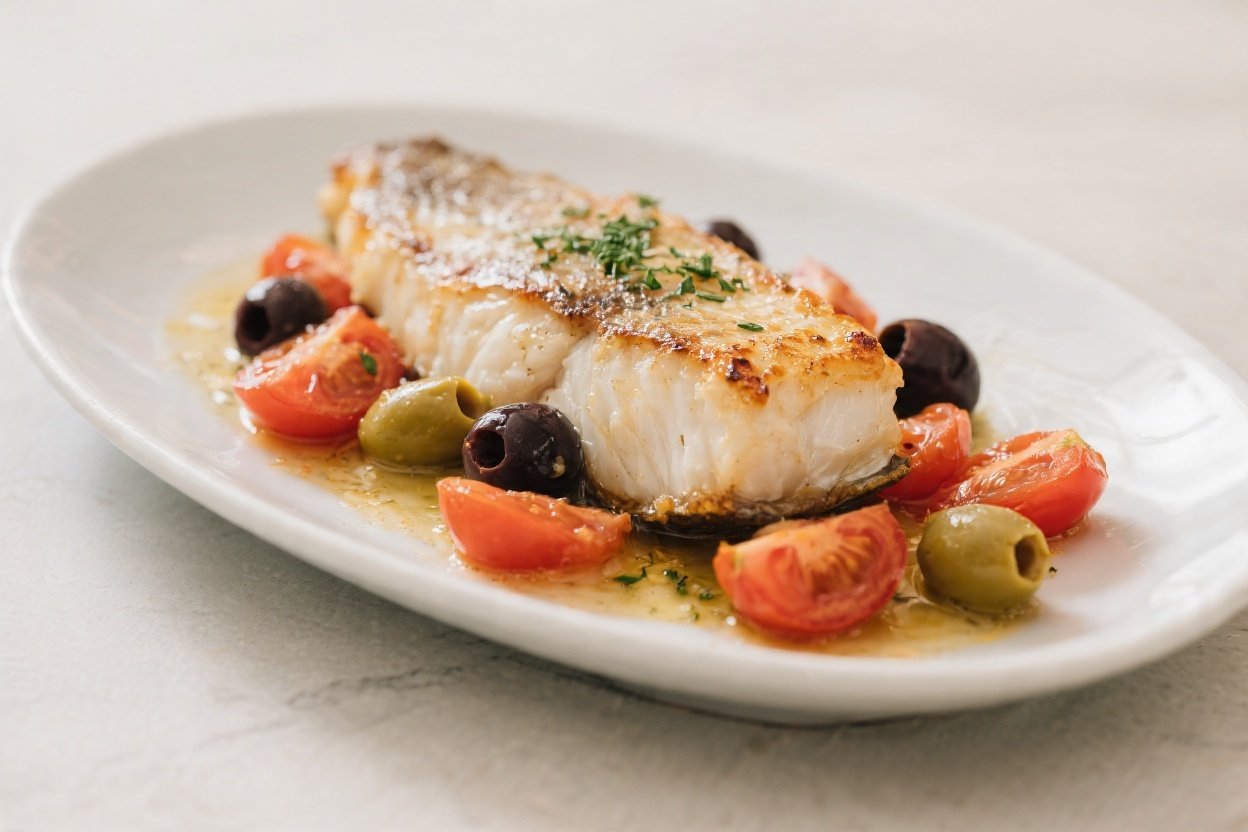
Baked Halibut With Olives and Tomatoes — Simple, Bright, and Weeknight-Friendly
Ingredients
Method
- Preheat the oven: Set to 400°F (200°C). Line a baking dish with parchment or lightly oil it.
- Prep the base: In the baking dish, toss tomatoes, olives, and garlic with olive oil, lemon juice, lemon zest, red pepper flakes, a big pinch of salt, and black pepper. Spread into an even layer.
- Season the fish: Pat halibut dry. Season both sides with salt and pepper. Place fillets on top of the tomato-olive mixture.
- Bake: Cook for 10–14 minutes, depending on thickness. Halibut is done when it flakes easily and is opaque in the center. Aim for an internal temperature of 130–135°F (54–57°C) for juicy results.
- Rest and finish: Let the fish rest 3 minutes. Spoon the pan juices over the top. Scatter fresh herbs and add extra lemon if you like.
- Serve: Pair with crusty bread, couscous, roasted potatoes, or a simple green salad.
Printable Recipe Card
Want just the essential recipe details without scrolling through the article? Get our printable recipe card with just the ingredients and instructions.