
Spicy Radish Salad (Musaengchae)
This spicy radish salad is a staple on Korean tables for a reason. It’s crisp, zippy, and packs a punch that wakes up any meal. You’ll love the balance of heat, sweetness, and tang, all wrapped around crunchy matchsticks of fresh radish. comes together quickly with pantry-friendly ingredients and tastes even better after a short rest. Serve it with rice, grilled meats, or a simple fried egg and call it dinner.
What Makes This Special
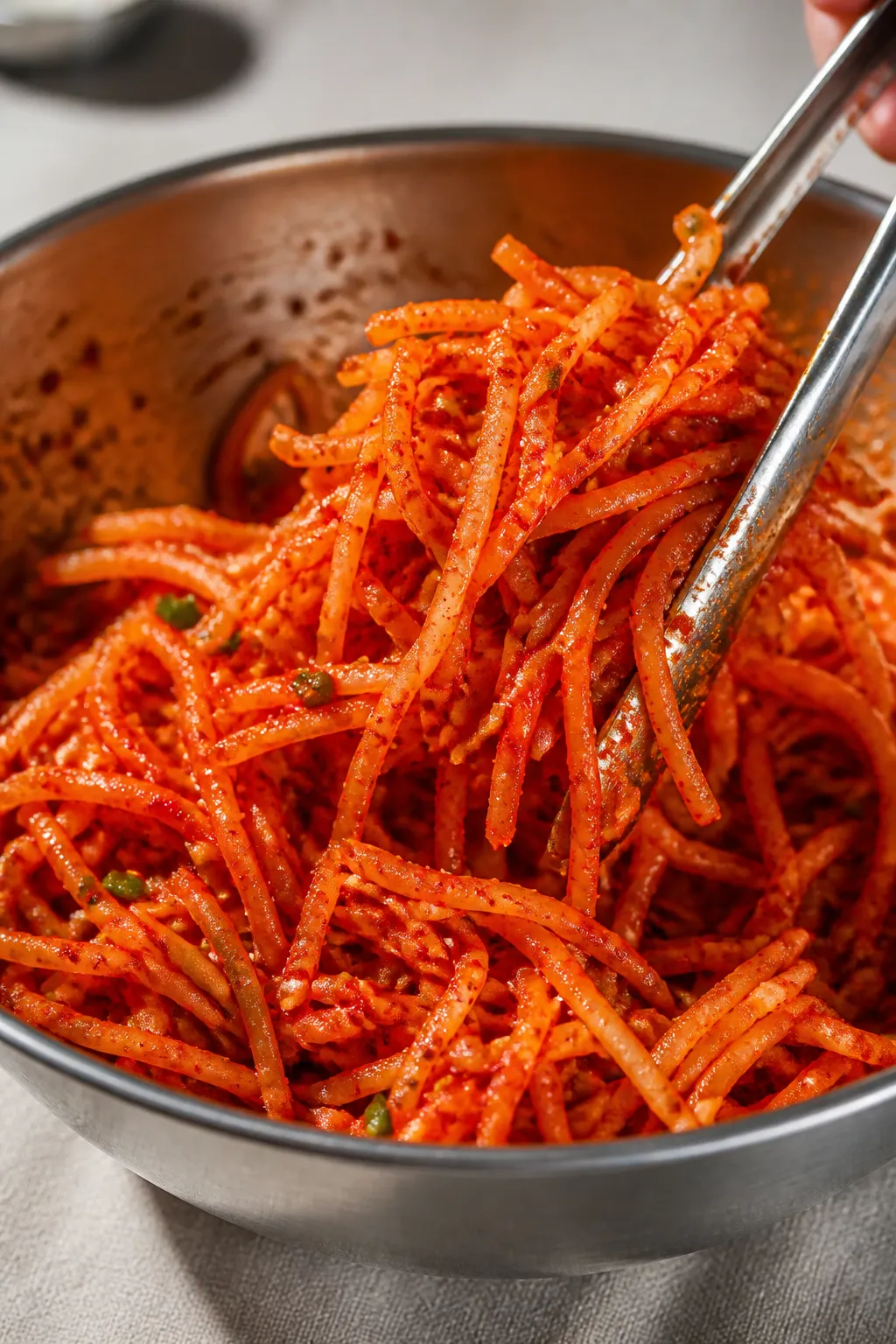
Musaengchae turns humble radish into a bold, refreshing side. The texture stays crisp thanks to a quick salting step that draws out moisture without making it soggy.
The seasoning gochugaru, garlic, sugar, and vinegar creates that classic Korean sweet-heat-tang flavor. Best of all, it’s a no-cook dish you can throw together in minutes.
Shopping List
- Korean radish (mu) or daikon, about 1.5–2 pounds
- Kosher salt (for salting and seasoning)
- Korean red pepper flakes (gochugaru), 1.5–2 tablespoons
- Garlic, 2–3 cloves, minced
- Sugar (white or raw), 1–2 tablespoons
- Rice vinegar or apple cider vinegar, 1.5–2 tablespoons
- Fish sauce or soy sauce, 1–2 teaspoons (optional but tasty)
- Sesame oil, 1 teaspoon
- Toasted sesame seeds, 1 teaspoon
- Scallions, 1–2, thinly sliced
Step-by-Step Instructions
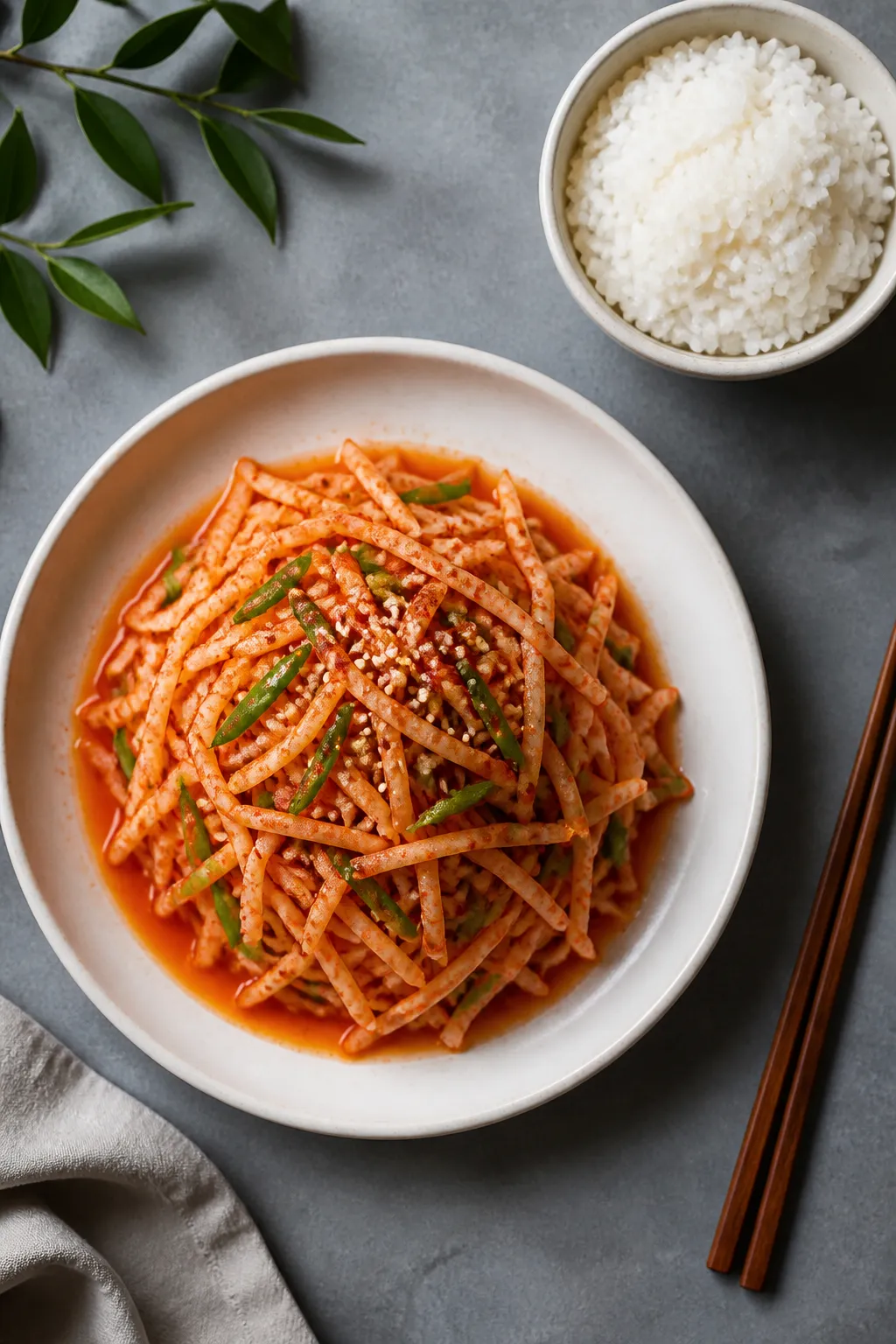
- Prep the radish: Peel the radish and slice it into thin matchsticks, about 2–3 inches long. Aim for even thickness so everything seasons evenly.
- Salt and rest: Toss the radish with 1 teaspoon kosher salt.Let it sit for 10–15 minutes until it releases some water and softens slightly.
- Drain and squeeze: Pour off the liquid. Gently squeeze the radish by the handful to remove excess moisture without crushing the texture.
- Make the seasoning: In a bowl, combine gochugaru, garlic, sugar, vinegar, fish sauce (or soy sauce), and sesame oil. Adjust sugar and vinegar to taste you want a bright, balanced sauce.
- Toss to coat: Add the radish to the bowl and mix well with your hands or tongs until every strand is evenly seasoned.Stir in scallions and sesame seeds.
- Rest briefly: Let it sit 5–10 minutes. The flavors meld, and the radish picks up color and tang.
- Taste and tweak: Add a pinch more salt, sugar, or vinegar if needed. If you like more heat, sprinkle in extra gochugaru.
- Serve: Plate as a side dish with rice, grilled meats, or noodles.It also works as a crunchy topping for bibimbap or salads.
How to Store
Keep musaengchae in an airtight container in the fridge for up to 4–5 days. The flavor deepens over time, though it may lose a bit of crunch by day four. Stir before serving to redistribute the seasoning. If it tastes dull after a couple of days, brighten it up with a splash of vinegar.
Health Benefits
- Low-calorie, high-volume: Radish is mostly water and fiber, so it’s filling without many calories.
- Digestive support: Fiber helps keep things moving and supports gut health.
- Vitamin boost: Radishes provide vitamin C and antioxidants that support immune health.
- Heart-friendly fats: Sesame oil and seeds add a touch of healthy fats and minerals.
Pitfalls to Watch Out For
- Skipping the salting step: This can leave the salad watery and bland. Salting concentrates flavor and keeps crunch.
- Over-squeezing: You want to remove moisture, not crush the radish. Gentle pressure is enough.
- Using the wrong chili: Gochugaru has a fruity, mild heat.Substituting with cayenne will be harsher and hotter.
- Too much vinegar: Add in small amounts and taste. The goal is bright, not sour.
Alternatives
- Milder version: Reduce gochugaru and increase sesame seeds for a gentler kick.
- Vegan-friendly: Use soy sauce or extra salt instead of fish sauce.
- Crisp upgrade: Add thinly sliced carrots or cucumbers for color and texture.
- Citrus twist: Swap part of the vinegar with yuzu or lemon juice for a fresh note.
- No sesame oil? Use a neutral oil and add more sesame seeds for aroma.
FAQ
Can I use regular red radishes instead of Korean radish or daikon?
Yes, but the texture and flavor will be sharper and spicier. Slice them very thin and consider adding a touch more sugar to balance the bite.
How spicy is musaengchae?
It’s medium by default. Gochugaru brings warmth rather than a sharp burn. For less heat, use 1 tablespoon; for more, go up to 2.5 tablespoons.
Do I have to use fish sauce?
No. It adds depth, but soy sauce or a pinch of extra salt can replace it. Start small and taste as you go.
Why is my salad watery the next day?
Radish continues to release moisture. Just give it a stir and taste. If needed, add a pinch of sugar and a splash of vinegar to refresh the flavor.
Can I make it ahead?
Absolutely. It tastes great after resting 30–60 minutes in the fridge. For best crunch, serve within 24–48 hours.
Is gochugaru the same as gochujang?
No. Gochugaru is dried chili flakes, while gochujang is a fermented chili paste. For this recipe, use gochugaru for the right texture and flavor.
Wrapping Up
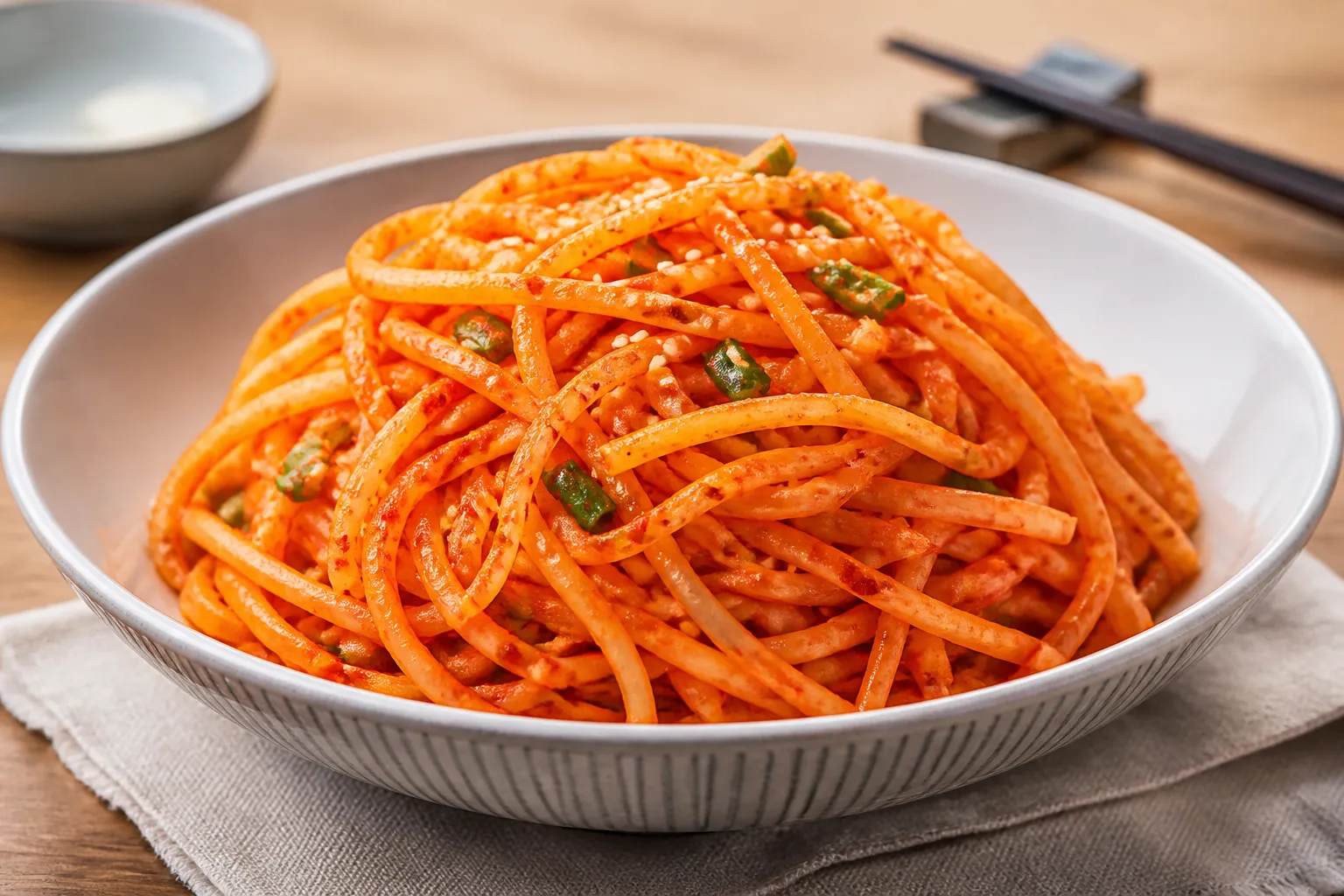
Spicy Radish Salad (Musaengchae) is quick, bold, and endlessly useful. With a few simple ingredients and a short rest, you get a crunchy side that brightens any meal. Keep a batch in the fridge, and you’ll always have something fresh and lively to round out your table.
Ingredients
Method
- Prep the radish: Peel the radish and slice it into thin matchsticks, about 2–3 inches long. Aim for even thickness so everything seasons evenly.
- Salt and rest: Toss the radish with 1 teaspoon kosher salt. Let it sit for 10–15 minutes until it releases some water and softens slightly.
- Drain and squeeze: Pour off the liquid. Gently squeeze the radish by the handful to remove excess moisture without crushing the texture.
- Make the seasoning: In a bowl, combine gochugaru, garlic, sugar, vinegar, fish sauce (or soy sauce), and sesame oil. Adjust sugar and vinegar to taste—you want a bright, balanced sauce.
- Toss to coat: Add the radish to the bowl and mix well with your hands or tongs until every strand is evenly seasoned. Stir in scallions and sesame seeds.
- Rest briefly: Let it sit 5–10 minutes. The flavors meld, and the radish picks up color and tang.
- Taste and tweak: Add a pinch more salt, sugar, or vinegar if needed. If you like more heat, sprinkle in extra gochugaru.
- Serve: Plate as a side dish with rice, grilled meats, or noodles. It also works as a crunchy topping for bibimbap or salads.
Printable Recipe Card
Want just the essential recipe details without scrolling through the article? Get our printable recipe card with just the ingredients and instructions.