
Korean Soy Marinated Eggs
Korean Soy Marinated Eggs are the kind of kitchen shortcut that makes everything taste better. They’re savory, slightly sweet, and full of umami, with a jammy yolk that’s hard to resist. Add them to rice, noodles, or a quick lunch bowl, and suddenly you’ve got a meal.
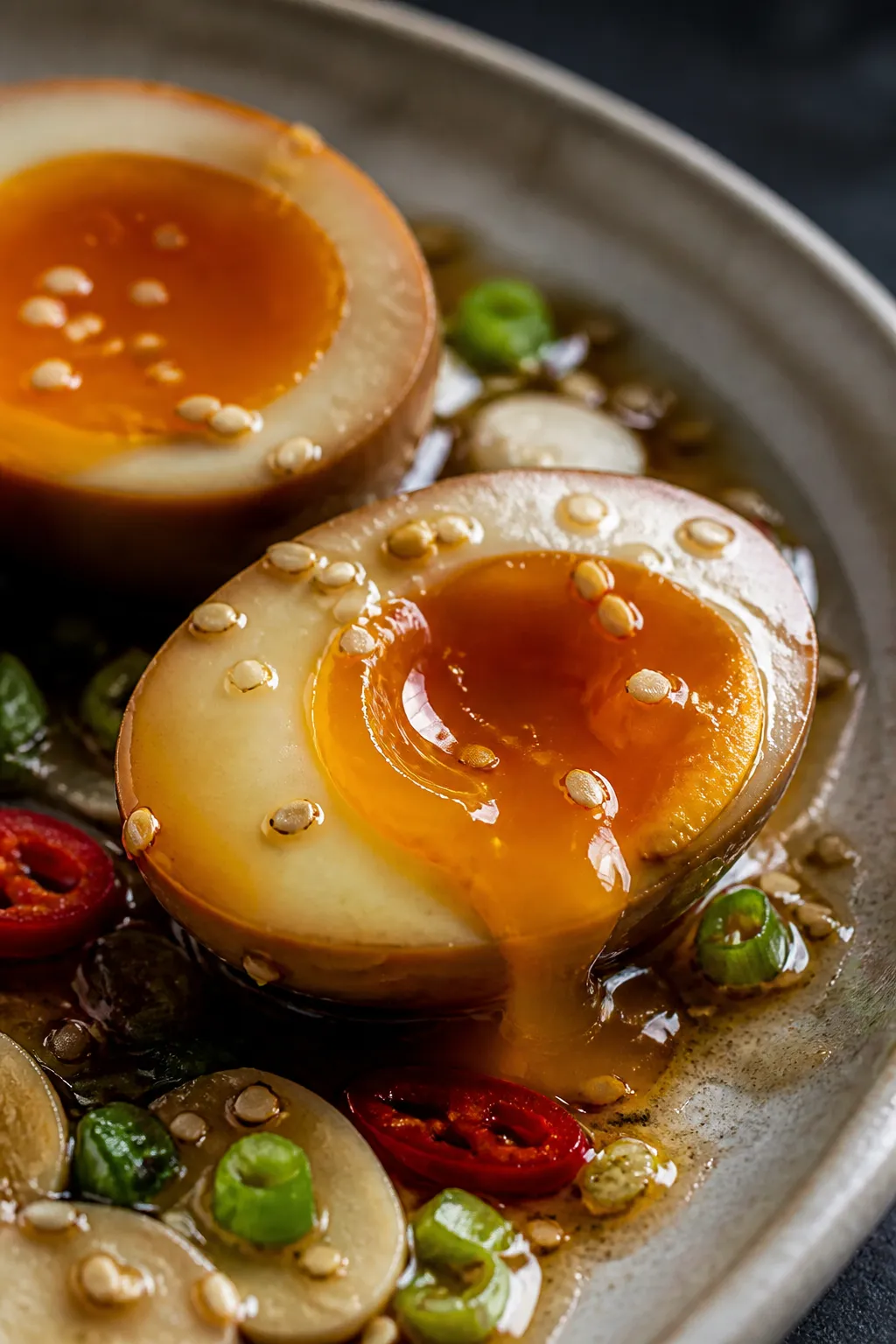
They’re also great for meal prep because the flavor gets deeper over time. If you love simple food that feels special, this recipe belongs in your fridge.
What Makes This Recipe So Good
- Big flavor, low effort: The marinade does the heavy lifting, and the eggs soak it all up.
- Perfect texture: Soft-boiled with a jammy center that stays creamy even after marinating.
- Versatile: Serve over hot rice, noodles, congee, or tuck into a quick sandwich.
- Meal prep friendly: Make a batch and enjoy all week.
- Balanced taste: Salty, sweet, garlicky, and a little toasty from sesame oil.
What You’ll Need
- 6–8 large eggs
- 1 cup soy sauce (regular or low sodium)
- 1 cup water (or unsalted broth for extra depth)
- 3 tablespoons sugar (white or brown)
- 2 tablespoons rice vinegar
- 1–2 tablespoons mirin (optional, for mild sweetness)
- 4 cloves garlic, thinly sliced
- 1–2 scallions, sliced
- 1 small piece ginger (about 1 inch), sliced
- 1 tablespoon sesame oil
- 1–2 teaspoons toasted sesame seeds
- 1 small chili, sliced (optional; use Korean cheongyang, Thai chili, or red pepper flakes)
- Ice for an ice bath
How to Make It
- Bring a pot of water to a rolling boil. Lower the eggs in gently with a spoon. Set a timer for 6½–7 minutes for jammy yolks, or 9 minutes for firmer centers.
- Prepare an ice bath. Fill a large bowl with ice and water.
- Shock the eggs. When the timer goes off, transfer eggs to the ice bath and let them cool for at least 5 minutes.This stops cooking and makes peeling easier.
- Make the marinade. In a bowl or small pot, combine soy sauce, water, sugar, rice vinegar, and mirin. Stir until the sugar dissolves. Add garlic, ginger, scallions, sesame oil, sesame seeds, and chili if using.Taste and adjust sweetness or saltiness to your liking.
- Peel the eggs carefully. Gently crack and peel under running water to avoid tearing the whites.
- Marinate. Place eggs in a lidded container and pour the marinade over. The eggs should be mostly submerged. If not, place a small piece of parchment on top or turn the eggs halfway through.
- Chill for at least 4 hours. For best flavor, marinate overnight.The longer they sit (up to 3 days), the deeper the color and taste.
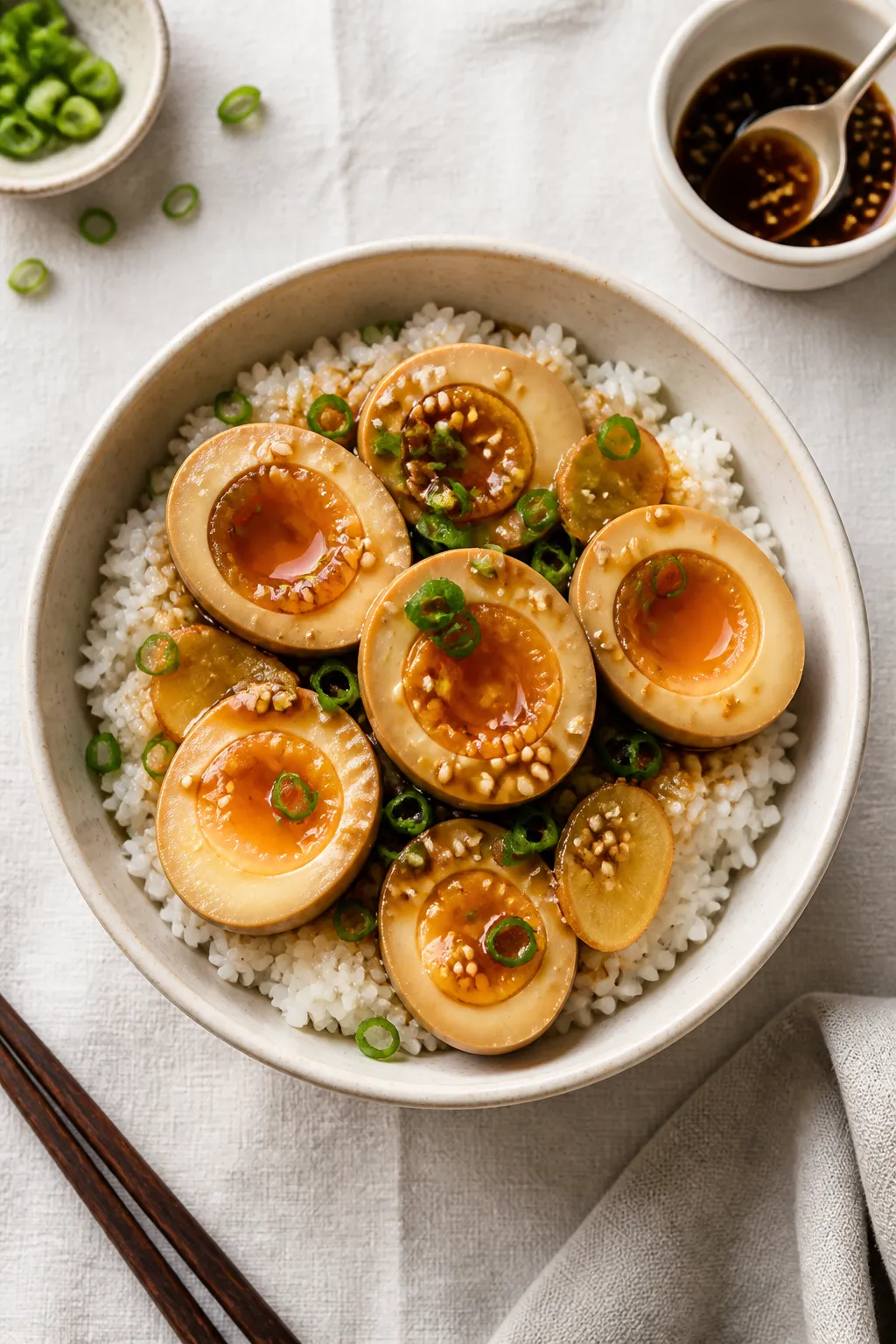
- Serve. Halve the eggs and spoon some marinade over warm rice, noodles, or steamed greens. Finish with extra scallions and sesame seeds.
Storage Instructions
- Refrigerate eggs in the marinade for up to 4–5 days.
- Keep them in a sealed container to lock in aroma and prevent fridge smells.
- You can reuse the marinade once within a few days by briefly boiling it, cooling completely, and using it again. Discard after the second use.
Health Benefits
- High-quality protein: Eggs help with satiety and muscle repair.
- Choline and B vitamins: Support brain health and energy metabolism.
- Controlled portions: One egg adds big flavor without a heavy calorie load.
- Low in added fat: Just a splash of sesame oil for aroma and healthy fats.
What Not to Do
- Don’t overcook the eggs. The yolk will turn chalky and won’t absorb as well.
- Don’t skip the ice bath. It’s the secret to easy peeling and perfect texture.
- Don’t leave eggs at room temperature. Always marinate and store in the fridge.
- Don’t oversalt. If your soy sauce is very salty, dilute with more water or add a bit more sugar.
Alternatives

- Gluten-free: Use tamari or a certified gluten-free soy sauce.
- No sugar: Swap with honey, maple syrup, or monk fruit to taste.
- No mirin: Use a little extra sugar and a splash more rice vinegar.
- Spice level: Add gochugaru (Korean chili flakes) or sliced chilies for heat, or skip them for mild.
- Aromatic twist: Add a strip of dried kelp (kombu) to the marinade for umami; remove after a few hours.
FAQ
How long should I marinate the eggs?
For a balanced flavor and a light brown edge on the whites, 8–12 hours is great. If you want a stronger, saltier taste and darker color, go up to 2–3 days.
Can I use medium or small eggs?
Yes, just reduce the boil time by 30–60 seconds to keep the yolk jammy.
Why are my eggs hard to peel?
Very fresh eggs can be tricky. An ice bath and peeling under running water help. You can also use eggs that are a few days old for easier peeling.
Can I warm the marinade?
You can gently warm it to dissolve sugar faster and bloom the aromatics, but let it cool completely before adding the eggs to avoid overcooking.
What do I serve them with?
Hot rice with a drizzle of marinade, sesame oil, and scallions is classic. They’re also great on ramen, soba, bibimbap, avocado toast, or grain bowls.
Are these the same as Japanese shoyu eggs?
They’re similar both are soy-marinated but Korean versions often include garlic, sesame oil, and a touch of heat, giving a bolder, garlicky profile.
Final Thoughts
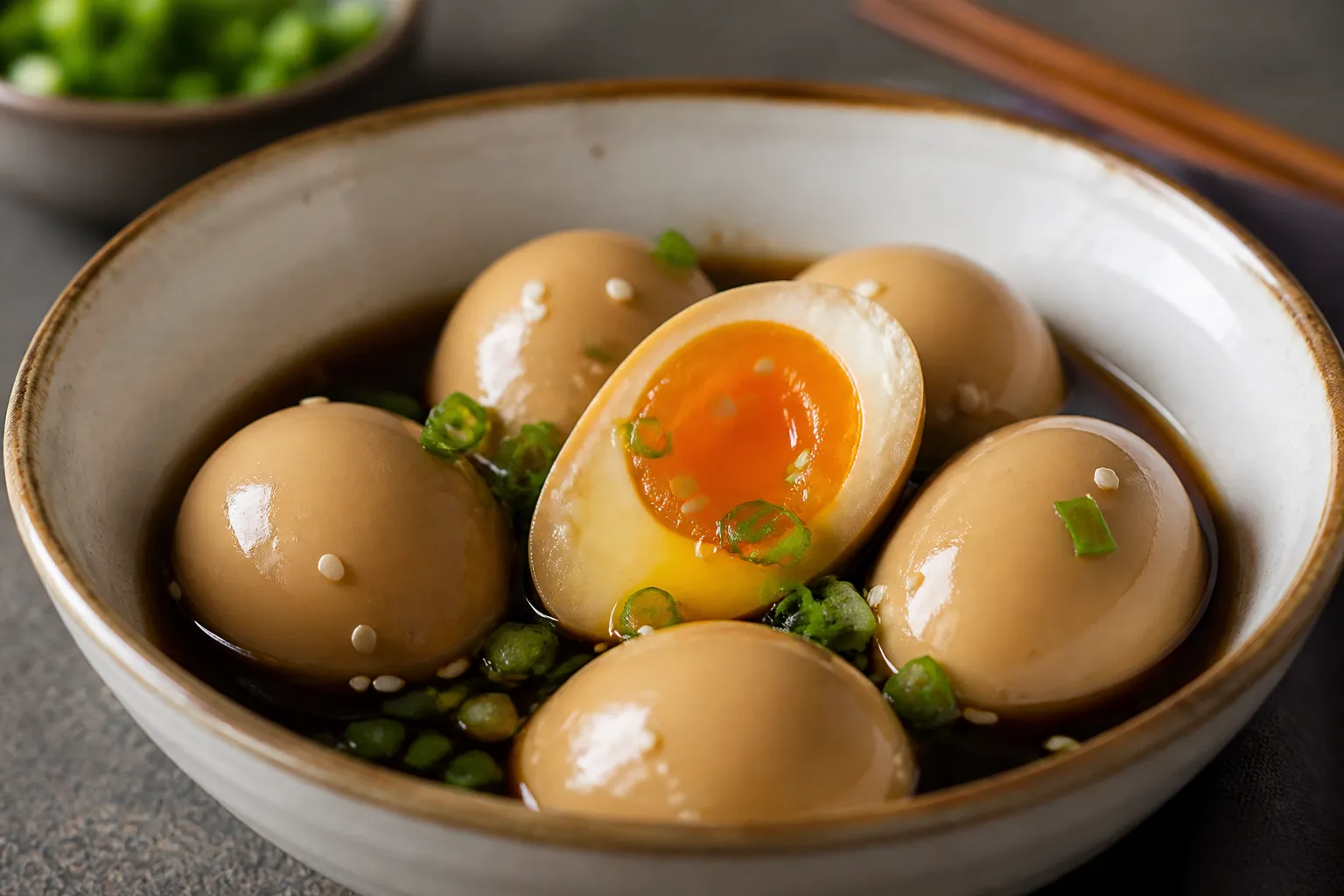
Korean Soy Marinated Eggs bring big, comforting flavor with almost no fuss. A small batch turns simple meals into something you actually look forward to. Keep a jar in the fridge, and you’re always one slice away from a satisfying bowl. Make them once, and they’ll become a weekly habit.
Ingredients
Method
- Bring a pot of water to a rolling boil. Lower the eggs in gently with a spoon. Set a timer for 6½–7 minutes for jammy yolks, or 9 minutes for firmer centers.
- Prepare an ice bath. Fill a large bowl with ice and water.
- Shock the eggs. When the timer goes off, transfer eggs to the ice bath and let them cool for at least 5 minutes. This stops cooking and makes peeling easier.
- Make the marinade. In a bowl or small pot, combine soy sauce, water, sugar, rice vinegar, and mirin. Stir until the sugar dissolves. Add garlic, ginger, scallions, sesame oil, sesame seeds, and chili if using. Taste and adjust sweetness or saltiness to your liking.
- Peel the eggs carefully. Gently crack and peel under running water to avoid tearing the whites.
- Marinate. Place eggs in a lidded container and pour the marinade over. The eggs should be mostly submerged. If not, place a small piece of parchment on top or turn the eggs halfway through.
- Chill for at least 4 hours. For best flavor, marinate overnight. The longer they sit (up to 3 days), the deeper the color and taste.
- Serve. Halve the eggs and spoon some marinade over warm rice, noodles, or steamed greens. Finish with extra scallions and sesame seeds.
Printable Recipe Card
Want just the essential recipe details without scrolling through the article? Get our printable recipe card with just the ingredients and instructions.