
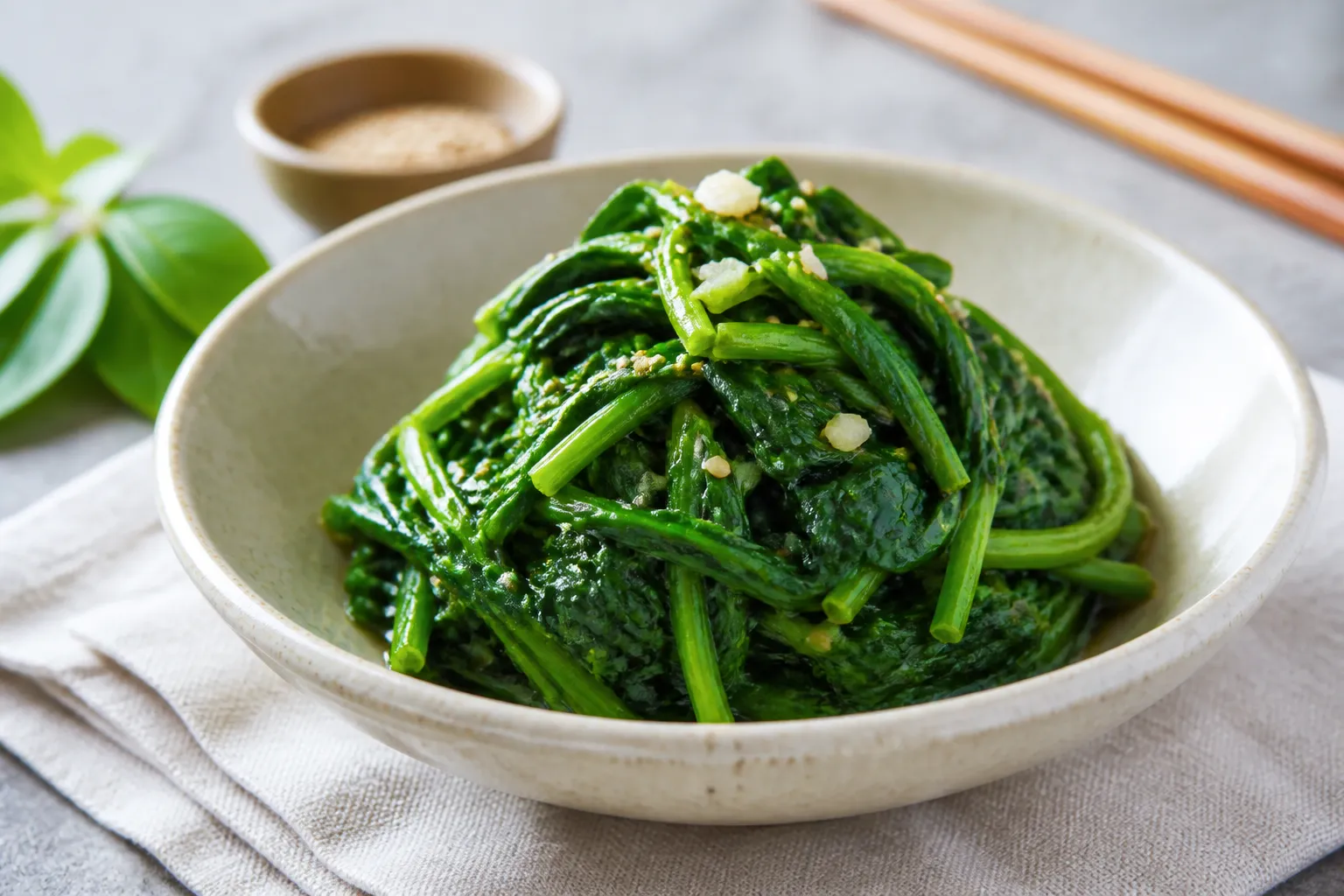
Sigeumchi Namul (Korean Spinach Side Dish)
Sigeumchi namul is the kind of side dish that makes a meal feel complete. It’s light, garlicky, and full of fresh spinach flavor. You can whip it up in minutes, and it goes with almost anything rice, noodles, grilled meats, or a quick lunch bowl.
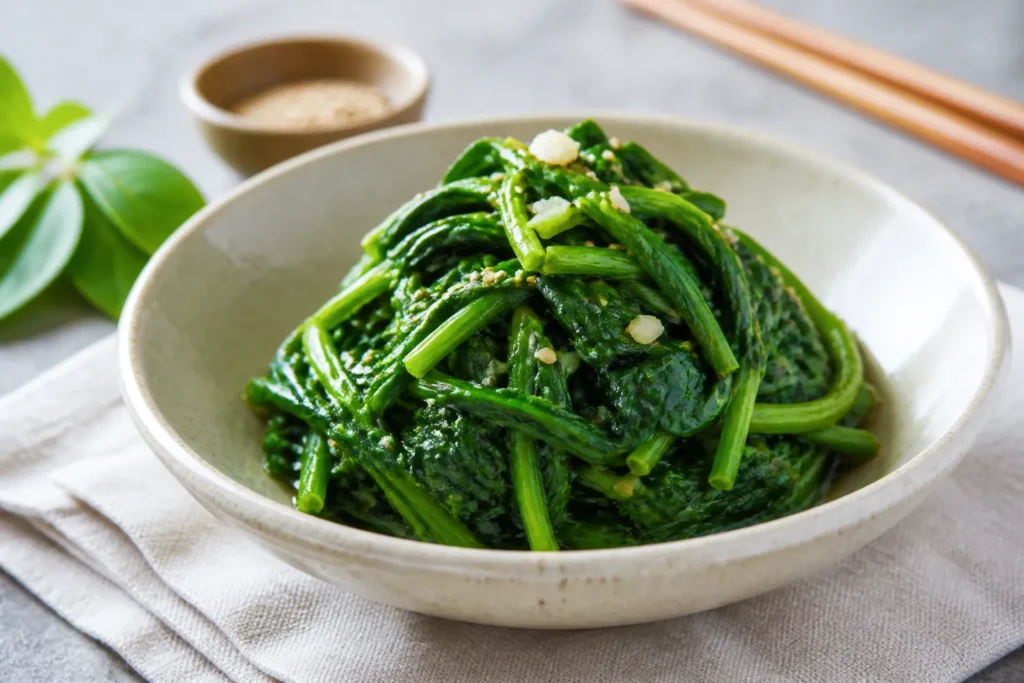
If you’ve had Korean banchan at a restaurant, you’ve probably tasted it. This version keeps things classic and easy, with just the right balance of sesame, soy, and salt.
What Makes This Special
This dish delivers big flavor with very little fuss. Blanching the spinach gives it a tender bite while keeping that vibrant green color.
The seasoning is simple but satisfying garlic, sesame oil, soy sauce, and a hint of nuttiness from toasted sesame seeds. It’s also a great make-ahead option, perfect for meal prep and quick weeknight meals. Best of all, it takes less than 10 minutes from start to finish.
Shopping List
- Fresh spinach (about 10–12 oz / 300–350 g; baby or regular)
- Soy sauce (or tamari for gluten-free)
- Sesame oil (toasted)
- Garlic (1–2 cloves, finely minced)
- Sesame seeds (toasted)
- Salt (for blanching water and seasoning)
- Optional: scallions, a pinch of sugar, gochugaru (Korean chili flakes), or rice vinegar
Instructions
- Prep the spinach: Rinse well.If using regular spinach, trim tough stems. Keep baby spinach as is.
- Boil water: Bring a large pot of water to a boil and add a generous pinch of salt. The salt helps season and brighten the greens.
- Blanch quickly: Add spinach and cook for 30–45 seconds, just until wilted.Do not overcook.
- Shock and drain: Immediately transfer spinach to a bowl of ice water to stop cooking and preserve color. Drain well.
- Squeeze gently: With clean hands, squeeze out excess water. You want it damp, not soggy.Then loosely separate the clumps.
- Season: In a bowl, combine spinach with 1–1.5 teaspoons soy sauce, 1 teaspoon sesame oil, 1 small minced garlic clove, and 1–2 teaspoons toasted sesame seeds. Toss lightly.
- Taste and adjust: Add a pinch of salt if needed. If you like a subtle sweetness, add a tiny pinch of sugar.For a little heat, sprinkle gochugaru.
- Finish: Top with extra sesame seeds and, if you like, thinly sliced scallions. Serve at room temperature or chilled.
How to Store
Keep sigeumchi namul in an airtight container in the fridge for up to 3 days. It’s best eaten within the first two days for peak freshness and texture. If it releases a little liquid over time, just give it a quick toss before serving. Avoid freezing it will turn mushy and lose flavor.
Why This is Good for You
- Spinach is rich in iron, vitamin K, folate, and antioxidants.
- Sesame seeds and sesame oil provide healthy fats and add a satisfying, nutty depth.
- Low in calories but high in flavor, making it a smart, nutrient-dense side.
- Naturally dairy-free and easy to make gluten-free with tamari.
Pitfalls to Watch Out For
- Overcooking the spinach: It should be just wilted. Too long, and you’ll get a dull color and mushy texture.
- Not squeezing enough water: Excess moisture waters down the seasoning.
- Heavy-handed garlic: Raw garlic is potent.Start small and adjust to taste.
- Too much soy sauce: It can overpower the delicate flavor. Keep it light and balanced.
Variations You Can Try
- Spicy kick: Add 1/2–1 teaspoon gochugaru or a drizzle of chili oil.
- Citrus lift: A few drops of rice vinegar or lemon juice brightens the dish.
- Miso twist: Whisk 1/2 teaspoon white miso with the soy and sesame oil for extra umami.
- Nutty crunch: Add crushed roasted peanuts or almonds instead of sesame seeds.
- Scallion and ginger: Mix in thinly sliced scallions and a touch of grated ginger for a fresh edge.
FAQ
Can I use frozen spinach?
Yes. Thaw completely, squeeze out as much water as possible, and season as directed. The texture will be a bit softer, but it still works.
Is this dish served hot or cold?
It’s usually served at room temperature or slightly chilled. That’s part of what makes it a great make-ahead side.
What can I serve it with?
It pairs well with steamed rice, grilled meats, tofu, bibimbap, or a simple noodle bowl. It also brightens up any lunchbox as part of a banchan spread.
How salty should the blanching water be?
Think lightly salted, like a mild soup. You want enough salt to season the leaves without making them briny.
Can I make it without soy sauce?
Use tamari or coconut aminos for a similar effect. If you skip soy entirely, add a little salt and a splash of rice vinegar to round out the flavor.
How do I toast sesame seeds?
Place them in a dry skillet over medium heat and stir frequently for 2–3 minutes until fragrant and lightly golden. Watch closely they burn fast.
Can I prep it ahead?
Absolutely. Make it up to a day in advance, refrigerate, and give it a quick toss before serving. Add a tiny splash of sesame oil if it seems dry.
Final Thoughts
Sigeumchi namul is proof that simple ingredients can taste special. With a quick blanch and a few pantry staples, you get a clean, savory side that works with almost any meal. Keep this recipe in your back pocket for busy nights, meal prep, or whenever you want something fresh and satisfying without much effort.
Printable Recipe Card
Want just the essential recipe details without scrolling through the article? Get our printable recipe card with just the ingredients and instructions.