
Kimchi Udon Stir Fry Recipe
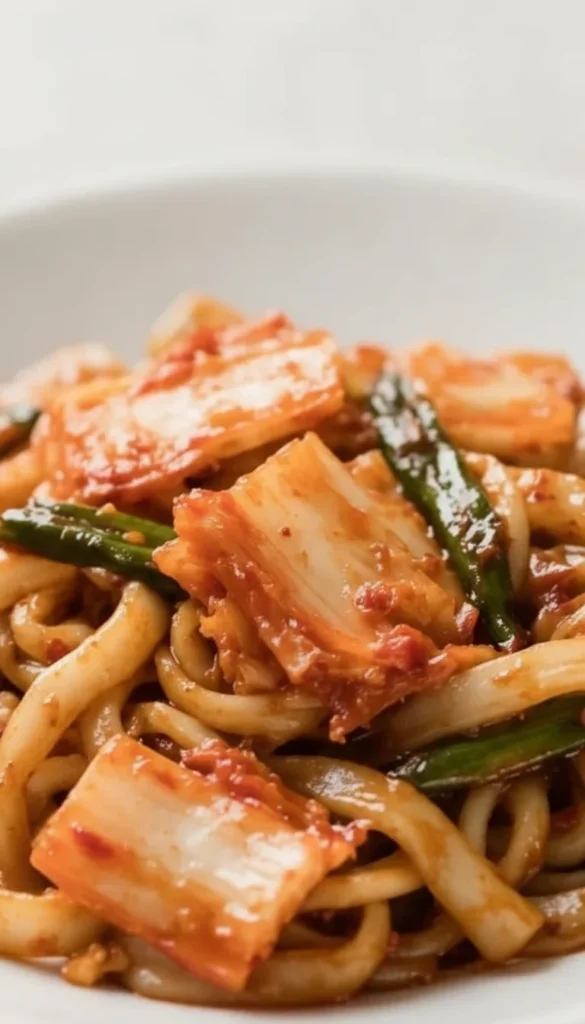
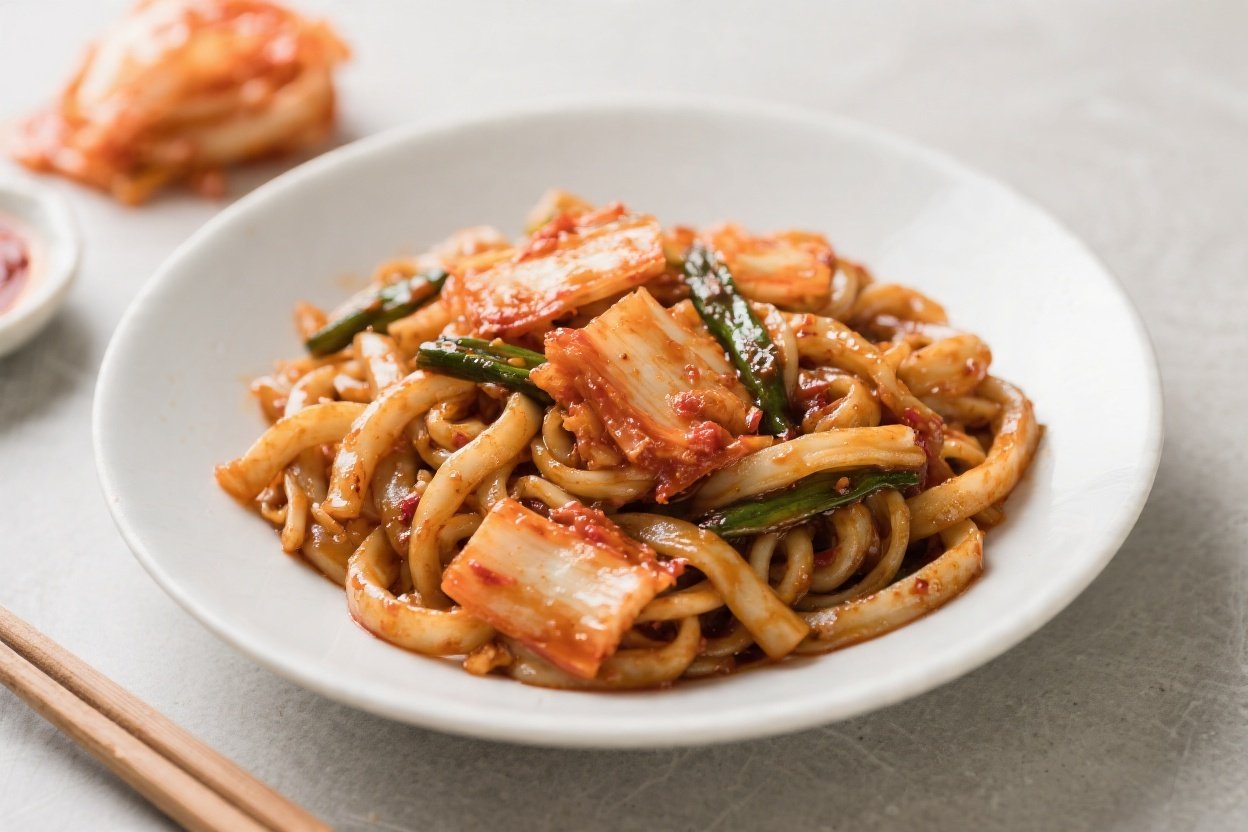
If you love bold flavors and quick meals, this Kimchi Udon Stir Fry will become a weeknight favorite. It’s chewy, saucy, and loaded with savory heat from kimchi and gochujang. You get that perfect mix of tangy, spicy, and slightly sweet in under 20 minutes.
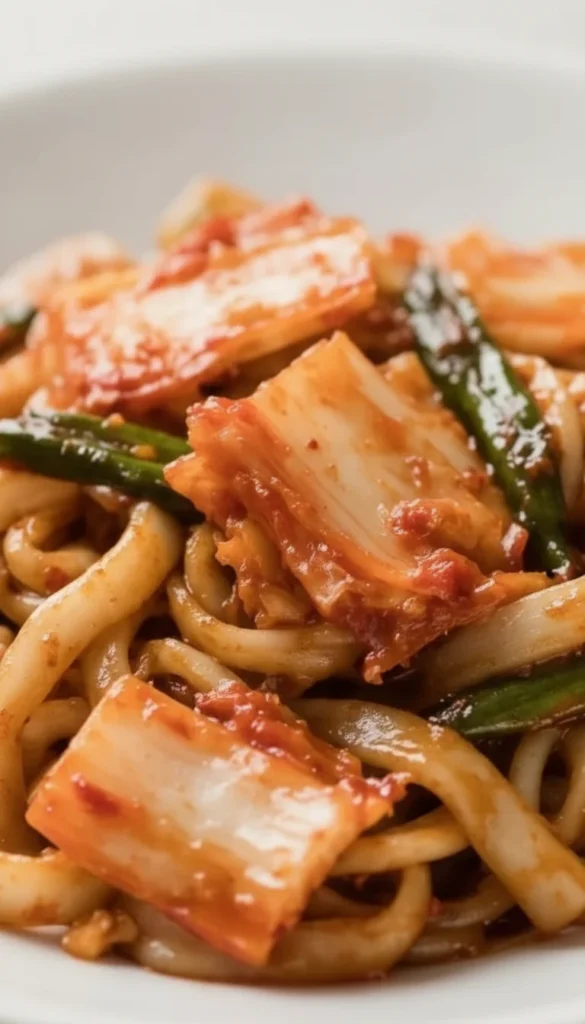
No fancy techniques required, just a hot pan and a handful of pantry staples. It’s the kind of dish that tastes like takeout but feels homemade and satisfying.
Why This Recipe Works
- Chewy udon noodles soak up a bold, glossy sauce without getting mushy.
- Kimchi brings built-in complexity acid, umami, heat so you need fewer ingredients.
- Quick high-heat cooking keeps veggies crisp and the noodles bouncy.
- Balanced sauce blends gochujang, soy, and a touch of sugar for sweet-savory depth.
- Versatile base for protein and veggie add-ins, from tofu to bacon or mushrooms.
What You’ll Need
- Udon noodles (14–16 oz; fresh or frozen are best for texture; dried works too)
- Kimchi (1 to 1½ cups), chopped, plus 2–3 tablespoons kimchi juice
- Neutral oil (1–2 tablespoons), such as canola or avocado
- Garlic (2–3 cloves), minced
- Green onions (3–4), sliced; separate white and green parts
- Gochujang (1–2 tablespoons), to taste
- Soy sauce (1–2 tablespoons)
- Sesame oil (1 teaspoon)
- Sugar or honey (1–2 teaspoons)
- Rice vinegar (1 teaspoon) or more kimchi juice for tang
- Optional veggies: sliced mushrooms, shredded carrots, bell pepper, or cabbage
- Optional protein: firm tofu, bacon, pork belly, shrimp, or rotisserie chicken
- Toppings: sesame seeds, extra green onions, nori strips, fried egg
Instructions
- Prep the noodles. If using fresh or frozen udon, loosen in hot water for 1–2 minutes and drain. If using dried, boil per package until just tender, then rinse and drain.Toss with a little oil to prevent sticking.
- Mix the sauce. In a small bowl, combine gochujang, soy sauce, sugar, sesame oil, and kimchi juice (and vinegar if using). Adjust sweetness and heat to taste.
- Heat the pan. Set a large skillet or wok over medium-high heat. Add oil.
- Add aromatics. Stir-fry garlic and the white parts of the green onion for 20–30 seconds until fragrant.Don’t brown the garlic.
- Cook protein (if using). Add tofu, bacon, shrimp, or other protein. Stir-fry until cooked through or crisp. Remove and set aside if the pan gets crowded.
- Stir-fry veggies. Add mushrooms, carrots, or other quick-cooking veggies.Cook 2–3 minutes until just tender but still crisp.
- Add kimchi. Toss in chopped kimchi and cook 1–2 minutes to concentrate flavor. Let it sizzle for a slight char.
- Add noodles and sauce. Return protein (if set aside). Add udon and pour the sauce over.Toss vigorously for 1–2 minutes until noodles are evenly coated and glossy.
- Finish and taste. Add the green parts of the onions. Taste and adjust with extra soy for salt, kimchi juice for tang, or sugar for balance.
- Serve. Top with sesame seeds, nori, and a fried egg if you like. Eat hot.
Storage Instructions
- Fridge: Store in an airtight container for up to 3 days.
- Reheat: Warm in a skillet with a splash of water to loosen the sauce.Avoid overcooking.
- Freezer: Not recommended; udon can turn mushy after thawing.
Benefits of This Recipe
- Fast and fuss-free: On the table in 20 minutes.
- Deep flavor with minimal effort: Kimchi and gochujang do the heavy lifting.
- Customizable: Works with whatever veggies or proteins you have.
- Balanced nutrition: Carbs for energy, protein options for staying power, and fermented kimchi for gut-friendly goodness.
What Not to Do
- Don’t overcook the udon. Soft noodles will break and turn gummy.
- Don’t skip the kimchi juice. It’s key for depth and tang.
- Don’t crowd a small pan. Cook in batches if needed to keep a good sear.
- Don’t burn the garlic. Bitter garlic can overpower the dish.
- Don’t add too much sauce at once. Start with less, then build to taste.
Recipe Variations
- Bacon and Egg: Crisp bacon first, then finish with a runny fried egg on top.
- Tofu and Mushroom: Pan-fry cubed firm tofu until golden; add shiitake or oyster mushrooms.
- Seafood: Shrimp or scallops cook fast and pair well with kimchi’s brightness.
- Veggie-Heavy: Add shredded cabbage, spinach, or bean sprouts for extra crunch.
- Creamy Twist: Stir in a spoonful of mayo or butter at the end for a richer, silky sauce.
- Extra-Spicy: Add gochugaru (Korean chili flakes) or a dash of chili oil.
FAQ
Can I use spaghetti instead of udon?
Yes, in a pinch. Cook it al dente and toss quickly so it doesn’t break. The texture won’t be as chewy, but the flavors will still shine.
How do I make it less spicy?
Use less gochujang and rinse the kimchi briefly to reduce heat. Add a bit more sugar or a pat of butter to mellow the spice.
What if I don’t have kimchi juice?
Add a splash of rice vinegar and a bit more soy sauce. A tiny pinch of fish sauce can also deepen the umami.
Is there a gluten-free option?
Use gluten-free udon or rice noodles and swap in tamari or coconut aminos. Check your gochujang label for gluten-free certification.
Can I make it vegan?
Absolutely. Use tofu for protein, ensure the kimchi is vegan (no fish sauce), and choose a vegan gochujang.
Wrapping Up
This Kimchi Udon Stir Fry is bold, fast, and endlessly flexible. With chewy noodles, tangy kimchi, and a punchy sauce, it hits all the right notes on busy nights. Keep a pack of udon and a jar of kimchi on hand, and you’re always a few minutes away from a satisfying meal.
Ingredients
Method
- Prep the noodles. If using fresh or frozen udon, loosen in hot water for 1–2 minutes and drain. If using dried, boil per package until just tender, then rinse and drain. Toss with a little oil to prevent sticking.
- Mix the sauce. In a small bowl, combine gochujang, soy sauce, sugar, sesame oil, and kimchi juice (and vinegar if using). Adjust sweetness and heat to taste.
- Heat the pan. Set a large skillet or wok over medium-high heat. Add oil.
- Add aromatics. Stir-fry garlic and the white parts of the green onion for 20–30 seconds until fragrant. Don’t brown the garlic.
- Cook protein (if using). Add tofu, bacon, shrimp, or other protein. Stir-fry until cooked through or crisp. Remove and set aside if the pan gets crowded.
- Stir-fry veggies. Add mushrooms, carrots, or other quick-cooking veggies. Cook 2–3 minutes until just tender but still crisp.
- Add kimchi. Toss in chopped kimchi and cook 1–2 minutes to concentrate flavor. Let it sizzle for a slight char.
- Add noodles and sauce. Return protein (if set aside). Add udon and pour the sauce over. Toss vigorously for 1–2 minutes until noodles are evenly coated and glossy.
- Finish and taste. Add the green parts of the onions. Taste and adjust with extra soy for salt, kimchi juice for tang, or sugar for balance.
- Serve. Top with sesame seeds, nori, and a fried egg if you like. Eat hot.
Printable Recipe Card
Want just the essential recipe details without scrolling through the article? Get our printable recipe card with just the ingredients and instructions.