
Miyeokguk (Korean Seaweed Soup)
Miyeokguk is the kind of soup that feels like a warm hug. It’s light yet deeply satisfying, with a clean, ocean-kissed flavor that never gets old. In Korea, it’s famous as a birthday tradition and a go-to for new moms, but it’s also an everyday comfort food.
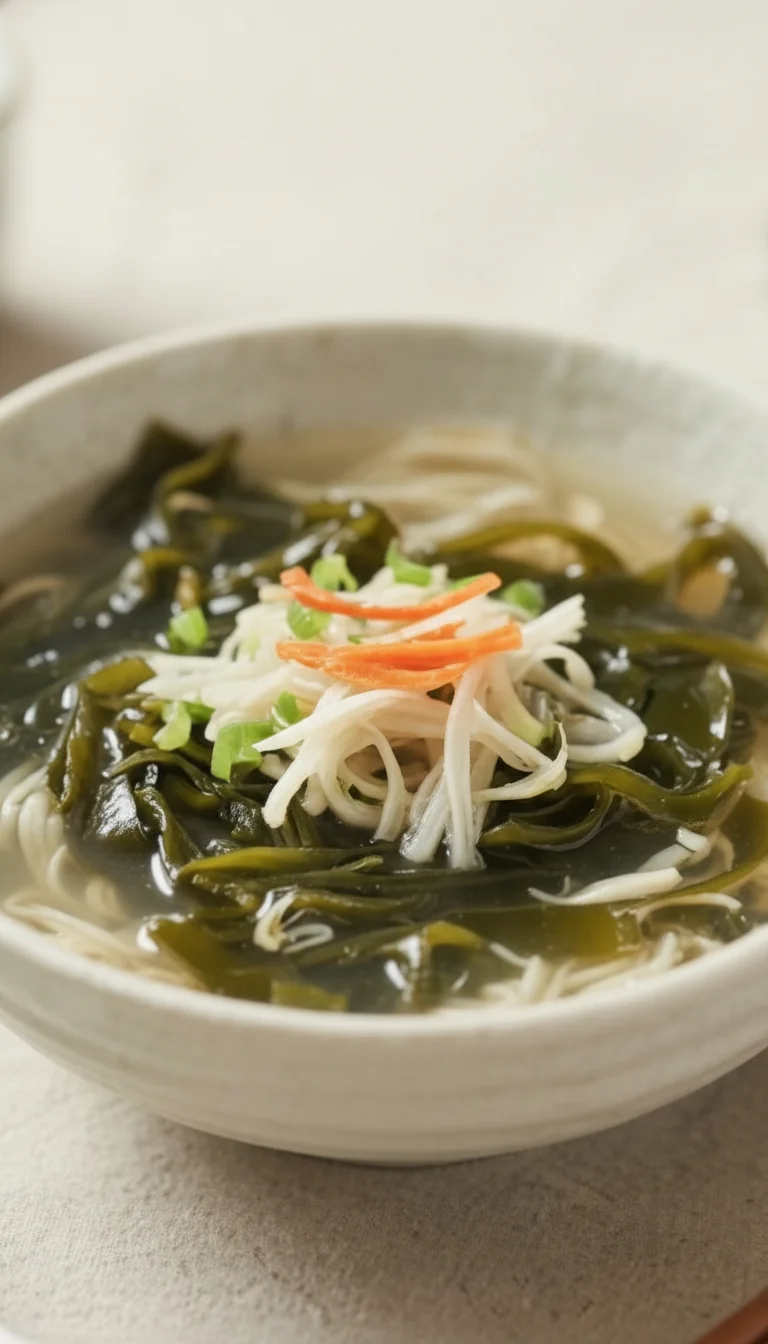
This version keeps things simple and true to its roots while being easy enough for a weeknight. If you can boil water and season to taste, you can make miyeokguk.
What Makes This Special
Miyeokguk is all about balance: rich umami, gentle sweetness, and a soothing texture. The dried seaweed (miyeok) plumps up into silky strands that pair beautifully with beef or seafood.
It’s quick to make, uses minimal ingredients, and tastes even better the next day. Best of all, it feels good to eat—light, clean, and deeply comforting.
Ingredients
- 1 ounce (about 30 g) dried miyeok (wakame)
- 4–6 cups water (start with 4, add more as needed)
- 4–6 ounces beef (brisket, stew meat, or thinly sliced chuck), cut small; or use mussels/clams instead
- 1–2 tablespoons toasted sesame oil
- 1–2 tablespoons soy sauce (Korean soup soy sauce is ideal; regular soy works too)
- 1 teaspoon minced garlic
- Salt, to taste
- Optional: a splash of fish sauce, a pinch of sugar, or a small piece of dried kelp (dashima) for extra depth
How to Make It
- Soak the seaweed. Rinse the dried miyeok briefly, then soak in cool water for 10–15 minutes until it’s soft and expanded. Drain well and cut into bite-size pieces.
- Season the beef. Toss beef with 1 teaspoon sesame oil and 1 teaspoon soy sauce.This adds flavor from the start.
- Stir-fry for aroma. In a pot, heat 1 tablespoon sesame oil over medium. Add beef and cook until no longer pink. Add the drained seaweed and garlic, and stir-fry 2–3 minutes until glossy and fragrant.
- Add water and simmer. Pour in 4 cups water (and a small piece of dried kelp if using).Bring to a boil, then simmer 15–20 minutes. Remove kelp after 10 minutes to avoid bitterness.
- Season to taste. Add soy sauce 1 teaspoon at a time, then adjust with salt. If you like, add a splash of fish sauce for extra umami.The broth should taste clean, savory, and slightly briny.
- Adjust consistency. If it’s too strong or crowded with seaweed, add more water. Simmer 5 more minutes to meld flavors.
- Serve hot. Ladle into bowls. A drizzle of sesame oil on top is optional but lovely.
How to Store
- Refrigerate: Up to 3–4 days in an airtight container.The flavors deepen overnight.
- Freeze: Up to 2 months. Cool completely, portion into freezer-safe containers, and leave headspace.
- Reheat: Simmer gently on the stovetop. Add a splash of water if the soup thickens.
Why This is Good for You
- Mineral-rich: Miyeok is naturally high in iodine, calcium, magnesium, and iron.
- Low in calories, high in satisfaction: The soup fills you up without feeling heavy.
- Healthy fats: A bit of toasted sesame oil brings antioxidants and flavor.
- Gentle on the stomach: Clean broth and soft textures make it easy to digest.
Common Mistakes to Avoid
- Over-soaking the seaweed: It can get mushy. 10–15 minutes is enough.
- Skipping the stir-fry step: Briefly cooking the seaweed and beef in sesame oil adds depth.
- Using too much soy sauce: It darkens and overpowers the broth.Season gradually and finish with salt.
- Boiling the kelp too long: If using kelp, remove after about 10 minutes to avoid bitterness.
- Not tasting as you go: The flavor should be clean and balanced, not salty or bland.
Variations You Can Try
- Seafood miyeokguk: Swap beef for mussels, clams, or shrimp. Add seafood in the last 5–7 minutes.
- Anchovy-kelp broth: Use a light stock from dried anchovies and kelp for a delicate, ocean-forward flavor.
- Vegetarian: Skip meat, use vegetable or kelp broth, and add tofu cubes at the end.
- Spicy kick: Stir in a small spoon of gochugaru or a touch of gochujang, though classic miyeokguk is not spicy.
- Rice water base: Use the rinsing water from rice (last rinse) for a slightly creamier body, a common home trick.
FAQ
Can I use fresh seaweed instead of dried?
Yes, but dried miyeok is traditional and gives better texture and flavor. If using fresh, rinse well to remove salt and shorten the simmer time.
What if I don’t have Korean soup soy sauce?
Use regular soy sauce, but start with less. You can also mix in a bit of fish sauce for depth and finish with salt to fine-tune the seasoning.
How do I make it taste more savory?
Add a small piece of dried kelp during simmering, use anchovy broth, or include a splash of fish sauce. Stir-frying the seaweed with beef in sesame oil also boosts umami.
Is this safe to eat during pregnancy or postpartum?
In Korea, it’s a classic postpartum food due to its minerals. That said, miyeok is high in iodine, so if you have thyroid concerns or dietary restrictions, consult your healthcare provider.
What do I serve with miyeokguk?
Steamed rice is perfect. Add simple sides like kimchi, stir-fried vegetables, or a fried egg for a complete meal.
Can I make it ahead?
Absolutely. It tastes even better the next day. Store it in the fridge and reheat gently, adjusting with water and salt if needed.
In Conclusion
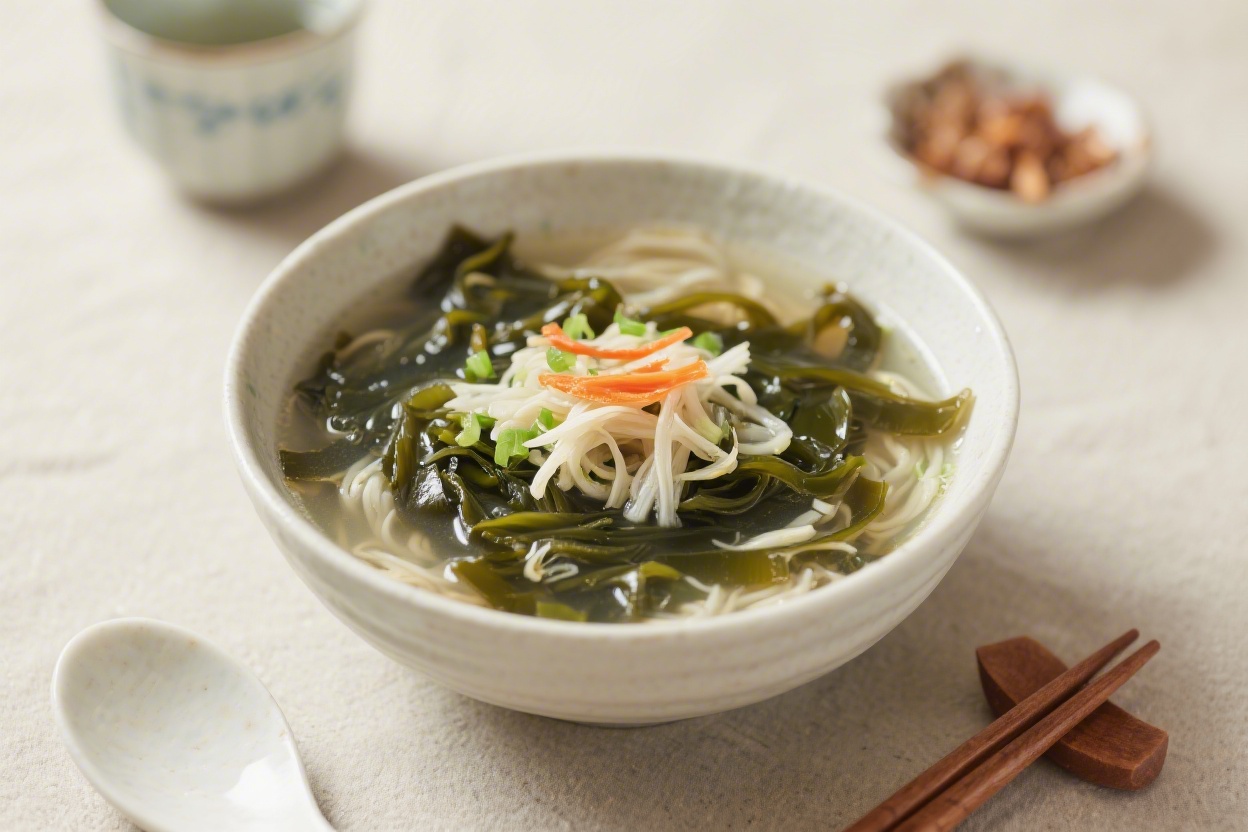
Miyeokguk is humble, soothing, and endlessly reliable. With a handful of pantry staples and a few easy steps, you’ll have a nourishing soup that fits any day birthday or not. Keep it simple, season thoughtfully, and let the seaweed shine. This is comfort you’ll want to make again and again.
Ingredients
Method
- Soak the seaweed. Rinse the dried miyeok briefly, then soak in cool water for 10–15 minutes until it’s soft and expanded. Drain well and cut into bite-size pieces.
- Season the beef. Toss beef with 1 teaspoon sesame oil and 1 teaspoon soy sauce. This adds flavor from the start.
- Stir-fry for aroma. In a pot, heat 1 tablespoon sesame oil over medium. Add beef and cook until no longer pink. Add the drained seaweed and garlic, and stir-fry 2–3 minutes until glossy and fragrant.
- Add water and simmer. Pour in 4 cups water (and a small piece of dried kelp if using). Bring to a boil, then simmer 15–20 minutes. Remove kelp after 10 minutes to avoid bitterness.
- Season to taste. Add soy sauce 1 teaspoon at a time, then adjust with salt. If you like, add a splash of fish sauce for extra umami. The broth should taste clean, savory, and slightly briny.
- Adjust consistency. If it’s too strong or crowded with seaweed, add more water. Simmer 5 more minutes to meld flavors.
- Serve hot. Ladle into bowls. A drizzle of sesame oil on top is optional but lovely.
Printable Recipe Card
Want just the essential recipe details without scrolling through the article? Get our printable recipe card with just the ingredients and instructions.