
Yukgaejang Spicy Beef Soup Recipe – Hearty, Fiery, and Comforting
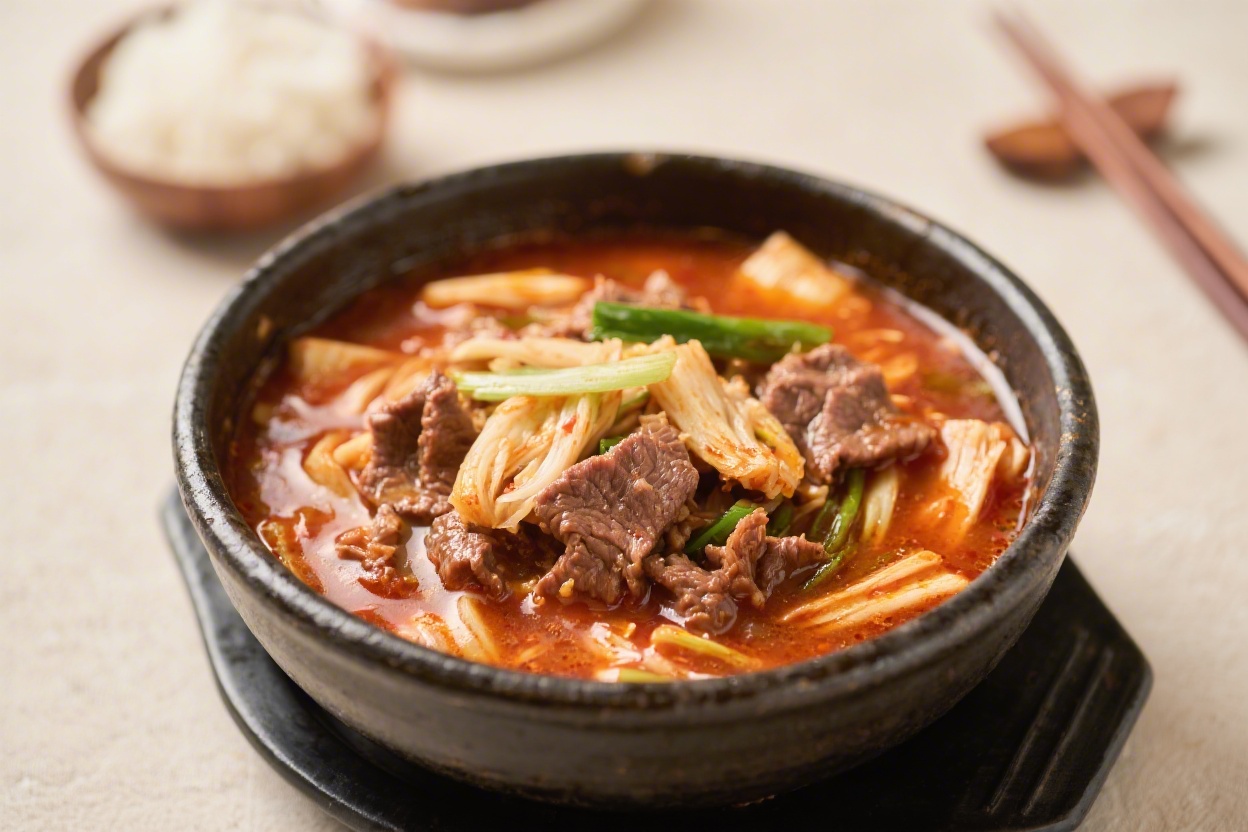
This bold Korean soup is all about rich beefy broth, deep chili warmth, and plenty of texture. If you crave something cozy with a kick, yukgaejang hits the spot. Tender shredded beef, chewy glass noodles, and earthy vegetables come together in a bowl that wakes up your senses.
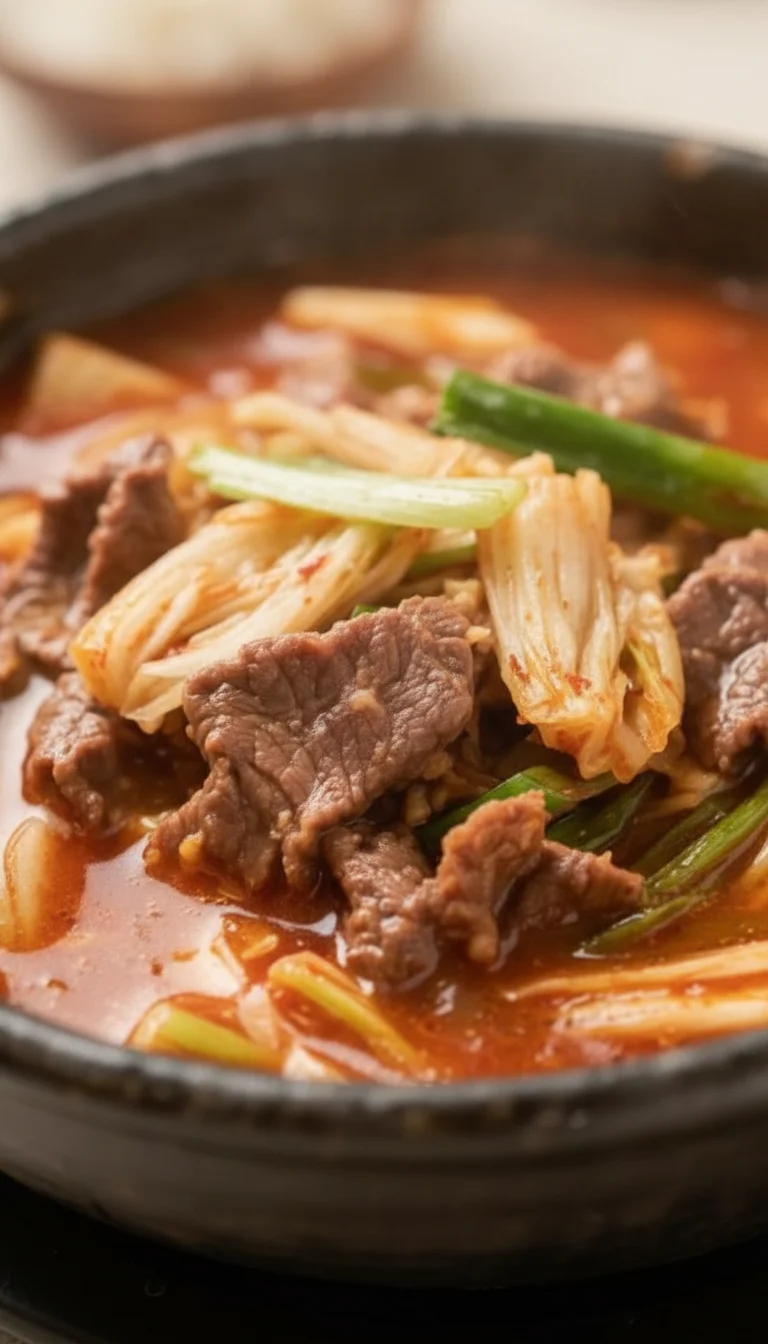
It’s satisfying without being heavy, and the heat builds in the best way. Make it on a weekend and enjoy leftovers all week.
What Makes This Recipe So Good
- Deep flavor, simple method: A long simmer builds a rich beef broth without complicated steps.
- Hearty textures: Shredded beef, bean sprouts, and glass noodles keep every spoonful interesting.
- Customizable heat: Adjust the gochugaru to make it mild or fiery.
- Great for leftovers: The flavors get even better the next day.
- Classic Korean comfort: Warm, spicy, and nourishing—perfect for cold days or when you need a pick-me-up.
Ingredients
- 2 pounds beef brisket or flank (boneless), rinsed
- 12 cups water
- 1 medium onion, halved
- 6 cloves garlic, smashed
- 2 inches fresh ginger, sliced
- 2 scallions, cut into large pieces (plus more for garnish)
- 8 ounces mung bean sprouts, rinsed
- 6–8 ounces fernbrake (gosari), soaked and rinsed (optional but traditional)
- 2 cups napa cabbage, roughly chopped
- 1 cup shiitake mushrooms, sliced (fresh or soaked dried)
- 3–4 ounces Korean glass noodles (dangmyeon), soaked per package
- 3 tablespoons neutral oil (canola or avocado)
- 3 tablespoons gochugaru (Korean red pepper flakes), to taste
- 2 tablespoons gochujang (Korean red chili paste)
- 2 tablespoons soy sauce
- 1 tablespoon fish sauce (optional, for depth)
- 1 tablespoon sesame oil
- 1 teaspoon sugar (optional, to balance heat)
- Salt and black pepper, to taste
- 2 eggs, lightly beaten (optional)
Instructions
- Make the broth: Add beef, water, onion, garlic, ginger, and scallion pieces to a large pot. Bring to a boil, then reduce to a gentle simmer.Skim foam. Cook 1.5–2 hours, until beef is very tender.
- Strain and shred: Remove beef and set aside to cool slightly. Strain the broth and discard aromatics.Shred the beef into bite-size strands with forks.
- Build the chili oil: In a clean pot, heat neutral oil over low. Add gochugaru and stir 30–45 seconds until fragrant and red. Do not burn.
- Season the base: Stir in gochujang, soy sauce, fish sauce (if using), sesame oil, and sugar.Cook 30 seconds to melt and bloom the flavors.
- Add broth and simmer: Pour the strained beef broth into the pot. Bring to a simmer and taste. Season with salt and pepper as needed.
- Add vegetables: Add shredded beef, bean sprouts, gosari, napa cabbage, and mushrooms.Simmer 10–12 minutes, until vegetables are tender but not mushy.
- Finish with noodles: Add soaked glass noodles and cook 4–6 minutes, until chewy and translucent.
- Optional egg ribbons: Slowly drizzle in beaten eggs while gently stirring to create silky strands.
- Garnish and serve: Ladle into bowls. Top with sliced scallions. Serve with hot steamed rice and kimchi.
Storage Instructions
- Refrigerator: Cool completely, then store in airtight containers for up to 4 days.
- Freezer: Freeze up to 2 months.For best texture, freeze without noodles and add fresh noodles when reheating.
- Reheating: Warm gently on the stove. If too thick, add a splash of water or broth and adjust seasoning.
Why This is Good for You
- Protein-rich: Shredded beef supports recovery and keeps you full.
- Veggie-loaded: Sprouts, mushrooms, and cabbage add fiber, minerals, and antioxidants.
- Warming spices: Gochugaru and garlic may support circulation and have anti-inflammatory compounds.
- Light yet satisfying: Brothy base delivers comfort without heaviness.
Common Mistakes to Avoid
- Rushing the broth: Short simmer = flat flavor. Give it time for depth and tenderness.
- Burning the chili flakes: Keep heat low when blooming gochugaru to avoid bitterness.
- Overcooking noodles: Glass noodles turn mushy if boiled too long.Add near the end.
- Under-seasoning: Taste after adding noodles and veggies and adjust salt, soy sauce, or fish sauce.
- Skipping the strain: Straining creates a clean-tasting, clear broth.
Recipe Variations
- Chicken version: Swap beef with chicken thighs. Simmer until tender, then shred.
- Mushroom-forward: Use extra shiitake, oyster, and enoki for a hearty, semi-vegetarian bowl. Replace fish sauce with extra soy.
- Extra greens: Add spinach or watercress in the last 2 minutes for a fresh bite.
- Milder heat: Reduce gochugaru to 1–1.5 tablespoons and increase gochujang slightly for body without too much spice.
- Bone broth boost: Start with beef bones for the simmer to create a richer, collagen-packed base.
FAQ
Can I use a pressure cooker for the beef?
Yes.
Cook the beef with aromatics and water at high pressure for about 45 minutes, then natural release. Strain, shred, and proceed with the recipe.
What can I substitute for gosari (fernbrake)?
If you can’t find gosari, use more mushrooms, extra napa cabbage, or a handful of blanched spinach. The soup will still be delicious.
Is there a gluten-free option?
Use gluten-free soy sauce or tamari and confirm your gochujang is gluten-free.
Glass noodles are typically gluten-free, but check labels.
How spicy is yukgaejang?
It’s medium to hot, depending on your gochugaru. Start with less, taste, and add more if you want extra heat.
Can I make it ahead?
Absolutely. The flavors deepen overnight.
Store the noodles separately if you’re making it ahead to keep them from getting too soft.
What should I serve with it?
Steamed white rice, kimchi, and simple banchan like pickled radish or seasoned spinach are perfect sides.
Final Thoughts
Yukgaejang is the kind of soup that hugs you back—spicy, savory, and full of substance. With a little patience, you’ll get a broth that tastes like it simmered all day. Keep it classic or tweak the heat and veggies to match your mood.
Either way, it’s a reliable, soul-warming bowl you’ll come back to again and again.
Ingredients
Method
- Make the broth: Add beef, water, onion, garlic, ginger, and scallion pieces to a large pot. Bring to a boil, then reduce to a gentle simmer. Skim foam. Cook 1.5–2 hours, until beef is very tender.
- Strain and shred: Remove beef and set aside to cool slightly. Strain the broth and discard aromatics. Shred the beef into bite-size strands with forks.
- Build the chili oil: In a clean pot, heat neutral oil over low. Add gochugaru and stir 30–45 seconds until fragrant and red. Do not burn.
- Season the base: Stir in gochujang, soy sauce, fish sauce (if using), sesame oil, and sugar. Cook 30 seconds to melt and bloom the flavors.
- Add broth and simmer: Pour the strained beef broth into the pot. Bring to a simmer and taste. Season with salt and pepper as needed.
- Add vegetables: Add shredded beef, bean sprouts, gosari, napa cabbage, and mushrooms. Simmer 10–12 minutes, until vegetables are tender but not mushy.
- Finish with noodles: Add soaked glass noodles and cook 4–6 minutes, until chewy and translucent.
- Optional egg ribbons: Slowly drizzle in beaten eggs while gently stirring to create silky strands.
- Garnish and serve: Ladle into bowls. Top with sliced scallions. Serve with hot steamed rice and kimchi.
Printable Recipe Card
Want just the essential recipe details without scrolling through the article? Get our printable recipe card with just the ingredients and instructions.