
Vegetarian Miso Soup With Tofu – A Cozy, Umami-Packed Classic
Miso soup is the kind of simple comfort that never gets old. It’s warm, savory, and surprisingly quick to make at home. This version keeps things vegetarian while still delivering deep flavor and satisfying texture.
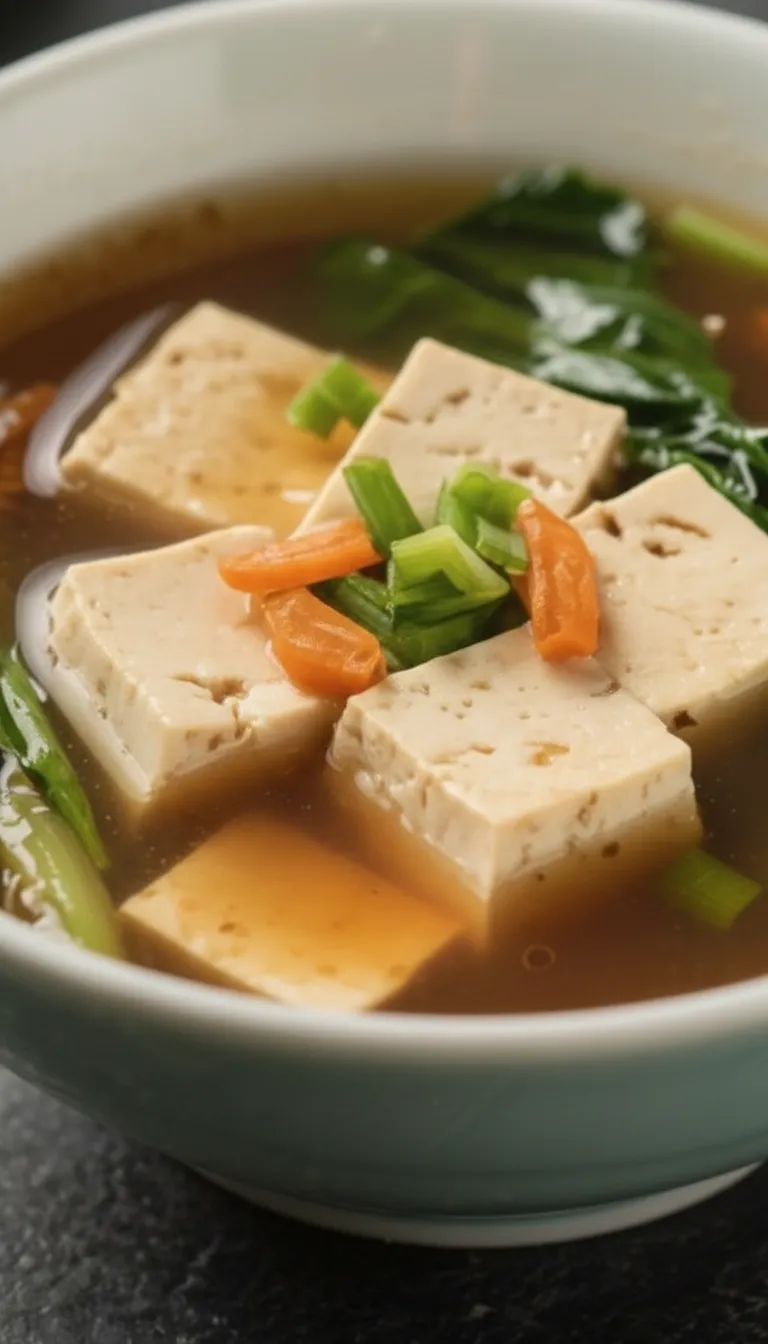
With soft tofu, seaweed, and scallions, it feels nourishing without being heavy. It’s a great weeknight staple, a soothing side, or a light meal on its own.
What Makes This Special
This recipe is all about clean, layered flavor with minimal fuss. Using kombu and dried mushrooms for the broth gives you a rich, vegetarian base without fish.
The miso paste adds a mellow, salty depth that ties everything together. Soft tofu brings gentle creaminess, while wakame adds a subtle ocean note. It’s fast, flexible, and easy to customize with what you have on hand.
Shopping List
- Kombu (dried kelp) – 1 strip (about 4 inches)
- Dried shiitake mushrooms – 3 to 4 pieces (optional but recommended)
- Water – 4 cups
- Wakame (dried seaweed) – 1 to 2 tablespoons
- Soft or silken tofu – 7 to 10 ounces, cubed
- Miso paste (white/shiro or yellow) – 2 to 3 tablespoons
- Scallions – 2, thinly sliced
- Low-sodium soy sauce or tamari – 1 to 2 teaspoons (optional, to taste)
- Fresh ginger – 1-inch piece, sliced (optional)
Instructions
- Make the vegetarian dashi: Add 4 cups of water to a pot with the kombu and dried shiitakes.Let them soak for 15 to 20 minutes to soften and release flavor.
- Warm gently: Place the pot over medium heat and slowly bring it close to a simmer. Just before it boils, remove the kombu. Simmer the mushrooms for 5 more minutes, then remove them.Strain if needed.
- Prep add-ins: Soak the wakame in a small bowl of water for 5 minutes, then drain. Slice the scallions and cut the tofu into small cubes.
- Season the broth: Add the wakame to the pot. Taste the broth; if you’d like more depth, add 1 teaspoon soy sauce or tamari.Keep the heat low—no boiling from here on.
- Whisk in miso: Ladle some hot broth into a small bowl, add the miso, and whisk until smooth. Pour it back into the pot. Aim for 2 tablespoons first, then taste and add more if needed.
- Add tofu and warm through: Gently slide in the tofu and heat for 1 to 2 minutes.Avoid boiling; high heat can dull the miso’s flavor and split the tofu.
- Finish and serve: Stir in the scallions. Taste and adjust with a touch more miso or soy sauce. Ladle into bowls and serve hot.
How to Store
Store leftover soup in an airtight container in the fridge for up to 3 days.
For best flavor, store the broth and tofu separately and combine when reheating. Reheat gently over low heat and avoid boiling, which can mute the miso and break up the tofu. If the soup tastes flat after reheating, whisk in a little fresh miso just before serving.
Health Benefits
- Protein without heaviness: Tofu provides plant-based protein and calcium (if set with calcium sulfate).
- Gut-friendly ferments: Miso contains beneficial compounds from fermentation.Keeping heat low helps preserve them.
- Mineral-rich seaweed: Wakame and kombu add iodine and trace minerals that support thyroid and overall health.
- Light yet satisfying: The soup is low in calories but high in umami, helping you feel content without overdoing it.
Pitfalls to Watch Out For
- Boiling the miso: High heat dulls flavor. Add miso off the boil and warm gently.
- Skipping the base: Water alone tastes thin. The kombu and shiitake “dashi” is key for depth.
- Over-salting: Miso is salty.Taste before adding soy sauce or extra miso.
- Breaking the tofu: Stir softly and avoid a rolling boil to keep cubes intact.
Recipe Variations
- Greens boost: Add a handful of baby spinach, bok choy, or napa cabbage in the last minute.
- Mushroom lovers: Slice the rehydrated shiitakes and return them to the pot for extra umami.
- Spicy edge: Stir in a pinch of red pepper flakes, a dab of chili crisp, or grated ginger.
- Heartier meal: Add cooked soba or udon noodles, or serve with a side of steamed rice.
- Different miso: White miso is mild and slightly sweet; yellow is balanced; red miso is stronger and saltier—use less and taste as you go.
FAQ
Can I make it gluten-free?
Yes. Use certified gluten-free miso and tamari instead of soy sauce, or skip the soy sauce entirely if the miso provides enough salt.
What if I don’t have kombu or shiitakes?
You can still make a tasty soup with water, miso, and tofu, but the flavor will be lighter. If possible, add a few sliced fresh mushrooms or a splash of soy sauce to compensate.
Which tofu is best?
Soft or silken tofu gives that classic, delicate texture.
If you prefer a firmer bite, use medium or firm tofu and cut it smaller so it warms through quickly.
Can I freeze miso soup?
Freezing isn’t ideal. Tofu changes texture, and miso can separate. If you must freeze, do so without the tofu, then add fresh tofu when reheating.
How do I keep the soup from tasting too salty?
Start with less miso, taste, and add more gradually.
Use low-sodium soy sauce and remember that different miso brands vary in saltiness.
Final Thoughts
Vegetarian miso soup with tofu is simple, soothing, and endlessly adaptable. Once you learn the gentle technique—build a solid broth, whisk in miso off the heat, and treat the tofu kindly—you’ll have a reliable bowl of comfort anytime. Keep kombu, dried mushrooms, and miso in your pantry, and you’re always minutes away from something warm, nourishing, and deeply satisfying.
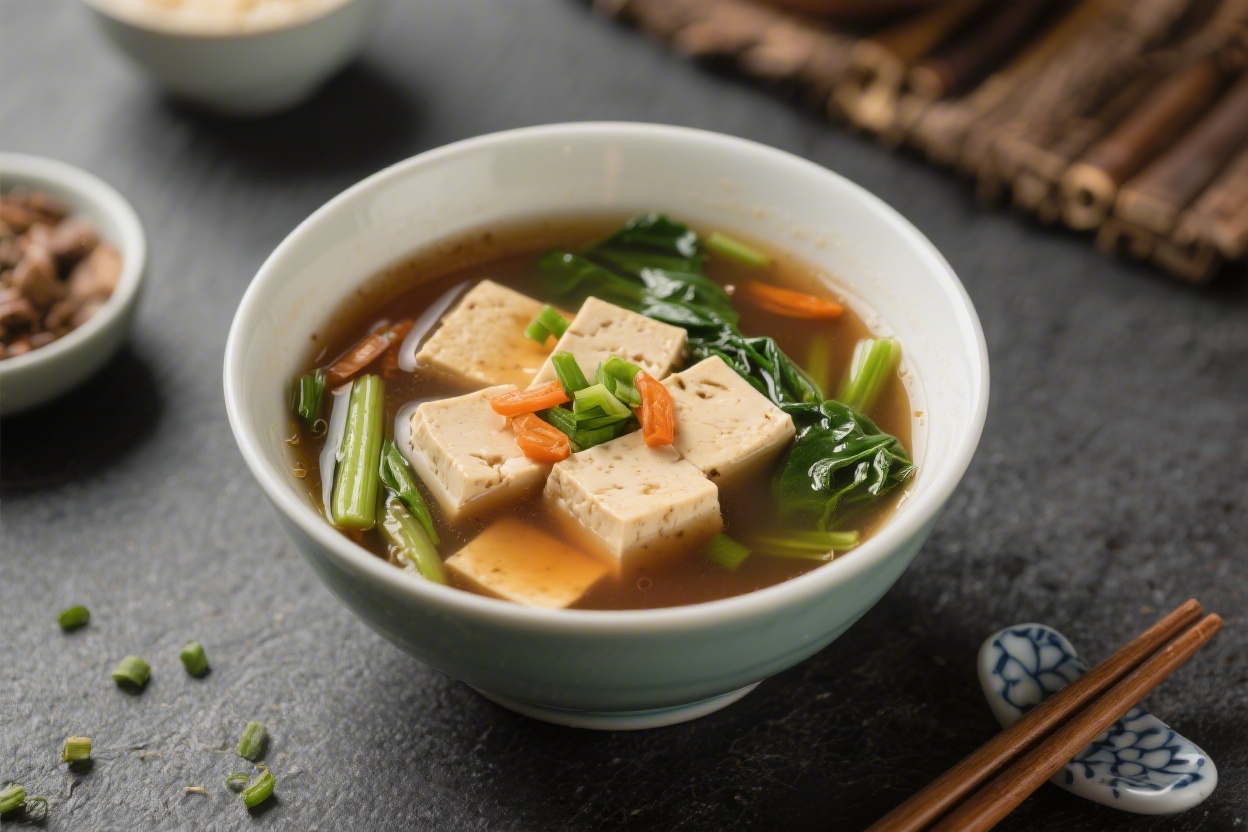
Ingredients
Method
- Make the vegetarian dashi: Add 4 cups of water to a pot with the kombu and dried shiitakes. Let them soak for 15 to 20 minutes to soften and release flavor.
- Warm gently: Place the pot over medium heat and slowly bring it close to a simmer. Just before it boils, remove the kombu. Simmer the mushrooms for 5 more minutes, then remove them. Strain if needed.
- Prep add-ins: Soak the wakame in a small bowl of water for 5 minutes, then drain. Slice the scallions and cut the tofu into small cubes.
- Season the broth: Add the wakame to the pot. Taste the broth; if you’d like more depth, add 1 teaspoon soy sauce or tamari. Keep the heat low—no boiling from here on.
- Whisk in miso: Ladle some hot broth into a small bowl, add the miso, and whisk until smooth. Pour it back into the pot. Aim for 2 tablespoons first, then taste and add more if needed.
- Add tofu and warm through: Gently slide in the tofu and heat for 1 to 2 minutes. Avoid boiling; high heat can dull the miso’s flavor and split the tofu.
- Finish and serve: Stir in the scallions. Taste and adjust with a touch more miso or soy sauce. Ladle into bowls and serve hot.
Printable Recipe Card
Want just the essential recipe details without scrolling through the article? Get our printable recipe card with just the ingredients and instructions.