
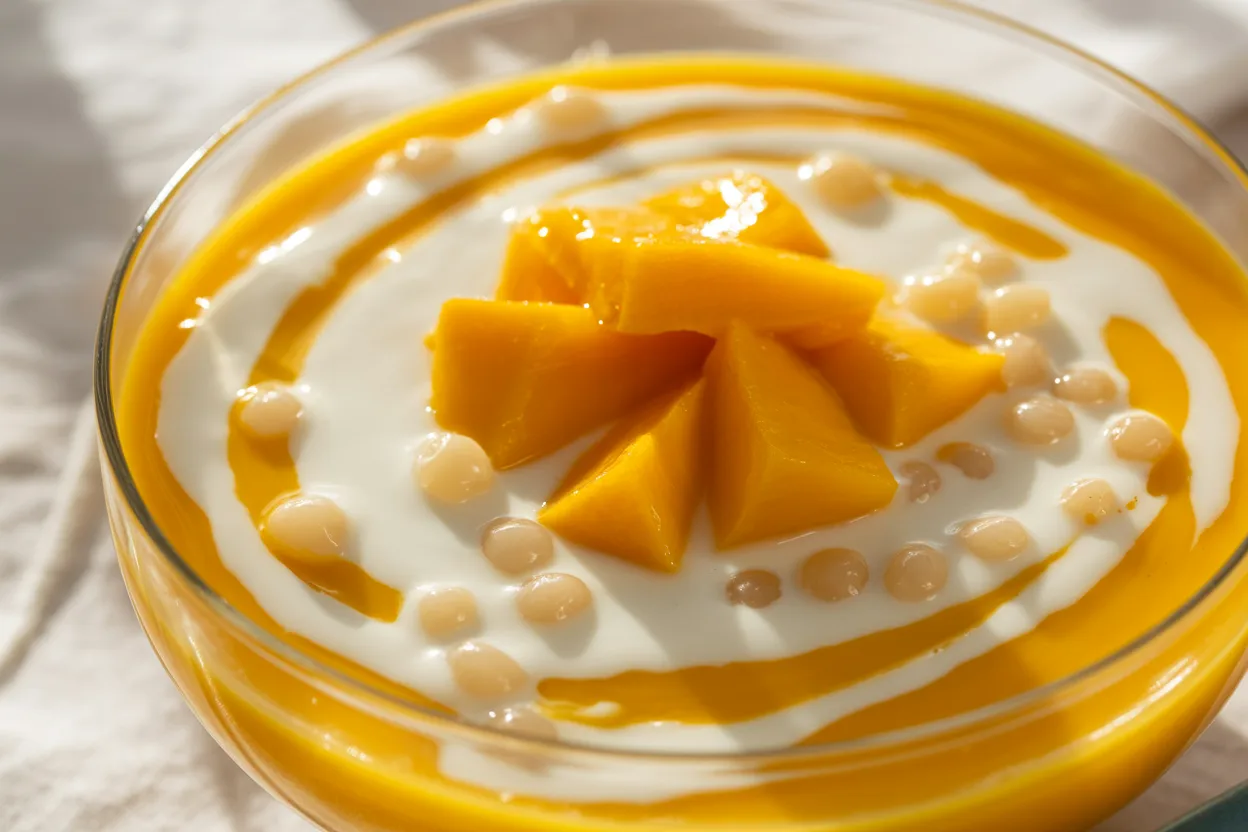
Mango Sago – Creamy, Refreshing & Perfectly Sweet
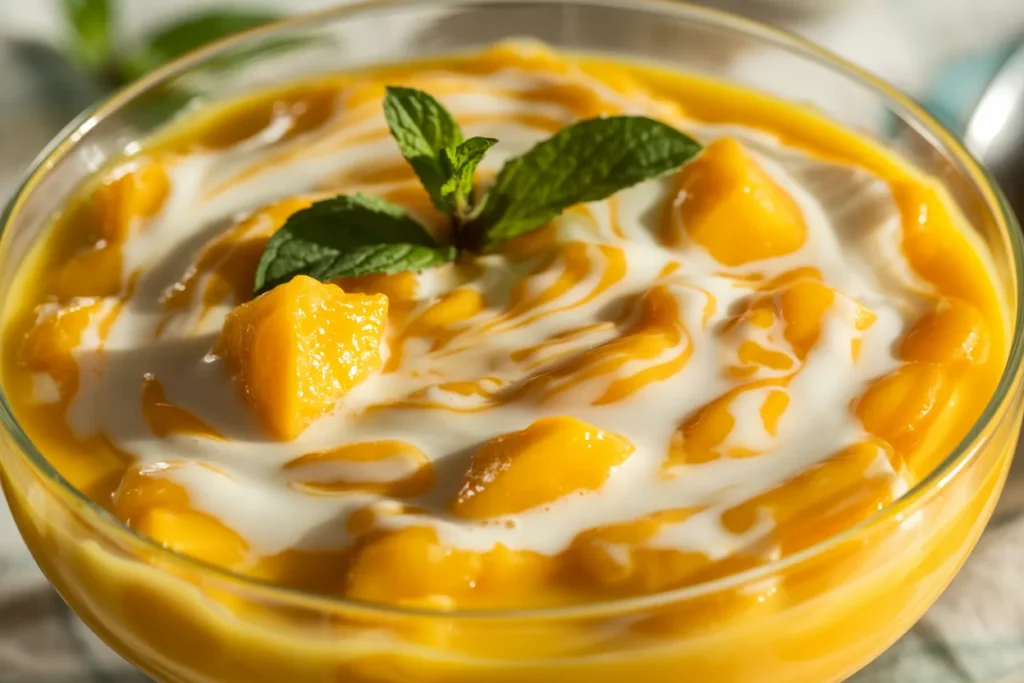
So, you’ve spent your life thinking rice pudding was the final boss of creamy desserts? Think again. Meet Mango Sago. It’s the tropical, chilled, velvet-textured dream that makes regular pudding look like it’s not even trying. It’s essentially a hug in a bowl, provided that hug is refreshing, sweet, and tastes like a beach vacation in Hong Kong. If you’re looking for a dessert that says “I’m sophisticated” while being as easy as boiling water, you’ve hit the jackpot.
Why This Recipe is Awesome
This dessert is the ultimate “low effort, high reward” play. It’s the kind of dish that makes people think you have a secret talent for Asian fusion cuisine, when in reality, you just know how to use a blender.
- The Texture: It’s a literal party of textures. You’ve got the silky mango puree, the creamy coconut milk, and those little “pearls” of sago that pop in your mouth like tiny, flavorless (but fun!) boba.
- Naturally Vegan-ish: Unless you choose to douse it in condensed milk (which, let’s be honest, is a tempting life choice), it’s naturally dairy-free.
- No Bake, No Stress: It’s 90 degrees out. Do you want to turn on the oven? Absolutely not. This is a cold-process masterpiece.
- Idiot-Proof: If you can boil a pot of water without forgetting about it, you’ve basically mastered this recipe.
Ingredients You’ll Need
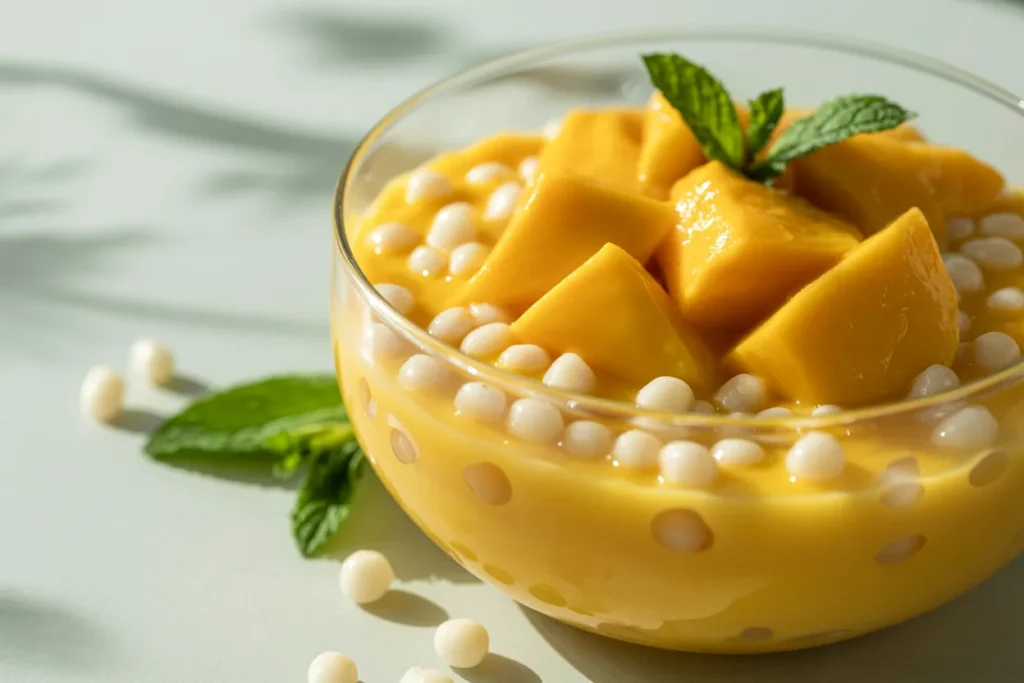
Gather your supplies. Most of this is probably already chilling in your pantry, waiting for its moment to shine.
- 2 Large Ripe Mangoes: Use Honey or Ataulfo mangoes if you can find them. If your mango is crunchy or sour, abort mission—we need them “smushy-sweet.”
- ½ cup Small Sago Pearls: These look like tiny white beads. FYI, they are made from palm starch, but you can use tiny tapioca pearls if your grocery store is being difficult.
- 1 cup Coconut Milk: Full fat, please. This isn’t the time to be “light.” We want that creamy, decadent mouthfeel.
- ¼ cup Condensed Milk (or Coconut Cream + Sugar): This is the “make it taste like a restaurant” ingredient. Use more if you have a massive sweet tooth.
- A splash of Evaporated Milk: For that extra silkiness.
- Fresh Mint or Pomelo (Optional): If you want to be extra and add that classic citrusy “crunch” on top.
Step-by-Step Instructions
- Boil the Pearls: Bring a large pot of water to a rolling boil. Drop the sago pearls in and stir immediately so they don’t turn into a giant, gelatinous blob. Let them dance in the water for about 10–12 minutes.
- The “Rest” Period: Turn off the heat, pop a lid on the pot, and let them sit for 10 minutes. This ensures the “white heart” in the center of the pearl disappears. If they’re still white in the middle, they aren’t ready!
- The Cold Shock: Drain the sago and rinse them under cold water. This stops the cooking and washes away the excess starch. Set them aside in a bowl of cold water so they don’t stick.
- The Mango Massacre: Peel and pit your mangoes. Dice one half into beautiful little cubes for the topping. Toss the rest into a blender.
- Liquify: Blend the mango chunks with the coconut milk, condensed milk, and evaporated milk. It should look like a thick, vibrant orange sunshine-smoothie.
- The Assembly: In a large bowl or individual glasses, mix the mango puree with the drained sago pearls. Give it a good stir.
- Chill Out: Let it sit in the fridge for at least an hour. This dessert is best served ice-cold. Top with your reserved mango cubes right before serving.
Common Mistakes to Avoid
- The Sago Sludge: Adding sago to cold water is a crime. They will literally dissolve into a starchy soup. Always start with boiling water.
- Using Unripe Mangoes: If the mango isn’t sweet, the dessert will be underwhelming. If you’re stuck with sour mangoes, add more condensed milk and pray.
- Under-rinsing: If you don’t rinse the sago thoroughly after cooking, the whole dessert will turn into a thick, gluey paste overnight. Rinse ’em like you’re washing a sin away.
- Skipping the Chill: Eating this warm is… fine, I guess? But eating it cold is a spiritual experience. Don’t rush it.
Alternatives & Substitutions
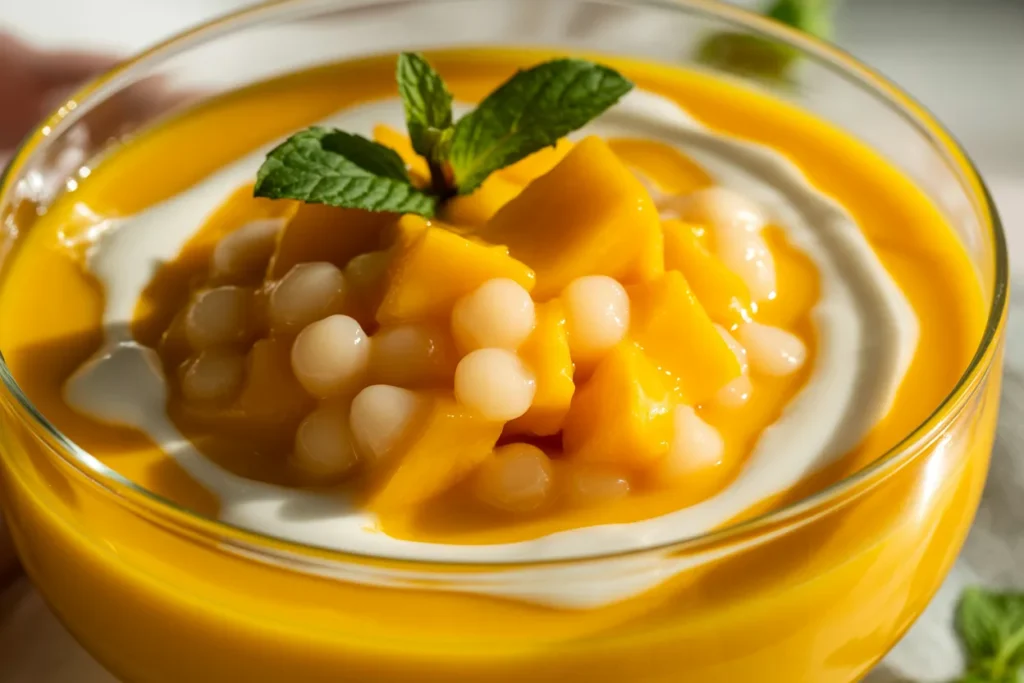
- The Pomelo Swap: Traditional Hong Kong style uses pomelo shreds for a bitter-sweet contrast. If you can’t find pomelo, grapefruit works in a pinch, but be careful, it’s punchy.
- Vegan Queen: Use coconut condensed milk or a bit of maple syrup instead of the dairy version. It keeps the tropical vibes 100% plant-based.
- Fruit Variations: Not a mango fan? (Who are you?) You can try this with strawberries or peaches, though you might need to adjust the sugar levels.
- Texture Add-ins: Some people like to add coconut jelly or nata de coco. IMO, more textures equals more fun, so go wild.
Final Thoughts
Mango Sago is the ultimate “I’m a fancy host” dessert that secretly requires zero culinary talent. It’s bright, it’s creamy, and it looks stunning in a glass. Plus, it’s the perfect excuse to buy those expensive honey mangoes you’ve been eyeing. Now go impress someone or yourself with your new culinary skills. You’ve earned it!
Frequently Asked Questions(FAQs)
What is mango sago?
Mango sago is a popular Asian dessert made with sweet ripe mangoes, cooked sago pearls (tapioca), and a creamy base usually made from coconut milk or evaporated milk. It’s served chilled and is known for its refreshing, tropical flavor and soft, chewy texture.
What type of mango is best for mango sago?
Sweet, ripe mangoes such as Ataulfo, Alphonso, or Honey mangoes work best. These varieties are naturally creamy and low in fiber, giving mango sago a smooth, rich consistency.
Can I use frozen mango for mango sago?
Yes, frozen mango can be used if fresh mangoes are not available. Thaw the mango completely and drain any excess liquid before blending or chopping to maintain the right texture.
Why is my sago mushy or sticking together?
Sago becomes mushy if overcooked or not rinsed properly. It should be cooked until translucent with a tiny white dot in the center, then rinsed under cold water to remove excess starch and prevent clumping.
Can mango sago be made dairy-free?
Yes, mango sago is naturally dairy-free when made with coconut milk. Avoid evaporated milk or cream if you want a fully plant-based version.
How sweet should mango sago be?
The sweetness depends on the ripeness of the mangoes. Taste before adding sugar or sweetener, as ripe mangoes often provide enough natural sweetness on their own.
How long can mango sago be stored?
Mango sago is best enjoyed fresh but can be stored in the refrigerator for up to 24 hours. After that, the sago may absorb too much liquid and lose its ideal texture.
Can I make mango sago ahead of time?
You can prepare the sago and mango puree ahead of time, but it’s best to combine everything shortly before serving to keep the texture fresh and creamy.
What toppings can be added to mango sago?
Fresh mango cubes, pomelo, mini tapioca pearls, or a drizzle of coconut cream make excellent toppings and add extra texture and flavor.
Is mango sago served warm or cold?
Mango sago is always served chilled. Refrigerating it for at least an hour enhances its refreshing taste and creamy consistency.
Printable Recipe Card
Want just the essential recipe details without scrolling through the article? Get our printable recipe card with just the ingredients and instructions.