
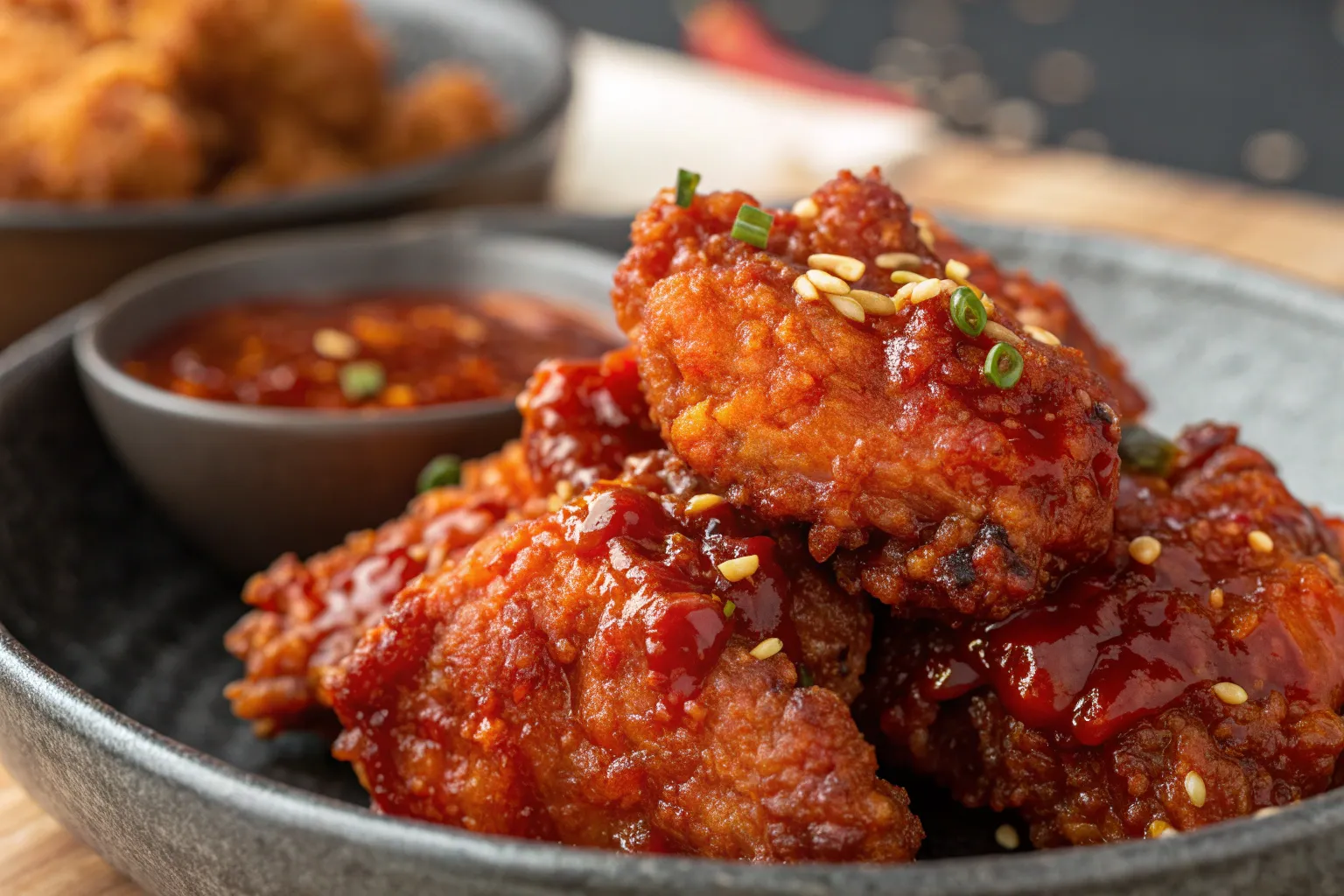
Spicy Gochujang Korean Fried Chicken
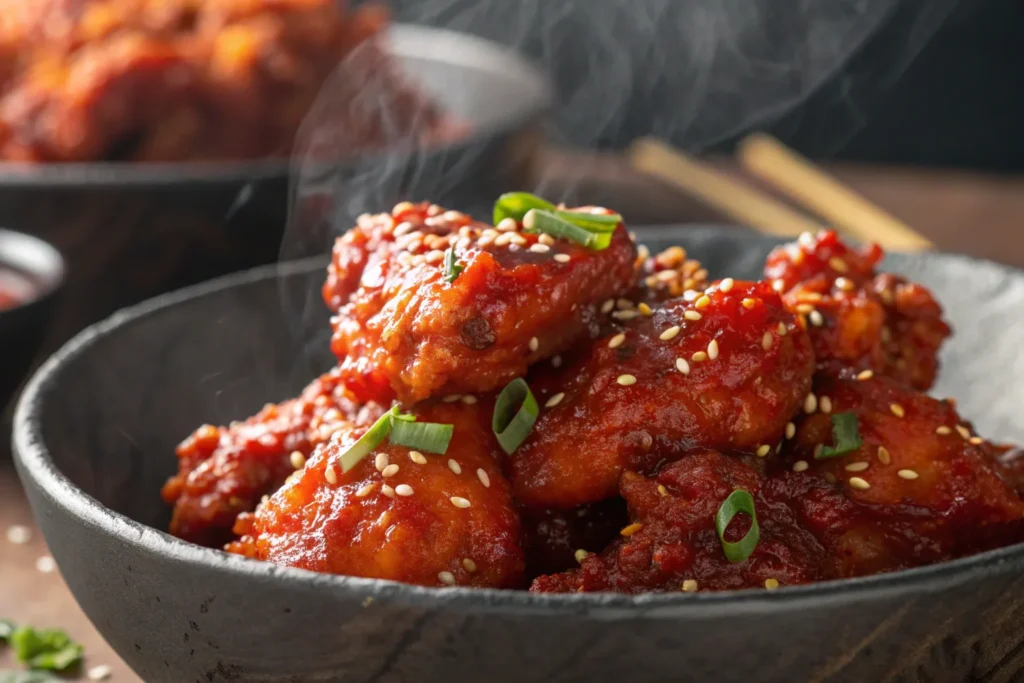
Spicy Gochujang Korean Fried Chicken is a bold, flavor-packed dish that perfectly balances heat, sweetness, and umami. Crispy on the outside and juicy on the inside, each bite delivers an irresistible crunch followed by a rich, spicy glaze made with gochujang, Korea’s iconic fermented chili paste. This dish has gained international fame for its addictive flavor and unique double-frying method, which ensures a crisp exterior that stays crunchy even after coating in sauce. Ideal for weeknight dinners, game-day snacks, or special occasions, this fried chicken elevates traditional comfort food to a vibrant, Korean-inspired culinary experience.
Why You’ll Love This Recipe
You’ll love this recipe because it offers restaurant-quality Korean fried chicken at home without excessive complexity. The gochujang glaze provides a harmonious balance of sweet, spicy, and savory flavors that pair beautifully with the crunchy chicken. The double-frying technique guarantees a crisp texture, while the chicken stays tender and juicy. This recipe is also versatile—perfect with steamed rice, pickled vegetables, or as part of a larger Korean-inspired meal.
Key Ingredients Explained
The star of this recipe is gochujang, a fermented Korean chili paste that delivers heat, depth, and umami flavor. Chicken wings or drumettes are preferred for their perfect bite-size portions and natural juiciness. Cornstarch or potato starch is used to achieve a super-crispy coating, while soy sauce, garlic, ginger, and sugar enhance the glaze with aromatic and savory notes. High-quality ingredients, especially fresh chicken and authentic gochujang, ensure the best results.
Equipment Needed
Essential equipment includes a deep fryer or a large, heavy-bottomed pot for frying, a thermometer to monitor oil temperature, tongs for safely handling the chicken, a mixing bowl for the glaze, and a wire rack for draining excess oil. A whisk or spatula is useful for blending the sauce, and kitchen paper or parchment helps absorb extra oil while keeping the chicken crispy.
Instructions; How to Make
Step 1: Prepare the Chicken
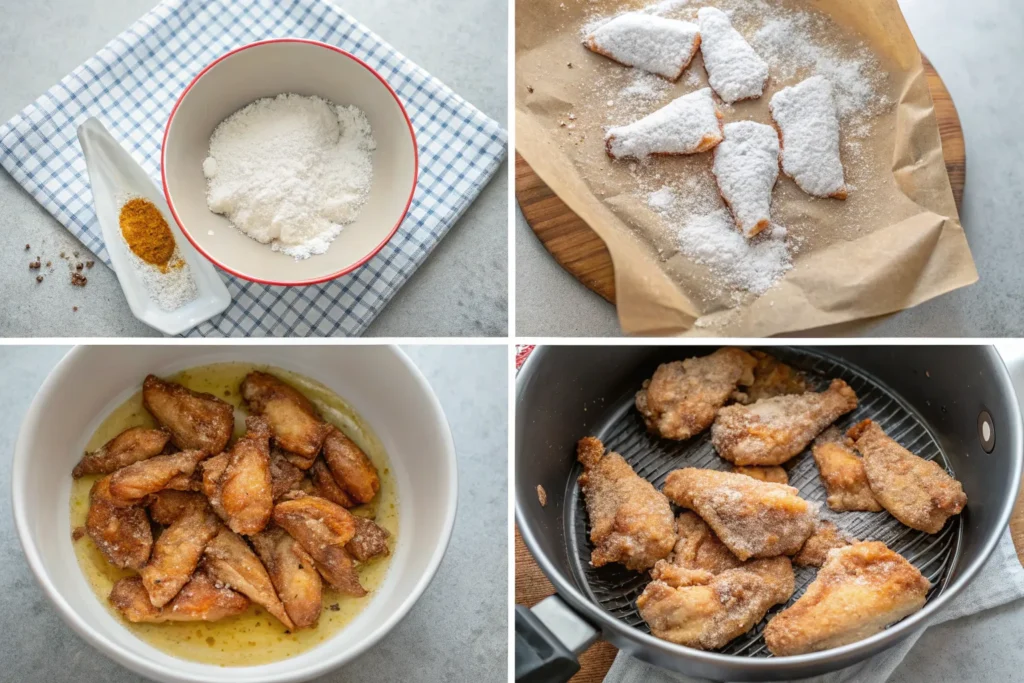
Pat the chicken wings or drumettes dry with paper towels to remove excess moisture. This helps the coating stick better and ensures crispiness. Lightly season with salt and pepper.
Step 2: Prepare the Coating
In a large bowl, combine cornstarch (or potato starch) with a pinch of salt. Toss the chicken pieces in the starch until evenly coated. Shake off excess starch to prevent clumping during frying.
Step 3: First Fry (Blanching)
Heat oil in a deep fryer or heavy-bottomed pot to around 300°F (150°C). Fry the chicken in small batches for 4–5 minutes until it’s just cooked but not browned. Remove the chicken and drain on a wire rack. This step cooks the chicken through and prepares it for crispiness in the second fry.
Step 4: Second Fry (Crisping)
Increase the oil temperature to 375°F (190°C). Fry the chicken again in batches for 2–4 minutes until golden brown and ultra-crispy. Drain excess oil on a wire rack or paper towels.
Step 5: Prepare the Gochujang Glaze
While the chicken is frying, combine gochujang, soy sauce, garlic (minced), ginger (grated), sugar or honey, and a splash of rice vinegar in a small saucepan. Heat gently over medium-low heat, whisking until smooth and slightly thickened. Taste and adjust for spice or sweetness as desired.
Step 6: Toss Chicken in Glaze
Once the chicken has cooled slightly for a minute or two, transfer it to a large mixing bowl. Pour the gochujang glaze over the chicken and toss gently to coat each piece evenly. Avoid tossing while the chicken is piping hot straight from the fryer to maintain maximum crispness.
Step 7: Garnish and Serve
Arrange the glazed chicken on a serving platter. Sprinkle with toasted sesame seeds and finely sliced green onions or chives. Serve immediately while crispy. Pair with steamed rice, pickled vegetables, or enjoy as finger food with napkins handy!
Texture & Flavor Profile
The texture is a signature feature: crackling crisp exterior with tender, juicy meat inside. The glaze is sticky and glossy, coating each piece with sweet, spicy, and slightly tangy notes. The heat from gochujang is balanced by sugar and a touch of soy sauce, making the chicken intensely flavorful without overwhelming the palate. When combined with garnishes like toasted sesame seeds or green onions, it also offers a pleasant visual and textural contrast.
Common Mistakes to Avoid
Overcrowding the frying pan can lower oil temperature and result in soggy chicken, so fry in small batches. Using wet chicken or skipping the double-fry technique can compromise the crunch. Additionally, adding the glaze to piping-hot chicken can cause it to become too thin or watery, so slightly cool the chicken before tossing it in the sauce. Measuring starch and maintaining proper oil temperature are key to achieving the perfect crisp.
Make-Ahead Instructions
The chicken can be seasoned and dredged ahead of time and stored in the refrigerator for a few hours before frying. The gochujang glaze can also be prepared in advance and refrigerated. Assemble and toss the chicken in the glaze just before serving to maintain maximum crispiness.
Substitutions & Ingredient Swaps
For a milder version, reduce the amount of gochujang or mix it with honey or ketchup. Chicken thighs can be used instead of wings for larger portions. Cornstarch can be swapped with potato starch or all-purpose flour, though cornstarch produces the crispiest results. Gluten-free soy sauce can be used to make the recipe gluten-free.
Serving Size & Yield
This recipe yields approximately 4 servings (about 12–16 wings or drumettes), depending on portion sizes. It can be doubled or tripled for larger gatherings, keeping the same frying and glazing techniques.
Scaling the Recipe
The recipe scales easily, but it is crucial to maintain batch frying to prevent overcrowding. Sauce ratios can be adjusted proportionally, and you may need a larger mixing bowl or additional wire racks to accommodate extra chicken.
Storage & Shelf Life
Leftover fried chicken can be stored in an airtight container in the refrigerator for up to 2 days. To retain some crispness, reheat in a hot oven or air fryer rather than the microwave.
Freezing Instructions
You can freeze uncooked, battered chicken for up to 1 month. Freeze on a tray first, then transfer to a freezer-safe bag. Fry directly from frozen using a slightly longer cooking time. Cooked, sauced chicken does not freeze well, as the glaze may become watery upon thawing.
Pairing Suggestions
Serve with steamed white rice, kimchi, pickled vegetables, or a crisp salad to balance the richness. For drinks, light lagers or sparkling beverages complement the spicy, sweet flavors well.
Presentation & Styling Tips
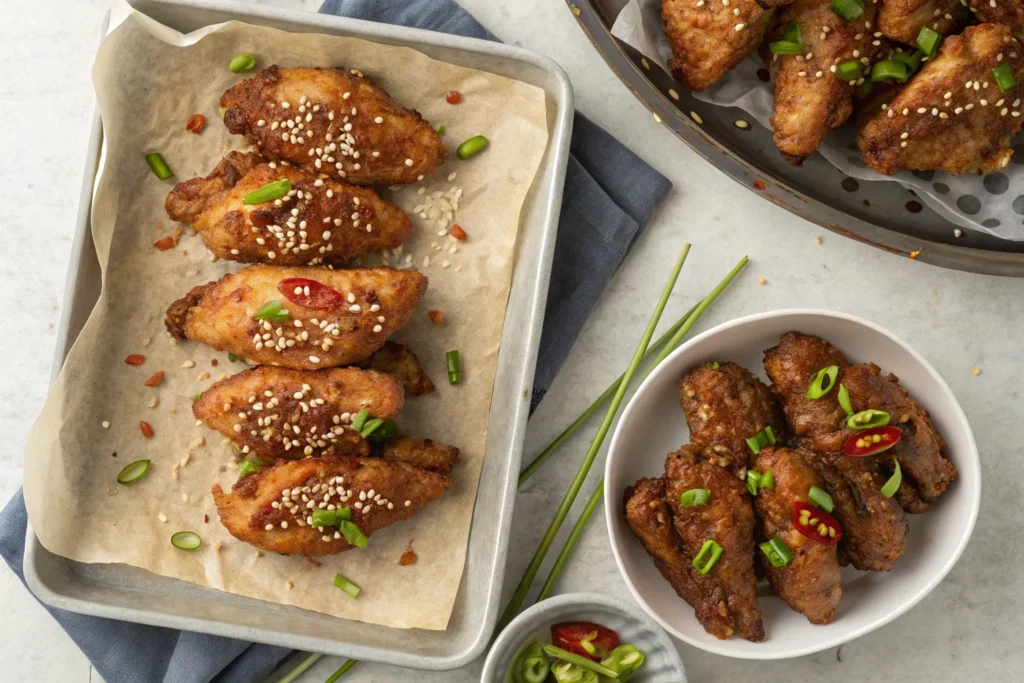
Arrange chicken on a platter lined with parchment paper or a wire rack. Garnish with sesame seeds, finely sliced green onions, or chili flakes for color and texture. For a party presentation, stack wings in a shallow bowl or serve on individual skewers for an appealing display.
Recipe Success Indicators
The chicken should be visibly crispy, golden-brown, and glossy with sauce. The interior must remain juicy and tender. A slight stickiness of the glaze without being watery or pooling indicates a perfectly balanced finish. Aroma should feature sweet, umami, and spicy notes from gochujang and aromatics.
Dietary Information
This dish is naturally high in protein and can be adapted for gluten-free diets with appropriate starch and soy sauce swaps. It is not vegetarian or vegan, but alternative proteins like tofu or cauliflower can be battered and fried for a plant-based version.
Cultural or Seasonal Relevance
Korean fried chicken, or “Yangnyeom Chicken” when sauced, is a beloved staple in Korea, often enjoyed during gatherings, celebrations, and late-night snacks. Its combination of crispy texture and sweet-spicy glaze has made it popular worldwide. This recipe is perfect for game nights, festive parties, or any occasion that calls for bold, shareable flavors.
Expert Troubleshooting
If the chicken coating is falling off, ensure the surface is dry before dredging in starch. Soggy chicken usually indicates low oil temperature, so monitor with a thermometer. If the sauce is too thin, simmer briefly to thicken before tossing. For excessive heat, mix in honey or sugar to balance spice.
Reader Tips & Feedback
Many readers recommend tossing chicken lightly with the glaze to maintain crispiness rather than overcoating. Others suggest serving with sliced cucumbers or pickles to balance richness. Feedback often highlights that double-frying is the key step for restaurant-style crispiness at home.
Printable Recipe Note
Save or print this Spicy Gochujang Korean Fried Chicken recipe for easy access during meal prep or entertaining. Having it on hand allows you to recreate this crowd-pleasing dish effortlessly whenever desired.
Conclusion
Spicy Gochujang Korean Fried Chicken is a show-stopping dish that combines addictive flavors, crispy texture, and juicy interior. With its sweet-spicy glaze and visually appealing presentation, it is perfect for parties, family dinners, or casual snacking. The recipe is approachable for home cooks, adaptable to dietary needs, and provides a rewarding culinary experience that rivals restaurant-quality fried chicken.
FAQs
Can I use chicken thighs instead of wings?
Yes, chicken thighs work well and provide larger, juicier portions. Adjust frying time accordingly.
What is the double-frying method and why is it important?
Double-frying ensures an extra-crispy exterior that stays crunchy even after adding the sauce. Fry once at lower temperature, then again at higher temperature before glazing.
How can I make the chicken less spicy?
Reduce the amount of gochujang or mix it with ketchup, honey, or a mild chili paste.
Can I make this gluten-free?
Yes, use potato starch instead of cornstarch if preferred and choose gluten-free soy sauce.
How do I reheat leftovers while keeping them crispy?
Reheat in a preheated oven at 375°F (190°C) or in an air fryer for a few minutes. Avoid microwaving, which softens the coating.
Can I prepare the glaze ahead of time?
Yes, the gochujang glaze can be made a day in advance and stored in the refrigerator. Bring it to room temperature before using.
Printable Recipe Card
Want just the essential recipe details without scrolling through the article? Get our printable recipe card with just the ingredients and instructions.