
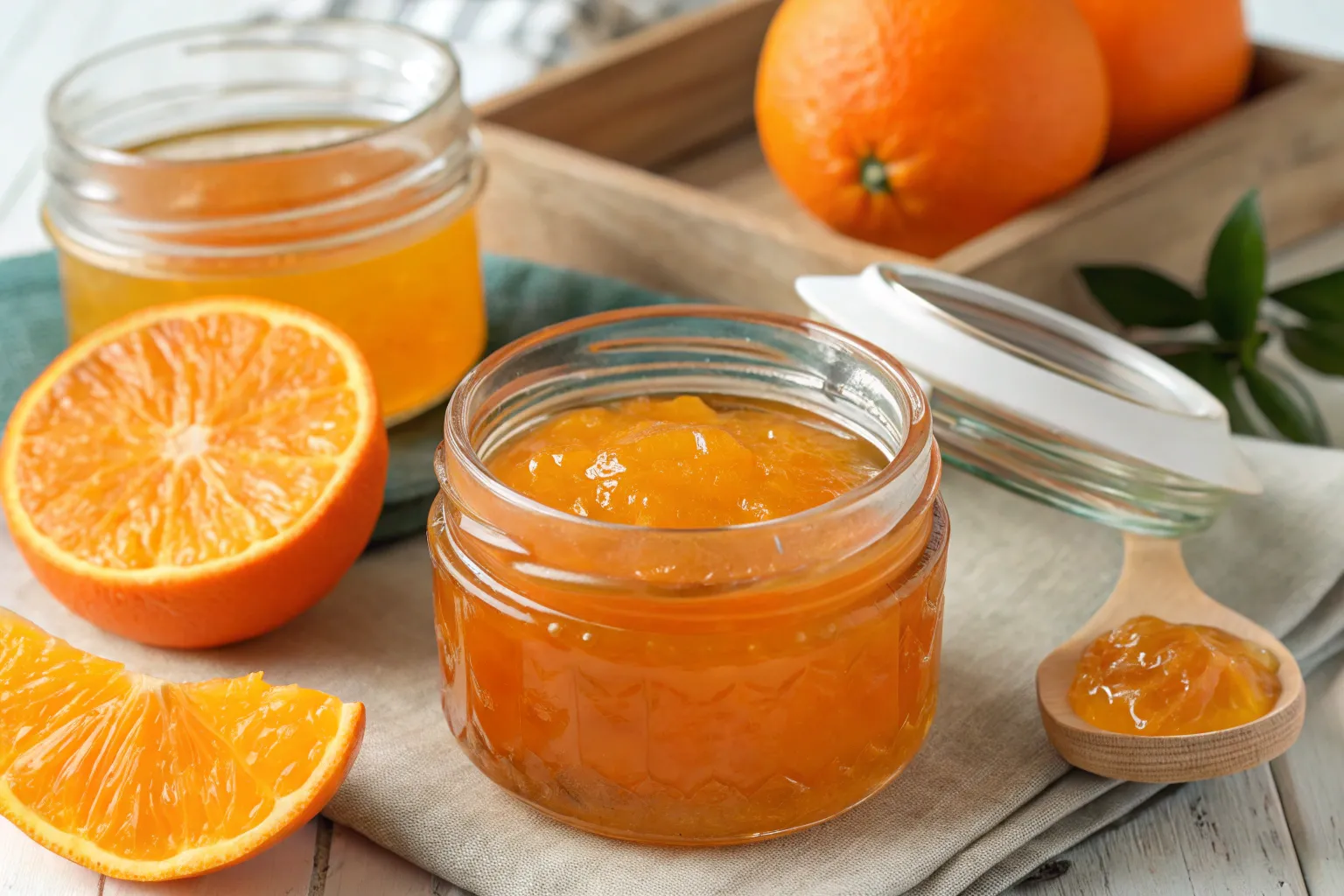
Homemade Orange Jelly
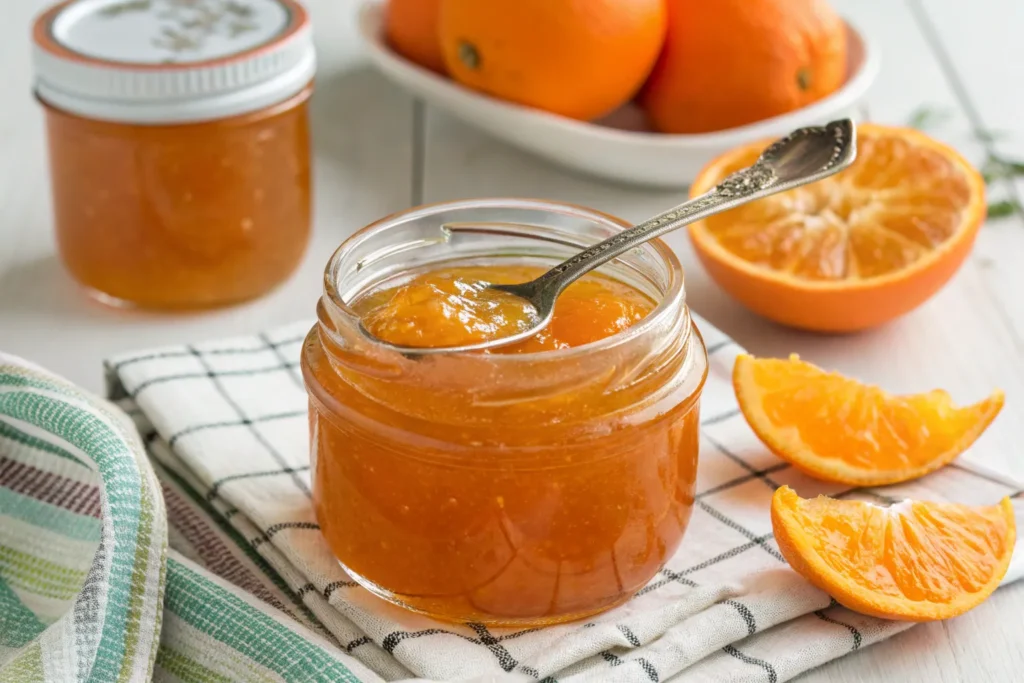
Homemade Orange Jelly is a beautifully vibrant spread that captures the fresh, sunny flavor of ripe oranges in a smooth, crystal-clear form. Unlike jams or marmalades, jelly is refined and delicate, offering pure citrus sweetness without pulp or peel. Making orange jelly at home is a rewarding process that allows you to enjoy the natural aroma, color, and taste of oranges without artificial additives. Perfect for breakfast tables, dessert fillings, or elegant gifts, this classic preserve brings a touch of homemade luxury to everyday meals.
Why You’ll Love This Recipe
You’ll love this recipe because it transforms simple ingredients into a sophisticated, versatile spread. Homemade orange jelly has a fresher, brighter flavor than store-bought versions and a silky texture that feels indulgent yet light. It’s surprisingly straightforward to make, even for beginners, and the result is both visually stunning and delicious. This recipe is also ideal for gifting, as the glossy, jewel-toned jelly looks beautiful in jars.
Nutritional Info
Orange jelly contains natural vitamin C from fresh orange juice and is free from artificial colors or preservatives when made at home. While it is a sweet preserve and should be enjoyed in moderation, making it yourself allows you to control sugar levels and ingredient quality. The clear, fruit-forward nature of jelly makes it feel lighter than heavier spreads.
Time Breakdown
Preparation takes about 15 minutes, including juicing and straining the oranges. Cooking time is approximately 25 to 30 minutes, followed by cooling and setting time of several hours. Overall, the process can be completed within the same day, making it an accessible homemade preserve.
Ingredients List
- Fresh orange juice (strained, no pulp)
- Granulated sugar
- Liquid pectin or powdered pectin
Instructions; How to Make
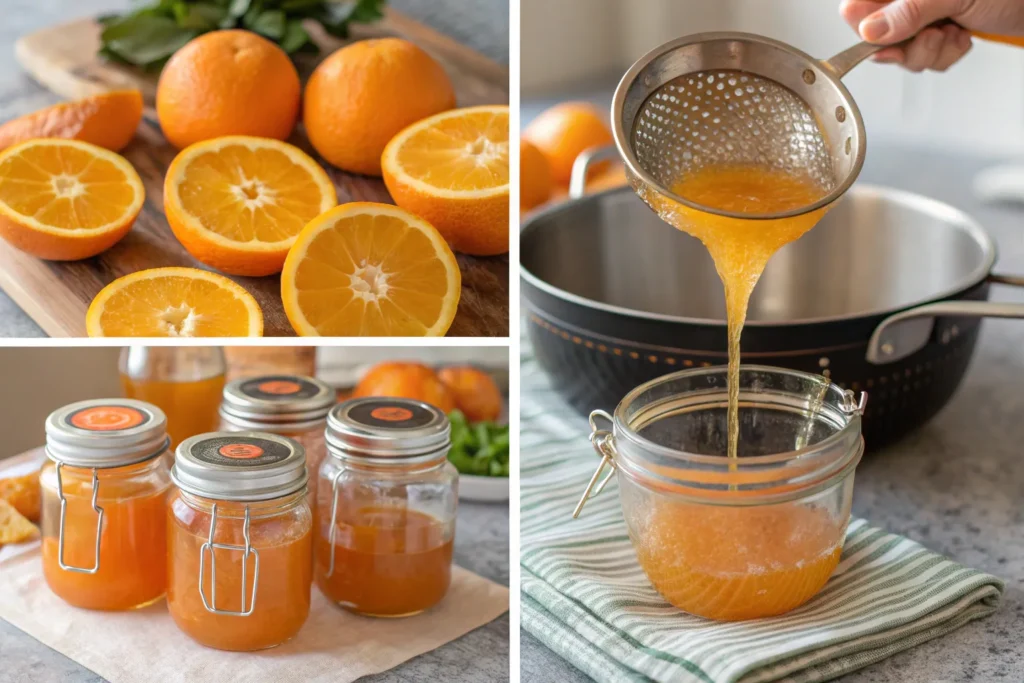
To make homemade orange jelly, begin by juicing fresh oranges and straining the juice thoroughly to remove all pulp and seeds. Pour the clear juice into a saucepan and bring it to a gentle boil. Add the pectin and stir continuously to ensure it dissolves completely. Once boiling, add the sugar all at once, stirring well. Bring the mixture to a rolling boil and cook for the required time until the jelly reaches the setting stage. Remove from heat, skim off any foam, and carefully pour into sterilized jars. Allow the jelly to cool and set completely before sealing or refrigerating.
Variations
You can enhance orange jelly with subtle flavor additions such as a splash of lemon juice for brightness or a hint of vanilla for warmth. Blood oranges create a deeper, ruby-colored jelly, while mandarin oranges produce a sweeter, milder version. For a festive twist, a touch of ginger or cinnamon can be infused during cooking and strained out before setting.
Storing Suggestions
Once set, orange jelly can be stored in sealed jars in the refrigerator for up to three weeks. If properly canned using water-bath methods, it can be stored at room temperature for several months. Always use clean utensils to preserve freshness and prevent contamination.
How to Serve Elegantly
Serve orange jelly on warm toast, croissants, or scones for a classic presentation. It also works beautifully as a glaze for cakes, a filling for pastries, or a pairing with cheese boards. For an elegant touch, spoon it into small glass dishes or jars when serving guests.
Chef’s Special Tips
Always strain the juice thoroughly for a perfectly clear jelly. Use fresh, ripe oranges for the best flavor and natural sweetness. Avoid overcooking, as this can dull the fresh citrus taste and affect the final texture. Skimming foam ensures a glossy, professional finish.
Conclusion
Homemade Orange Jelly is a timeless recipe that celebrates the pure, vibrant flavor of fresh oranges. With its smooth texture, beautiful color, and versatile uses, it’s a wonderful addition to any kitchen. Whether enjoyed at breakfast, used in baking, or given as a thoughtful homemade gift, this orange jelly delivers elegance and sunshine in every spoonful.
FAQs
What is the difference between orange jelly and marmalade?
Orange jelly is made from strained juice and has a smooth, clear texture, while marmalade includes pieces of peel and pulp.
Why didn’t my orange jelly set properly?
Jelly may not set if the sugar or pectin ratio is incorrect or if it wasn’t boiled long enough. Accurate measurements and proper boiling are key.
Can I reduce the sugar in this recipe?
Sugar plays an important role in setting and preserving jelly, so reducing it significantly may affect texture and shelf life unless low-sugar pectin is used.
Can I use bottled orange juice?
Fresh orange juice is recommended for the best flavor and natural pectin content, though bottled juice can be used if necessary.
How long does homemade orange jelly last?
Refrigerated jelly lasts about three weeks, while properly canned jelly can last several months when stored in a cool, dark place.
Printable Recipe Card
Want just the essential recipe details without scrolling through the article? Get our printable recipe card with just the ingredients and instructions.