
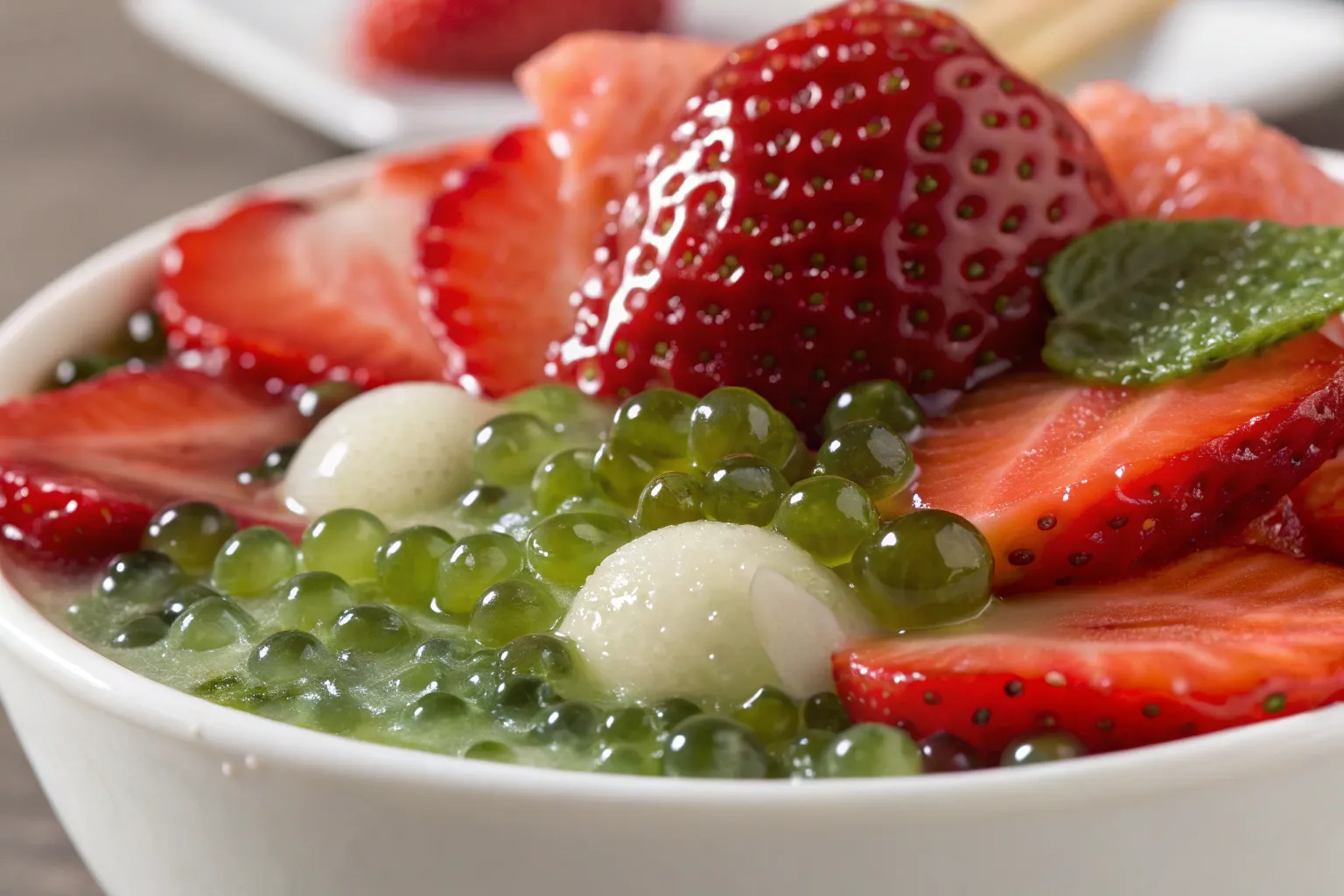
Strawberry Matcha Sago
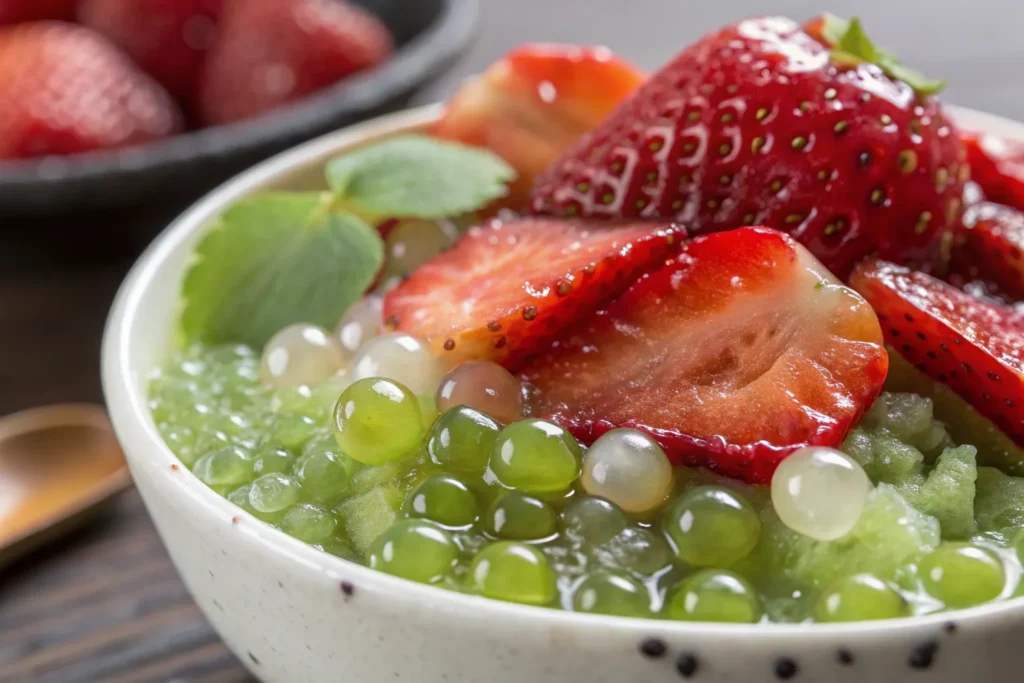
Strawberry Matcha Sago is a refreshing Asian-inspired dessert that combines creamy coconut sago, earthy matcha and sweet, juicy strawberries. This layered treat is light yet indulgent, making it perfect for warm weather, special occasions or whenever you want a dessert that feels both elegant and comforting.
Why You’ll Love This Recipe
This dessert offers a beautiful balance of flavors and textures. The mild bitterness of matcha pairs wonderfully with sweet strawberries, while the soft, chewy sago adds a satisfying bite. It’s visually stunning, naturally gluten-free and easy to customize, making it ideal for entertaining or a simple homemade treat.
Nutritional Info
Sago pearls are a source of carbohydrates that provide quick energy. Matcha is rich in antioxidants, and strawberries add vitamin C and natural sweetness. Coconut milk contributes healthy fats, making this dessert both nourishing and satisfying when enjoyed in moderation.
Time Taken
The total preparation time is about 30 minutes, plus chilling time if you prefer serving it cold. Most of the time is spent cooking the sago and allowing it to cool.
Ingredients
- Sago pearls
- Coconut milk
- Water
- Matcha powder
- Fresh strawberries chopped or sliced
- Sugar or honey
- Vanilla extract optional
Instructions
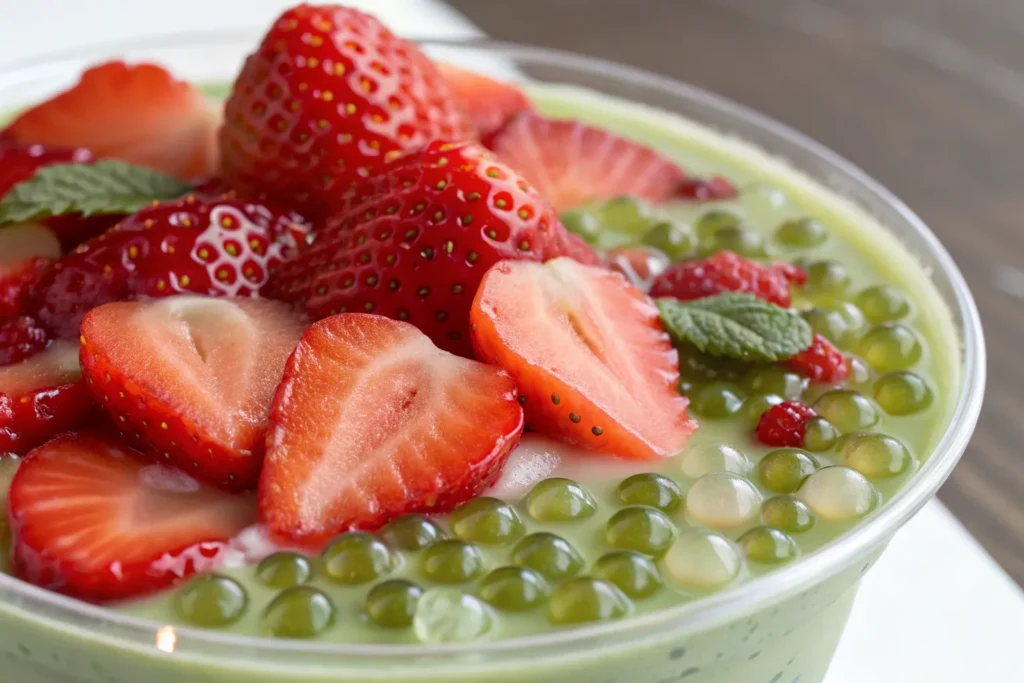
Cook the sago pearls in boiling water until they turn mostly translucent, then drain and rinse under cold water to remove excess starch. In a saucepan, gently heat coconut milk with sugar until dissolved. Divide the mixture and whisk matcha powder into one portion until smooth. Allow both mixtures to cool slightly. Layer the sago with matcha coconut sauce and fresh strawberries in serving glasses. Chill briefly or serve immediately, depending on preference.
You Must Know
Sago pearls can overcook easily, so watch them closely. Rinsing after cooking prevents clumping. Always dissolve matcha in warm liquid to avoid lumps and bitterness.
Storage Tips
Store Strawberry Matcha Sago in the refrigerator in an airtight container for up to two days. Stir gently before serving, as layers may settle.
Ingredient Substitutions
- Use almond or oat milk instead of coconut milk
- Replace sugar with maple syrup or condensed milk
- Swap strawberries with mango or kiwi
- Use tapioca pearls if sago is unavailable
- Add chia seeds for extra texture
Serving Suggestions
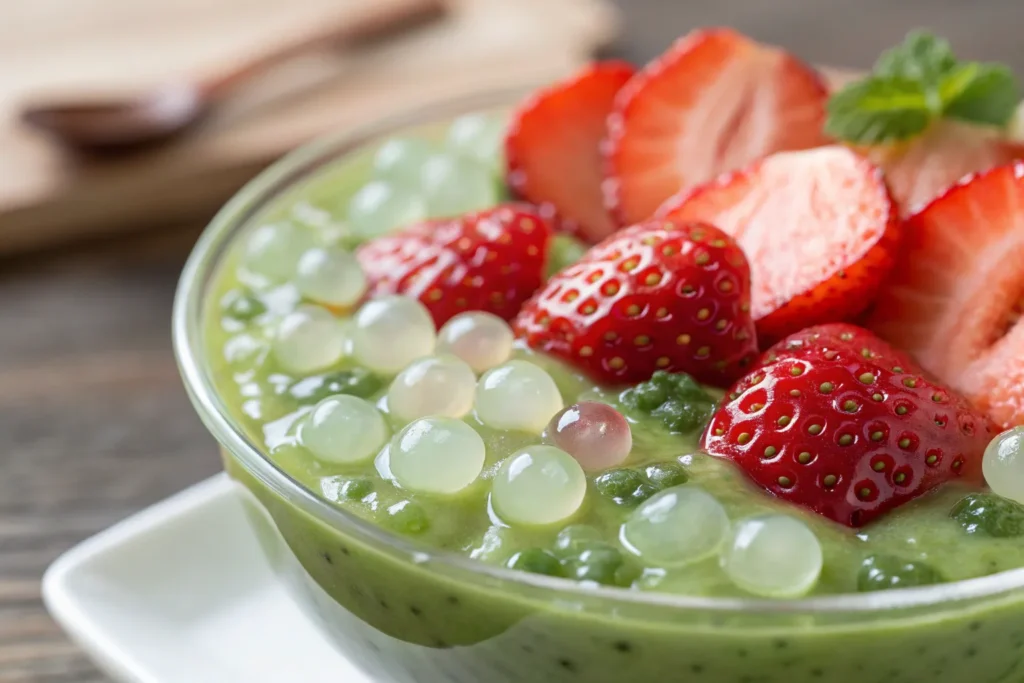
Serve chilled in clear dessert glasses for a beautiful presentation. It works well as a light dessert after a heavy meal or as a refreshing afternoon treat.
Cultural and Historical Context
Sago-based desserts are popular across Southeast and East Asia, often paired with coconut milk and fruit. Matcha adds a Japanese influence, blending traditional ingredients into a modern fusion dessert that reflects contemporary Asian cuisine.
Seasonal Adaptations
In summer, serve well chilled with extra fruit. In winter, slightly warm the coconut sauce and serve at room temperature for a comforting variation. Seasonal berries or tropical fruits can be used year-round.
Success Stories
Many home cooks love this dessert for its simplicity and elegance. It’s often praised for being not too sweet and for its unique flavor combination that impresses guests without complicated steps.
Freezer Meal Conversion
This dessert is not suitable for freezing, as the texture of sago and coconut milk changes when thawed. It’s best enjoyed fresh or refrigerated.
Pro Tips
- Whisk matcha thoroughly for a smooth sauce
- Sweeten gradually to control flavor balance
- Use ripe strawberries for natural sweetness
Chef’s Special Tips
- Add a pinch of salt to enhance sweetness
- Layer carefully for clean visual contrast
- Garnish with fresh mint or strawberry slices
Conclusion
Strawberry Matcha Sago is a delightful fusion dessert that brings together freshness, creaminess and subtle bitterness in every spoonful. Easy to make and visually stunning, it’s a perfect treat for any occasion. Try it at home and enjoy a refreshing dessert that feels both modern and timeless.
FAQs
What is sago made from?
Sago pearls are made from the starch extracted from the pith of tropical palm trees. They are similar in texture to tapioca pearls once cooked.
Can I use tapioca pearls instead of sago?
Yes. Small tapioca pearls work well as a substitute and have a similar chewy texture.
Is Strawberry Matcha Sago very sweet?
No. It’s lightly sweetened, allowing the matcha and strawberries to shine. You can easily adjust sweetness to taste.
Why does my matcha taste bitter?
Bitterness usually comes from using water that’s too hot or not whisking the matcha properly. Always dissolve matcha in warm, not boiling, liquid.
Can I make this dessert dairy-free?
Yes. This recipe is naturally dairy-free when made with coconut milk or plant-based alternatives.
How long does Strawberry Matcha Sago last in the fridge?
It stays fresh for up to two days when stored in an airtight container in the refrigerator.
Can I make this dessert ahead of time?
Yes. You can prepare it a few hours in advance and keep it chilled until serving.
What fruits pair well with matcha besides strawberries?
Mango, banana, kiwi and blueberries all pair beautifully with matcha.
Can I serve this dessert warm?
It’s traditionally served chilled, but it can be enjoyed slightly warm, especially in cooler weather.
Is Strawberry Matcha Sago gluten-free?
Yes. Sago and matcha are naturally gluten-free, making this dessert suitable for gluten-free diets.
Printable Recipe Card
Want just the essential recipe details without scrolling through the article? Get our printable recipe card with just the ingredients and instructions.