
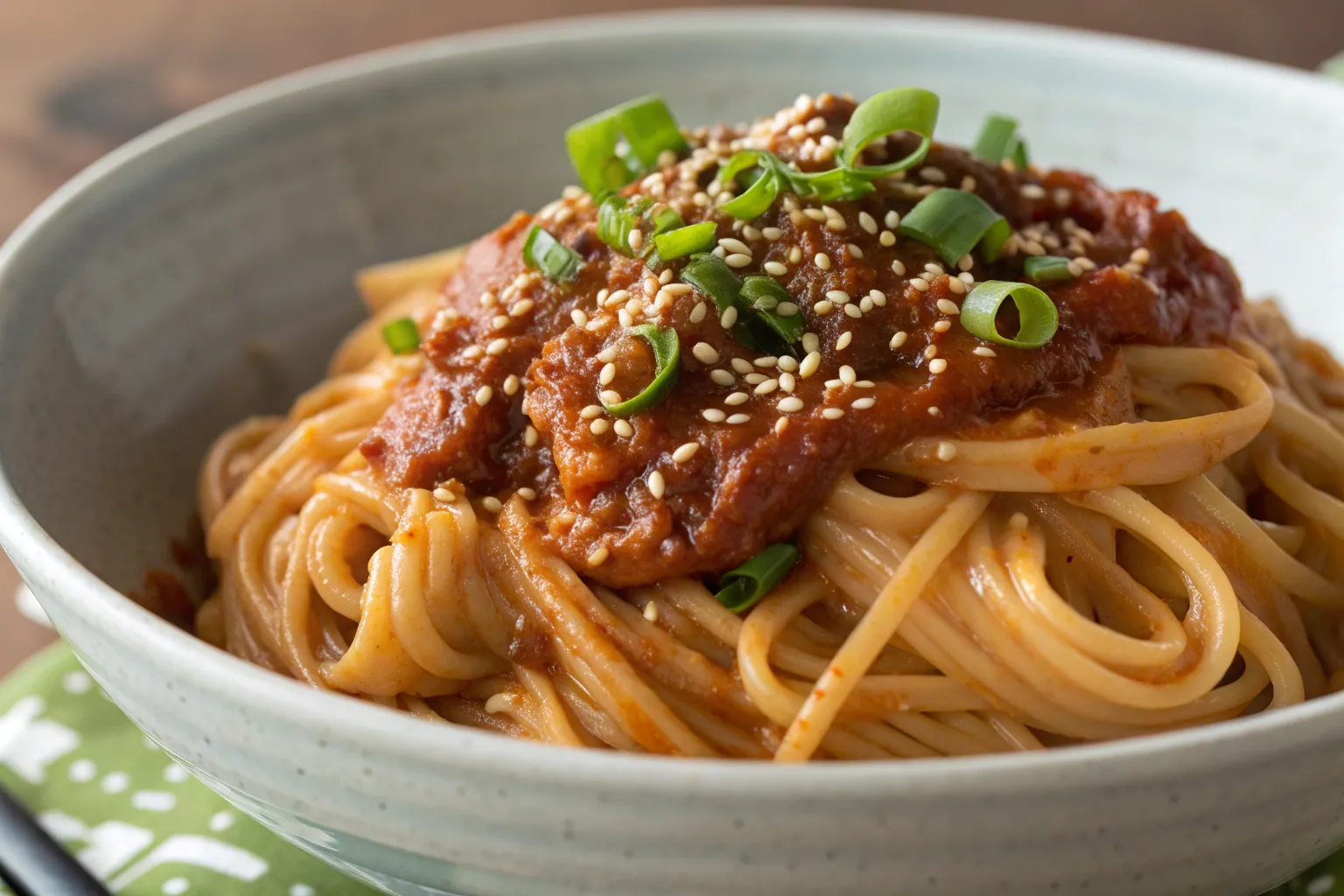
Creamy Korean Ssamjang Pasta Recipe

Creamy Korean Ssamjang Pasta is a bold, fusion-style dish that brings together the richness of creamy pasta with the savory, spicy depth of Korean ssamjang. This unique blend creates a luxurious sauce that coats every noodle with umami, heat and a touch of sweetness. It’s the kind of recipe that looks impressive, tastes restaurant-worthy and comes together quickly on a busy weeknight. Whether you love Korean flavors or want to explore a new kind of pasta, this dish delivers comfort, excitement and a satisfying twist in every bite.
Why You’ll Love This Recipe
You’ll love this ssamjang pasta because it perfectly balances creaminess with signature Korean flavors. Ssamjang, a fermented soybean and chili paste, brings complexity that elevates the sauce into something unforgettable. The result is creamy, spicy, slightly nutty and incredibly comforting. It’s versatile enough to serve as a quick dinner, a flavorful lunch or even a crowd-pleasing dish for gatherings. This recipe gives you the joy of Korean cuisine in a format you already love pasta but with a deeper, more exciting flavor profile.
Nutritional Info
This pasta offers a mix of protein, carbs and healthy fats depending on the ingredients you choose. Ssamjang contains fermented soy which provides probiotics and minerals, while cream or milk contributes calcium and richness. Vegetables like mushrooms, spinach or peppers can easily be added for extra fiber and nutrients. It’s a flexible meal that allows you to make it heavier, lighter or more balanced based on your preferences.
Time Taken
This dish is incredibly fast to prepare, making it ideal for weeknights. Cooking the pasta takes about 10 minutes, while the sauce comes together in 5 to 7 minutes. In total, the entire recipe is usually ready in under 20 minutes, depending on your chosen add-ins.
Ingredients
- Pasta of choice
- Butter or oil
- Garlic minced
- Onion finely chopped
- Ssamjang paste
- Gochujang optional for extra heat
- Heavy cream or milk
- Grated parmesan
- Soy sauce
- Sugar honey or brown sugar
- Pasta water
- Optional add-ins: mushrooms, spinach, chicken, shrimp, tofu, green onions, sesame seeds
Instructions

Boil your pasta until al dente and reserve some pasta water. In a pan, sauté garlic and onions in butter until fragrant. Add ssamjang and a small amount of gochujang if you want extra spice, letting the paste cook for a few seconds to deepen the flavor. Pour in cream and stir until the sauce becomes smooth and thick. Add soy sauce and a touch of sugar to create a balanced blend of savory, spicy and slightly sweet notes. Stir in parmesan and loosen the sauce with pasta water as needed. Toss in your cooked pasta, coating it fully in the creamy ssamjang sauce. Finish with green onions or sesame seeds and serve hot.
You Must Know
Ssamjang is quite salty and flavorful on its own, so adjust soy sauce carefully. The sauce thickens quickly as it contains both cream and fermented paste, so keep pasta water nearby to maintain the perfect consistency. Cooking the ssamjang for a short moment in the oil boosts its flavor tremendously and helps it meld beautifully into the creamy base.
Storage Tips
Store leftover pasta in an airtight container in the refrigerator for up to two days. When reheating, add a splash of milk or water to bring the sauce back to a silky texture. The fermented nature of ssamjang means the flavors deepen with time, but the dairy may thicken, so reheating slowly is important.
Ingredient Substitutions
Replace cream with coconut cream for a dairy-free version. If you don’t have ssamjang, you can mix miso paste with a bit of gochujang to create a similar flavor profile. Parmesan can be swapped with mozzarella or cream cheese for a smoother, stretchy texture. Use rice noodles or udon noodles if you want an even more Asian-inspired twist.
Serving Suggestions

Serve with pan-seared chicken, sautéed mushrooms or roasted vegetables for extra substance. A side plate of Korean pickles or kimchi brings a refreshing acidity that complements the creamy sauce. Fresh herbs like green onions or cilantro add brightness, while toasted sesame seeds bring crunch and nuttiness.
Cultural and Historical Context
Ssamjang traditionally appears in Korean cuisine as a dipping sauce for grilled meats and ssam (lettuce wraps). Its robust, fermented flavor makes it ideal for fusion cooking, which has grown in popularity as Korean food spreads globally. Combining ssamjang with pasta reflects a modern culinary trend where familiar comfort foods are enhanced with bold international influences. This dish captures the essence of Korean flavors while embracing the universal love of creamy pasta.
Seasonal Adaptations
In summer, lighten the dish by using milk instead of cream and add fresh vegetables like zucchini or cherry tomatoes. Fall versions work beautifully with mushrooms and roasted squash. During winter, make it richer with extra cream and include hearty proteins like chicken or shrimp. Spring variations pair well with spinach, peas and fresh herbs.
Success Stories
Home cooks love how unexpectedly delicious ssamjang is in creamy pasta. Many describe it as an instant favorite because it transforms simple ingredients into a dish with deep flavor. It’s commonly praised for being easy to make yet tasting like something from a trendy fusion restaurant. People often recreate it for potlucks, date nights or weeknight dinners and receive enthusiastic reviews.
Freezer Meal Conversion
The finished pasta does not freeze well because creamy sauces tend to separate. However, the base sauce without cream freezes beautifully. Mix ssamjang, sautéed aromatics, soy sauce and seasonings together, freeze in small portions and add cream when reheating for a fresh-tasting final dish. This shortcut makes weeknight cooking much faster.
Pro Tips
Use a small amount of sugar to balance the fermented saltiness of ssamjang. Always thin the sauce with pasta water for a silky, professional finish. Cook the ssamjang briefly in hot oil before adding liquids to unlock its full aroma. Add proteins or vegetables only after the sauce is balanced so they absorb the perfect flavor. Taste frequently—the intensity of ssamjang varies by brand.
Chef’s Special Tips
Blend a spoonful of cream cheese into the sauce for an ultra-silky, restaurant-style texture. A drizzle of sesame oil at the end adds depth and fragrance. If you like smoky flavors, add a touch of smoked paprika or use smoked mozzarella. For an elevated presentation, top with shaved parmesan, thinly sliced green onions and a sprinkle of toasted sesame seeds.
Conclusion
Creamy Korean Ssamjang Pasta is a bold, comforting and irresistible fusion of Korean heat and Italian-style creaminess. It comes together quickly, satisfies deeply and introduces a unique twist that sets it apart from everyday pasta dishes.
FAQs
Can I make ssamjang pasta without gochujang?
Yes, but the flavor will be milder and less spicy. You can replace gochujang with a small amount of chili garlic sauce or sriracha, but the authentic Korean depth will be reduced.
Is ssamjang very spicy?
Not usually. Ssamjang is more savory, nutty and slightly sweet than spicy. The heat level in the pasta mainly comes from gochujang or added chili flakes, which you can easily adjust.
Can I use any type of pasta?
Absolutely. Spaghetti, linguine, rigatoni or even ramen noodles work well. Pasta that holds sauce, like fusilli or bucatini, tends to make the dish extra creamy.
Can I make this recipe vegetarian or vegan?
Yes. Use vegetable broth instead of chicken broth, swap butter for olive oil or vegan butter, and choose plant-based cream or coconut milk. Ssamjang itself is typically vegan, but check labels to be sure.
What protein goes best with ssamjang pasta?
Shrimp, grilled chicken, tofu, or thinly sliced beef pair beautifully. Crispy mushrooms are also a great plant-based option, adding texture and umami.
How do I avoid the sauce becoming too thick?
Add a splash of reserved pasta water whenever the sauce starts to tighten. The starch helps the sauce stay glossy, smooth and clingy without becoming heavy.
Can I prepare this in advance?
The sauce can be made ahead, but the pasta tastes best when tossed fresh. If storing, keep the sauce and pasta separate, then reheat gently and combine just before serving.
Is ssamjang pasta kid-friendly?
Yes, if you reduce the spice. Use only ssamjang without adding extra gochujang, and include a little extra cream to mellow the flavor.
Does the dish taste very fermented?
It has a subtle fermented depth, but it’s balanced by cream, garlic and pasta water. The overall taste is creamy, savory and slightly sweet, not overpoweringly fermented.
Printable Recipe Card
Want just the essential recipe details without scrolling through the article? Get our printable recipe card with just the ingredients and instructions.