
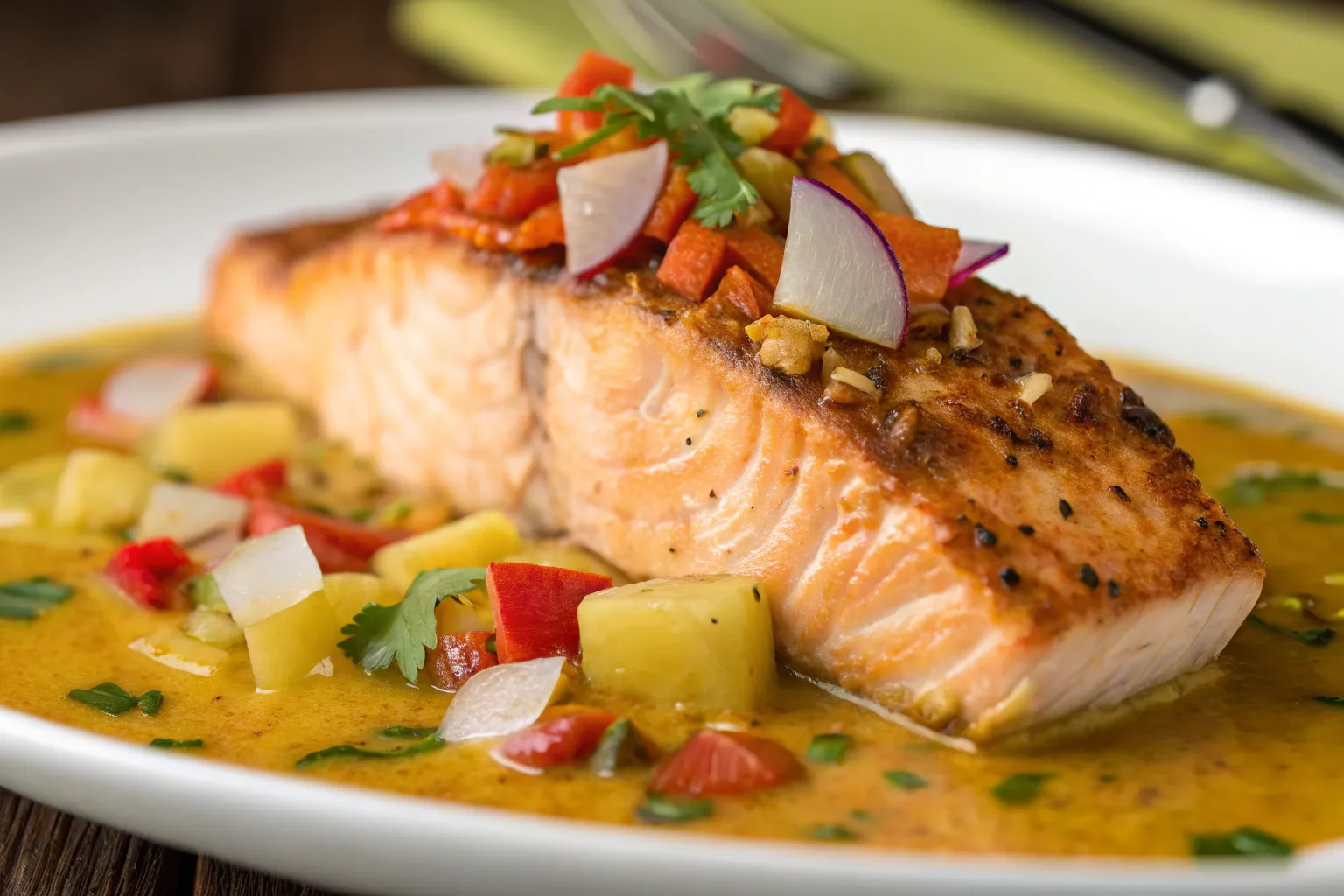
Caribbean Coconut Curry Salmon
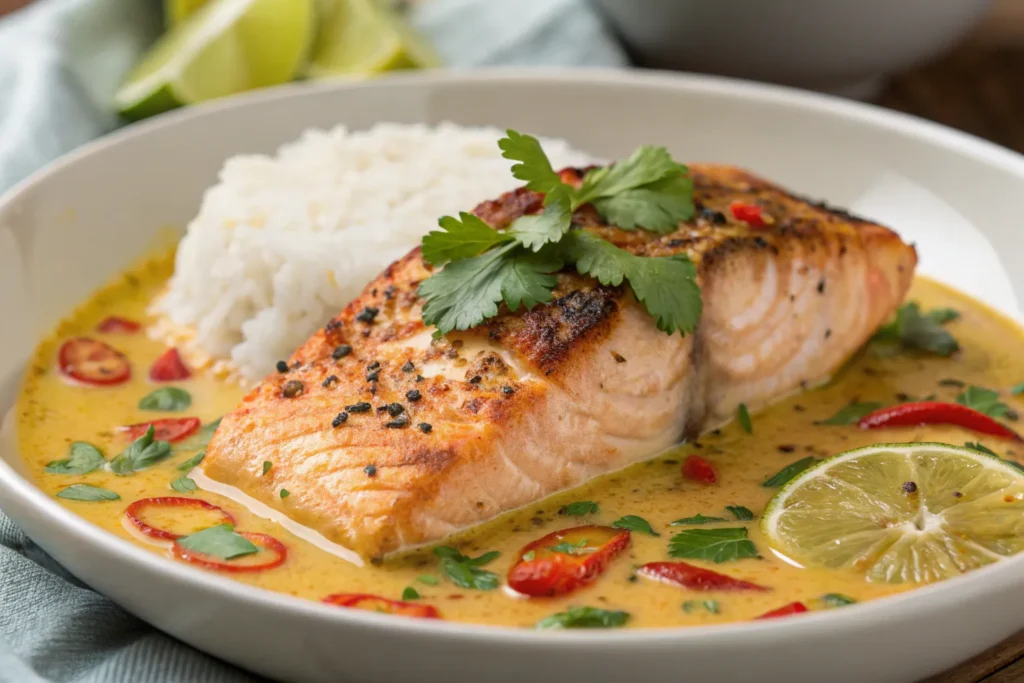
Caribbean Coconut Curry Salmon is a vibrant and flavorful dish that combines tender salmon fillets with a rich, aromatic coconut curry sauce. Infused with tropical spices, ginger, garlic, and a touch of lime, this dish brings the warmth of the Caribbean straight to your plate. It’s quick to make, packed with flavor, and perfect for a weeknight dinner or special occasion.
Why You’ll Love This Recipe
This dish balances the richness of salmon with the sweet creaminess of coconut milk and the bold flavors of curry and Caribbean spices. It is simple to prepare, requires minimal ingredients, and delivers a restaurant-quality taste at home. The sauce is versatile enough to serve over rice, quinoa, or alongside roasted vegetables, making it a complete meal in one pan.
Nutritional Info
Salmon provides high-quality protein, omega-3 fatty acids, and essential nutrients like vitamin D. Coconut milk adds healthy fats and a creamy texture without overpowering the dish. Using fresh vegetables in the sauce enhances fiber and micronutrient content, making this a nutrient-dense meal.
Time Taken
This recipe typically takes 25–30 minutes from start to finish, including prep and cooking time.
Ingredients
- Salmon fillets
- Coconut milk
- Red curry paste or powder
- Garlic, minced
- Fresh ginger, minced
- Onion, diced
- Bell peppers, sliced
- Lime juice
- Olive oil or coconut oil
- Salt and pepper
- Fresh cilantro or parsley for garnish
- Optional: chili flakes for extra heat
Instructions
Begin by seasoning the salmon fillets with salt and pepper. Heat oil in a skillet over medium heat and sear the salmon skin-side down until golden and slightly crispy. Remove and set aside. In the same pan, sauté onion, garlic, and ginger until fragrant. Add bell peppers and cook until slightly softened. Stir in red curry paste or powder and coconut milk, bringing it to a gentle simmer. Return the salmon to the pan and let it cook in the sauce until fully cooked, about 5–7 minutes. Finish with lime juice and garnish with fresh cilantro before serving. Serve over steamed rice, quinoa, or alongside roasted vegetables.
You Must Know
Do not overcook the salmon; it should remain tender and flaky. Stir the coconut milk gently to prevent splitting. Adjust the curry paste based on your desired spice level, starting with a small amount and adding more gradually.
Storage Tips
Store leftovers in an airtight container in the refrigerator for up to two days. Reheat gently on the stovetop to avoid overcooking the salmon. This dish is best enjoyed fresh, as reheating can slightly change the texture of the fish.
Ingredient Substitutions
- Swap red curry paste with yellow or green curry paste for different flavors.
- Use cod, trout, or halibut if you prefer a milder fish.
- Replace bell peppers with zucchini or carrots for variety.
- Coconut cream can replace coconut milk for a richer sauce.
Serving Suggestions
Serve this dish over steamed jasmine or basmati rice, coconut rice, or quinoa. Pair with sautéed greens, roasted vegetables, or a fresh mango salad for a tropical-inspired meal. A wedge of lime on the side enhances the flavors.
Cultural and Historical Context
Caribbean cuisine is known for its bold, tropical flavors, often combining seafood with aromatic spices and coconut. This dish reflects the islands’ culinary tradition, blending fresh fish with creamy coconut curry for a balance of sweet, savory, and spicy notes. The use of lime and cilantro adds brightness typical of Caribbean cooking.
Seasonal Adaptations
- Summer: Add fresh mango, pineapple, or cherry tomatoes for sweetness.
- Winter: Include root vegetables like sweet potatoes or carrots for heartiness.
- Spring: Use young coconut milk for a lighter, fresher taste.
- Fall: Incorporate bell peppers and zucchini for seasonal produce.
Success Stories
Home cooks praise this recipe for its vibrant, restaurant-quality flavors that are easy to make at home. Many enjoy it for weeknight dinners because it’s quick, satisfying, and versatile. Its tropical flavors are often a hit with kids and adults alike.
Freezer Meal Conversion
Freeze the coconut curry sauce without the salmon. When ready to serve, reheat the sauce gently and cook fresh salmon in it. Freezing fully cooked salmon is not recommended, as it can affect the texture.
Pro Tips
Sear salmon skin-side down for maximum flavor and texture. Use fresh ginger and garlic for the most aromatic sauce. Add curry paste gradually to control spice levels.
Chef’s Special Tips
Deglaze the pan with a splash of white wine or coconut water before adding coconut milk for extra depth. Finish with a touch of lime zest for brightness. Garnish with chopped fresh herbs for a fresh, vibrant presentation.
Conclusion
Caribbean Coconut Curry Salmon is a quick, flavorful, and comforting dish that brings the taste of the tropics to your table. It’s perfect for weeknight dinners or entertaining guests, offering a balance of rich, creamy sauce and tender, flaky salmon. Try it tonight and enjoy a taste of the Caribbean in your own kitchen.
FAQs
Can I use frozen salmon?
Yes. Thaw completely and pat dry before cooking to prevent excess moisture in the curry sauce.
Can I make this dish ahead of time?
You can prepare the curry sauce ahead and store it in the refrigerator. Cook the salmon fresh when ready to serve for the best texture.
Does it freeze well?
Freeze only the curry sauce without the salmon. Reheat gently and cook fresh salmon in the sauce for best results.
Can I make it spicier?
Yes. Add more red curry paste, chili flakes, or fresh chopped chilies to increase heat.
Can I use a different type of fish?
Yes. Cod, halibut, trout, or tilapia work well as substitutes.
Is this dish dairy-free?
Yes. The creaminess comes from coconut milk, making it naturally dairy-free.
What vegetables can I add?
Bell peppers, zucchini, carrots, green beans, or snap peas complement the flavors nicely.
Can I serve it with something other than rice?
Yes. Quinoa, couscous, cauliflower rice, or roasted vegetables are excellent alternatives.
How do I prevent the coconut milk from splitting?
Simmer gently over medium-low heat and avoid boiling. Stir occasionally and add cream or coconut milk off the heat if needed.
Can I use curry powder instead of curry paste?
Yes, but curry paste gives a more authentic, bold flavor. Adjust seasonings to taste if using powder.
Printable Recipe Card
Want just the essential recipe details without scrolling through the article? Get our printable recipe card with just the ingredients and instructions.