
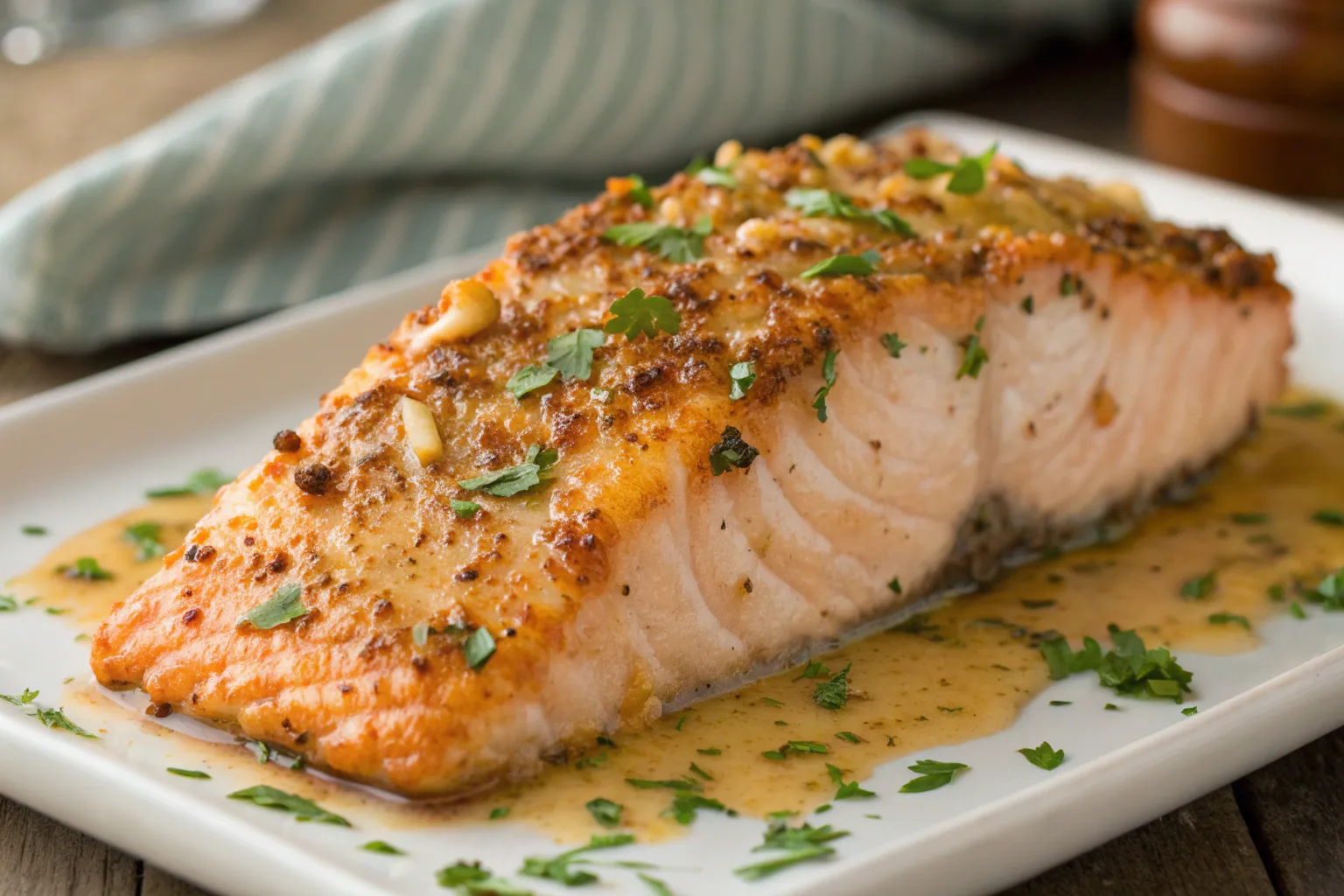
Baked Dijon Salmon

Baked Dijon Salmon is one of the simplest yet most flavorful salmon dishes you can prepare, making it perfect for both weeknight dinners and elegant occasions. The combination of tangy Dijon mustard, aromatic garlic, and subtle sweetness creates a beautifully balanced glaze that complements the rich, buttery flavor of salmon. Baking the fish keeps it tender and moist, allowing the flavors to gently soak into each flaky layer. This recipe comes together effortlessly with minimal ingredients, offering a delicious and nutritious meal that feels gourmet without requiring hours in the kitchen.
Ingredients
- 4 salmon fillets
- 3 tbsp Dijon mustard
- 1 tbsp whole grain mustard (optional)
- 2 tbsp olive oil
- 1 tbsp honey or maple syrup
- 2 cloves garlic, minced
- Salt and black pepper to taste
- 1 tbsp lemon juice
- Fresh parsley or dill for garnish
Instructions
Preheat your oven to 400°F and line a baking sheet with parchment paper or foil for easy cleanup. Place the salmon fillets skin-side down and pat them dry to help the glaze adhere. In a small bowl, whisk together the Dijon mustard, olive oil, honey, garlic, lemon juice, salt, and pepper until smooth. Spoon the mixture over each fillet, spreading it evenly to coat the tops and sides. Bake for 12–15 minutes, depending on the thickness of your salmon, until the fish flakes easily with a fork and the glaze develops a subtle golden sheen. Garnish with fresh herbs and serve warm.
Why You’ll Love This Recipe
This baked salmon is packed with flavor while remaining incredibly light and healthy. The Dijon glaze adds brightness and depth without overpowering the natural richness of the fish, making it ideal for people who prefer flavorful but not overly spicy dishes. Because everything is mixed in one bowl and baked on a sheet pan, cleanup is minimal. It’s equally great for meal prep or last-minute dinners, delivering a balanced combination of protein, healthy fats, and vibrant flavor.
Ingredient Substitutions
You can easily adapt this recipe to suit your preferences or pantry. Swap honey with maple syrup for a deeper sweetness, or replace olive oil with melted butter for a more decadent taste. If you don’t have Dijon mustard, spicy brown mustard or even a mustard blend will still produce great results. Fresh salmon can also be substituted with frozen fillets—just thaw and pat dry before glazing. For extra freshness, add lemon zest to the glaze or sprinkle herbs directly over the fish before baking.
Serving Suggestions
Serve Baked Dijon Salmon with roasted vegetables, steamed asparagus, lemon rice, or simple garlic mashed potatoes for a complete and satisfying meal. It also pairs wonderfully with salads, quinoa bowls, or creamy pasta dishes. For a lighter option, spoon the salmon over mixed greens with cucumbers and cherry tomatoes, using any leftover glaze as a warm dressing.
Storage Tips
Store leftover salmon in an airtight container in the refrigerator for up to three days. Reheat it gently in the oven at 300°F or in an air fryer for a few minutes to preserve its moisture. Avoid microwaving for too long as it can dry out the fish. You can also flake leftover salmon and use it in salads, wraps, or sandwiches.
Conclusion
Baked Dijon Salmon is a perfect example of how simple ingredients can create a truly memorable dish. The tangy mustard glaze adds brightness while allowing the natural flavor of the salmon to shine, resulting in a meal that tastes fresh, balanced, and comforting. Whether you’re cooking for yourself on a busy weeknight or serving guests, this recipe delivers restaurant-quality flavor with almost no effort. Elegant, healthy, and endlessly versatile, it’s a dish you’ll want to make again and again.
FAQs
Can I use frozen salmon for this recipe?
Yes, frozen salmon works perfectly as long as it is fully thawed before baking. Thaw it in the refrigerator overnight or under cold running water if you’re short on time. Once thawed, pat the fillets very dry so the Dijon glaze adheres properly and the fish bakes evenly. Excess moisture can cause the glaze to slide off or prevent the salmon from developing a flavorful finish.
How do I know when the salmon is fully cooked?
Salmon is done when it flakes easily with a fork and the internal temperature reaches 145°F at the thickest part. Because ovens vary, it’s best to start checking around the 12-minute mark. Slightly undercooking and allowing carryover heat to finish the job helps keep the salmon tender and prevents it from drying out.
Can I make the Dijon glaze ahead of time?
Absolutely. The glaze can be mixed up to 24 hours in advance and stored in the refrigerator. This makes dinner prep even quicker, especially on busy evenings. When ready to use, give the mixture a good stir to recombine the ingredients, then spread it over the salmon just before baking.
What can I substitute for Dijon mustard?
If you don’t have Dijon on hand, spicy brown mustard, honey mustard, or even a coarse grain mustard will still produce a delicious result. Each option slightly changes the flavor profile—spicy brown adds heat, while honey mustard adds sweetness—so you can adjust the amount of honey or lemon to balance it.
Can I bake this salmon in foil for easier cleanup?
Yes, baking in foil is an excellent option and helps lock in moisture. Simply place each fillet on a piece of foil, spoon on the glaze, and fold the foil loosely to create a steam packet. This method produces a very tender, moist salmon and is great for preventing the glaze from dripping as it cooks.
Is this recipe suitable for meal prep?
Baked Dijon Salmon is meal-prep friendly because it reheats well and maintains moisture better than many other fish dishes. Store portions in airtight containers and enjoy them over rice, in salads, or as a protein addition to grain bowls. Just be sure to reheat gently to maintain its tender texture.
Can I grill the salmon instead of baking it?
Yes, this recipe adapts well to grilling. Brush the glaze on the salmon and place it on a well-oiled grill over medium heat. Cover and cook for about 8–10 minutes or until the fish flakes easily. Grilling adds a slightly smoky flavor that complements the tangy Dijon beautifully.
What vegetables pair best with this dish?
This salmon pairs wonderfully with roasted asparagus, broccoli, green beans, or a simple mixed vegetable medley. The tangy glaze also complements citrus-based sides, herbed potatoes, or fresh leafy salads. Any vegetable that benefits from a bright, zesty flavor pairing will work well.
Printable Recipe Card
Want just the essential recipe details without scrolling through the article? Get our printable recipe card with just the ingredients and instructions.